Get Full Government Meeting Transcripts, Videos, & Alerts Forever!
Get email alerts on the Utilities Water topic
No spam. Unsubscribe anytime.
Council committee reviews CCR and tools to prevent water shutoffs at apartment complexes; staff to return with recommendations
Summary
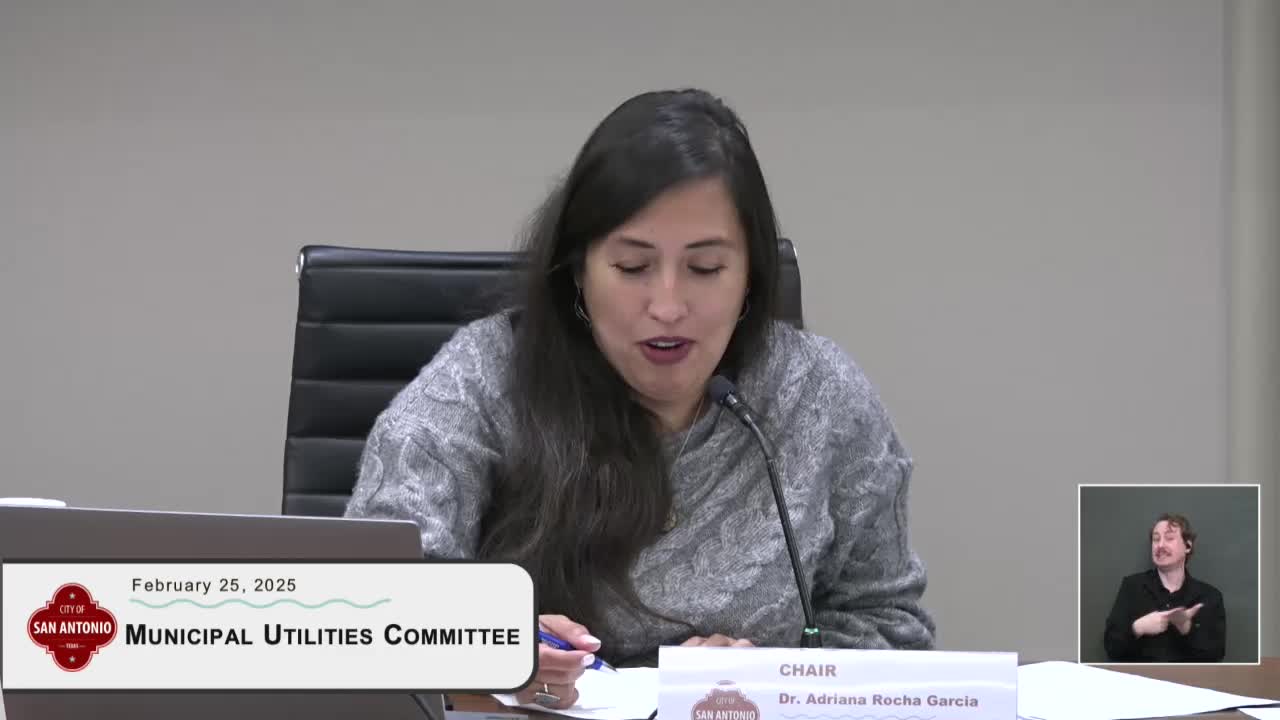
City staff updated a San Antonio City Council committee on a City Council Resolution aimed at preventing water-service disconnections at multifamily properties whose owners have not paid master-meter water bills.
City staff updated a San Antonio City Council committee on a council resolution and staff review aimed at preventing water-service disconnections at multifamily rental properties when landlords fail to pay master-meter accounts.
Staff described a proactive inspection and enforcement program that has inspected tens of thousands of units and more than 1,800 multifamily complexes, explained current outreach and coordination with the San Antonio Water System (SAWS) and requested direction on potential ordinance changes and new enforcement tools.
Why it matters: When a property owner fails to pay a master-meter water bill, tenants can lose service even when they individually paid rent. The CCR and staff recommendations aim to reduce tenant harm by improving outreach, requiring landlord payment plans in some circumstances and providing the council with potential enforcement options.
What staff reported - Staff said the city's multifamily program has completed more than 47,000 inspections and more than 1,800 complexes have been inspected as part of proactive and reactive enforcement. Staff said most properties comply, but a small number require repeated intervention. - Since the program began, staff said 39 properties had to re-enter a reactive enrollment list; 18 of those properties subsequently 'graduated' from the reactive program and 21 remained enrolled at the time of the presentation. - Staff told the committee that, in one recent snapshot, about 380 master-meter accounts were eligible for disconnection and owed about $2.9 million. Staff said the number of properties at risk rose after the COVID-era assistance programs ended.
Proposed options discussed Staff and councilmembers discussed several possible changes: - Requiring property owners to enter payment plans or demonstrate active collection efforts before SAWS disconnects service for a master-meter account; staff said implementing such a requirement would require ordinance changes and operational adjustments. - Increased coordination and data-sharing between city departments and SAWS so staff can identify at-risk properties earlier and prioritize outreach. - Using enforcement tools beyond disconnection: staff and some councilmembers discussed creating a mechanism to place a lien or title retention on a property that repeatedly fails to pay master-meter utility bills, as a stronger deterrent to nonpayment. Staff warned this would require legal and financial analysis, and councilmembers asked staff to study costs and practical effectiveness.
Council direction Councilmembers praised the increased outreach but expressed concern about opening the inspection ordinance to broad change. Members requested staff, including the city attorney's office and the prosecutor, return with concrete recommendations and legal analysis on title-retention or lien options and on any ordinance amendments. Several members emphasized avoiding measures that would worsen tenant outcomes and asked for timelines and cost estimates.
Next steps and outcome Committee members asked staff to return with recommendations and a potential ordinance draft in roughly 30 to 60 days; staff agreed to return with options for the council to consider. No formal ordinance change was adopted at the meeting.
Provenance: The CCR discussion began when staff introduced item 4 and ended when the committee concluded the item and recessed.