Get Full Government Meeting Transcripts, Videos, & Alerts Forever!
Get email alerts on the City Budget topic
No spam. Unsubscribe anytime.
Upland council begins review of nonessential programs amid large deferred‑maintenance needs; fireworks decision deferred
Summary
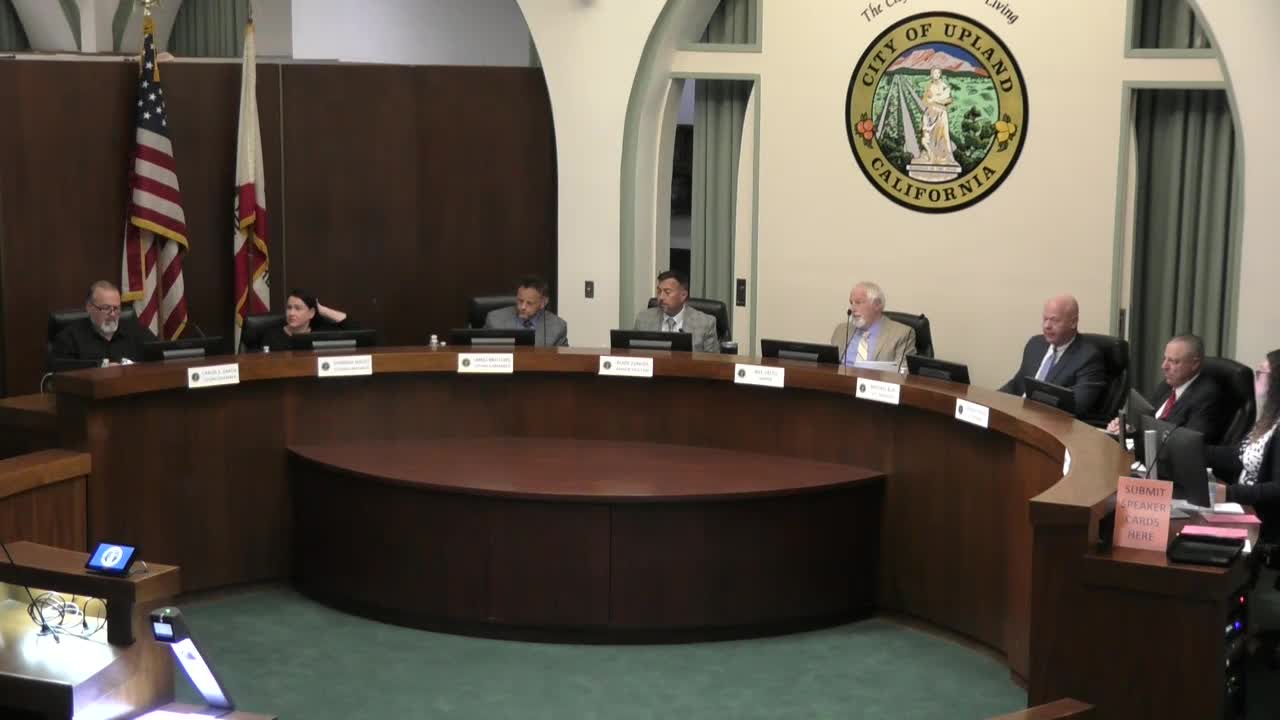
Upland ' The Upland City Council on Feb. 24 began reviewing a staff list of nonessential city programs and possible reductions as the city confronts large deferred'maintenance needs for roads and facilities. Assistant City Manager Steven Parker said the list was produced quickly at the council's request and that several items, including the city's Fourth of July fireworks, require near'term decisions.
Upland — The Upland City Council on Feb. 24 began reviewing a staff list of nonessential city programs and possible reductions as the city confronts large deferred‑maintenance needs for roads and facilities. Assistant City Manager Steven Parker told the council the list was produced quickly in response to a council request and said staff values all the items but wanted direction because some decisions, including the city's Fourth of July fireworks show, have time‑sensitive planning needs.
The issue matters because council members and staff said road and infrastructure needs outstrip available funds, and recent ballot defeats of local measures mean the city has limited new revenue options. Parker presented reserve balances and program costs and estimated that eliminating every item on the quick list would free about $4.3 million — an amount that staff and several council members said would not materially move the needle on the city's multi‑hundred‑million dollar maintenance backlog.
Parker said the city maintains a 25% general‑fund economic uncertainty reserve and that other reserves include a pension stabilization fund (about $8.4 million), an OPEB trust (about $2.4 million) and an infrastructure improvement reserve (about $1.65 million). He told the council the pavement and sidewalk master plans show "hundreds of millions of dollars of deferred maintenance," and that the city's pavement condition index and costs for rehabilitation require longer‑term planning.
Public commenters, many of them parents and regular users of the Upland Library and recreation programs, urged the council to avoid cuts to the library and community events. Tommy Brooks, a probation officer, told the council, "I'd rather have kids programs than a nice smooth paved road for now," and several teens and parents described the library as a safe place and a source of after‑school support and volunteer opportunities. Mark Davidson, a downtown business owner, warned that festivals and events sustain historic downtown merchants and said, "I personally pay over $200,000 a year in sales tax," arguing those events produce revenue for local businesses.
Council discussion ranged from calls to begin immediate cuts to calls for a deliberate community‑engagement process. Council Member Shannon Moss, who requested the staff list at an earlier meeting, said reallocations will be needed to address roads and policing; she moved to cancel the Light Up the Night fireworks show because that event has near‑term planning timelines. The motion was seconded, but after extensive debate about event revenue, downtown economic impacts and the need for more complete impact data, the mover withdrew the motion and no cancellation vote was taken.
Other budget details discussed in the meeting included: - Cost estimates for paving: council comments cited a range of costs, including $250,000–$350,000 per mile for mill-and‑overlay and roughly $1.2 million per lane per mile for full roadway rehabilitation; staff and council members referenced a figure of roughly $150 million over five years to substantially improve pavement condition across the city. (Speakers attributed these figures to staff/council statements during the meeting.) - The city currently budgets about $6 million per year for road maintenance; staff said an additional $30 million over five years would be needed to move the pavement condition index from the low 60s toward a 70 (a modest improvement). - A staff checklist of citywide program line items showed combined potential savings of about $4.3 million if all listed programs were eliminated; staff emphasized the list was not exhaustive and that many items had community value.
Council members repeatedly asked for more analysis of downstream and indirect impacts before making decisions. Council Member Breitling said, "I'm not comfortable with tonight's voting on anything this evening," and several members urged staff to return with more complete proposals, including projected fiscal impacts, community benefits and alternatives such as increased sponsorships or consolidation of events.
The council gave several pieces of direction to staff during the meeting: prepare a fuller budget picture for the May/June budget workshop and to develop community workshops and outreach so residents can weigh priorities; analyze the fiscal and economic impacts of canceling or modifying events (including sales tax and downtown business impacts); and explore whether some credit‑card processing fees can be passed to customers for building and planning fees and other permits (staff already indicated efforts were under way and the council asked staff to return with an ordinance or recommendation). City Attorney reported that the council's earlier closed‑session items resulted in "no reportable action."
On event‑specific items, staff said the Light Up the Night fireworks show had an estimated budget gap of about $67,000 for 2025. Staff also said combining the downtown tree lighting and the hometown holiday event could save roughly $27,000; council members asked staff to explore merging events or adjusting schedules to reduce costs while noting the downtown tree lighting and the parade draw different visitor groups with separate economic impacts.
Next steps: city staff will return with more detailed fiscal and impact analyses as part of the regular budget process and with proposals for public workshops. The council did not vote to cancel the Fourth of July fireworks; the proposal was withdrawn and the matter will return for further review.
Details of formal actions recorded during the meeting included a unanimous vote to approve the consent calendar (items A–E) and a series of referrals and directions to staff to provide more detailed budget impact information and community outreach plans. No permanent cuts or program eliminations were adopted Feb. 24.