Get email alerts on the Small Business Restaurants topic
No spam. Unsubscribe anytime.
Georgia Restaurant Association Tells Committee Rising Costs, Inspector Inconsistency Hinder Small Operators
Summary
The Georgia Restaurant Association presented industry data to the Small Business Development Committee and highlighted main challenges facing restaurants: rising food and insurance costs, inconsistent local inspections and permitting requirements, and permitting/grease‑trap costs that can shut down planned openings.
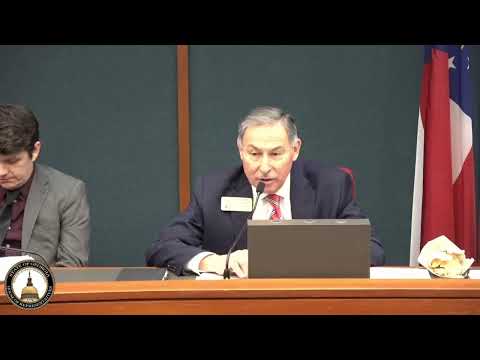
Stephanie Fisher, president and CEO of the Georgia Restaurant Association, told the Small Business Development Committee the association represents about 23,000 restaurants in Georgia that employ roughly 500,000 people and that 70% of restaurants are small independents. "We approximately 23,000 restaurants in the state of Georgia. We employ over, approximately 500, thousand employees," Fisher said in her opening remarks.
Fisher and industry guests described a set of operational challenges faced by restaurants across the state: rising food costs (notably volatile egg prices), increasing insurance premiums and workers'‑comp costs, inconsistent health‑department and building inspections across local jurisdictions, high and sometimes unexpected waste‑ or grease‑trap costs for second‑generation restaurant conversions, and credit‑card processing fees.
Chanielle Decker (Legacy Restaurant Partners) said workers'‑comp costs and insurance uncertainty are among the largest issues for restaurateurs. "It's one of the largest issues that we have is workers' comp," she said, describing the practical burden on small operators who must recruit staff, manage safety and cover unexpected litigation or claims.
Joseph Shaw of H Restaurant Group described the permitting and inspection problems that can arise when different inspectors apply codes inconsistently. Shaw gave one example from a DeKalb County build‑out where a contractor was told to install a 15,000‑gallon grease trap; later review showed the code required a 4,500‑gallon trap, but the unnecessary upgrade had already cost the operator about $150,000.
Committee members asked questions and offered suggestions. Several members urged restaurateurs to work with their state representatives when they encounter inconsistent or overzealous local enforcement; the committee chair said state agencies can, in some circumstances, step in and perform secondary inspections.
The association asked lawmakers to consider legislative or administrative fixes to make permitting, licensing and enforcement more consistent and predictable for small restaurants. The committee chair encouraged the association to meet with members of the panel and to propose concrete legislative language where appropriate. The presentation closed with committee discussion and a reminder to industry members to raise specific problems to their legislators.
Ending: The committee accepted the association's annual presentation and opened the floor to follow‑up questions; no committee action or vote followed the presentation.
AI generated
The text on this page is AI generated. Summaries, highlights, analysis, and video transcripts are all produced from the original source material.
AI can make mistakes, so if you spot one, and we will fix it for everyone.
Note: the source content is unaltered by us. Any content source we link to, be it a video, an audio recording, or a document, is presented exactly as its publisher released it. That publisher is usually a government body, sometimes an individual official or another organisation.