Get Full Government Meeting Transcripts, Videos, & Alerts Forever!
Get email alerts on the Agriculture Practices topic
No spam. Unsubscribe anytime.
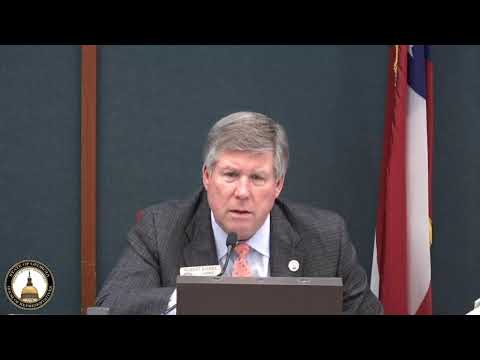
Committee approves HB413 to classify portable sawmills as agricultural practice
Summary
The committee passed HB413 to clarify that portable/mobile sawmills operating on agricultural land are protected as agricultural practices, preventing local governments from treating them as regulated operations.
The House Agriculture & Consumer Affairs Committee voted to advance HB413, a bill that amends Chapter 1, Title 2 of the Official Code of Georgia to clarify that portable sawmills operating on agricultural land are an agricultural practice and therefore not subject to local regulation of crop management or animal husbandry.
Representative David Jenkins, who presented the bill, said the change intends to protect small farmers who supplement income with mobile sawmill operations. Jenkins described the amendment as defining portable sawmills on agricultural land "an agricultural practice" and cited language in the bill that preserves local governments' zoning authority: "subsections a and a dot 1 ... shall not prohibit or impair the power of any local government to adopt or enforce any zoning ordinance or make any zoning decision." He said that the wood processed by these mobile mills typically comes from storm damage or clearing and "is pretty much a waste product" if not used locally.
Jenkins told the committee the bill is aimed at small operations that rely on multiple revenue streams to remain viable; he said the median farm size in Georgia is about 250 acres and that larger timber harvests generally enter commercial supply chains only from much larger, well-managed tracts.
Committee members asked whether waste from commercial mills would be covered; Jenkins said scale matters and large commercial operations have established supply chains while small farmers typically compost or otherwise reuse mill byproducts. The committee moved the bill forward by voice vote; the transcript records the motion and that the bill "passes," but does not include a roll-call tally.
The bill amends the Official Code of Georgia on the definition and protections for agricultural practices; the transcript does not record further amendments or a recorded vote total.