Get Full Government Meeting Transcripts, Videos, & Alerts Forever!
Get email alerts on the Parking Minimums Housing Policy topic
No spam. Unsubscribe anytime.
Shoreline council leans toward studying citywide elimination of parking minimums; staff to flesh out impacts
Summary
Councilmembers signaled support for studying the citywide removal of parking minimums to reduce development costs and increase housing supply. Staff will analyze impacts, including ADA access, loading zones, EV charging, bike parking and enforcement, and return to the council after Planning Commission review.
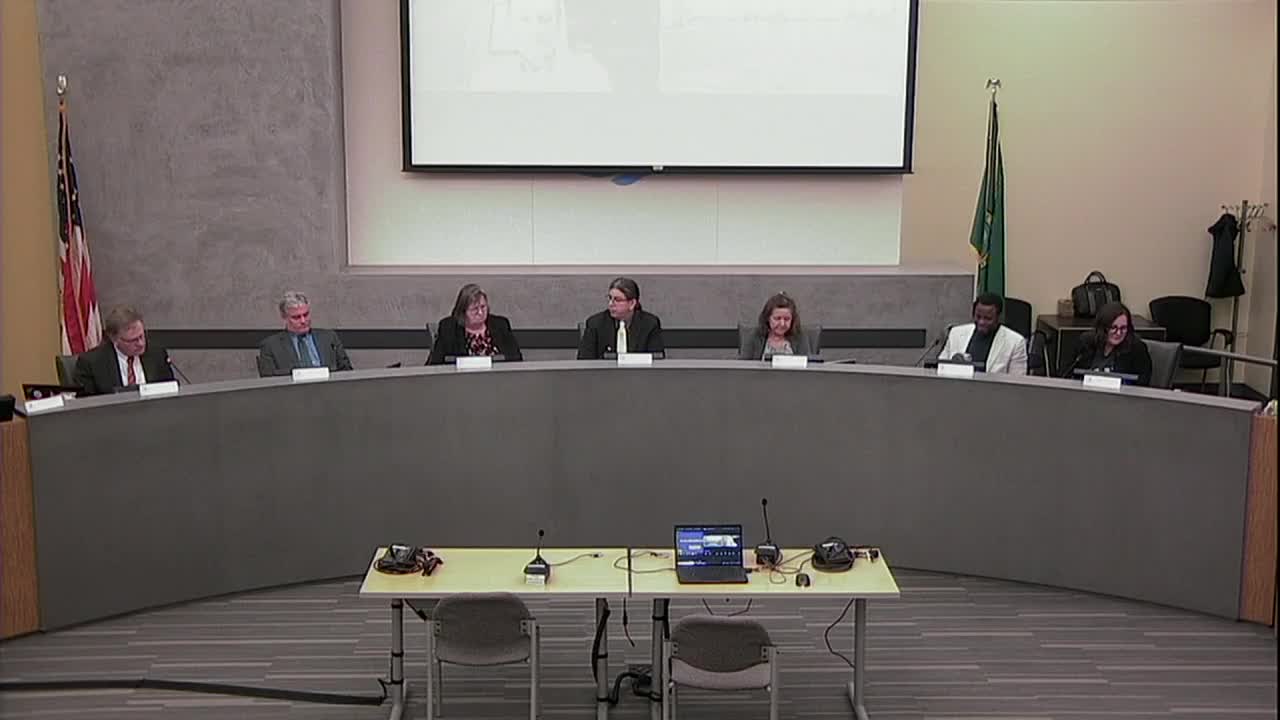
Shoreline City Council on Feb. 24 directed staff to study how the city could implement Land Use Policy LU-3.2 by updating development code parking regulations — including a possible citywide elimination of parking minimums — and to return with recommendations after stakeholder outreach and Planning Commission review.
City planning staff framed the discussion by noting that parking requirements can make housing development infeasible. Staff cited typical construction costs for parking spaces ($10,000 for surface stalls; about $24,000 and up for structured parking, with some local estimates as high as $50,000 per stall in the Puget Sound region) and said existing code already allows some parking reductions near frequent transit.
Councilmembers from across the political spectrum expressed broad support for pursuing a citywide study rather than limiting the review to specific areas. Several members stressed the need for a comprehensive approach that pairs any code changes with improvements in sidewalks, bicycle infrastructure and a clearer plan for rights-of-way management.
Key issues staff and council asked to analyze before drafting final code amendments included: whether some uses (for example, large retail or weekly-event venues) should retain minimums to avoid localized spillover; approaches to ensure ADA access when parking minimums are removed; provisions for loading zones, deliveries and short-term stopping; EV charging infrastructure or readiness; bike parking; enforcement of on-street parking to avoid long-term occupancy of curb space; and incentives or permit tools to coordinate developer-provided parking where needed.
Staff outlined a preliminary schedule: stakeholder outreach (including development-review groups and the Chamber of Commerce), Planning Commission review in early spring and a return to council in late summer with recommended code amendments. No ordinance or final policy was adopted at Monday's meeting; the item was a study-and-direction discussion and council did not take a final vote.
Public comment prior to the discussion included multiple residents who urged the council to remove parking minimums to help reduce housing costs and allow small-scale neighborhood developers to build modest multiunit housing. Speakers warned of potential increased on-street parking demand and asked the city to accelerate enforcement and retain protections such as ADA parking where needed.
Councilmembers said they expect staff to present pros and cons and recommended best practices from other jurisdictions (staff cited case studies from Spokane, Wash., and Beaverton, Ore.) and to recommend whether any exemptions or phased approaches are appropriate. Several councilmembers emphasized that the market and lenders also influence how much parking developers provide and that the city's role should focus on removing regulatory barriers while ensuring safety and access.