Get Full Government Meeting Transcripts, Videos, & Alerts Forever!
Get email alerts on the State Legislation Municipal Courts topic
No spam. Unsubscribe anytime.
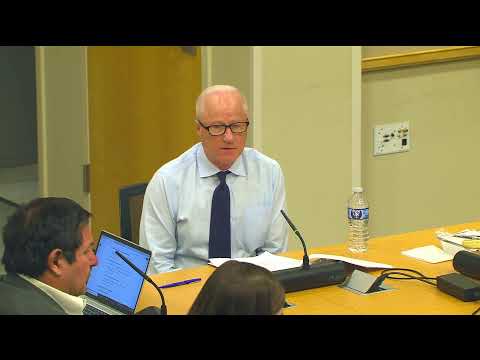
Aurora City Council holds firm opposition on failure-to-appear bill, debates other state measures
Summary
At its Feb. 24 study session, the Aurora City Council voted to maintain an opposed position on Senate Bill 62, debated House Bill 1147’s effect on consent-decree reporting, and discussed taking an 'amend' position on a separate Senate bill under review.
The Aurora City Council on Feb. 24 continued an opposed position on Senate Bill 62, which would bar municipalities from creating a separate criminal offense for failure to appear, and discussed concerns with House Bill 1147, which council members said could affect tracking requirements tied to the city's consent decree.
Council Member Gardner opened debate on a separate Senate bill under consideration, saying, “I don't agree with an amend position. I think we should be in an opposed position,” and arguing the city should increase transparency rather than scale back disclosure timelines. Council members continued discussion and ultimately maintained an "amend" position on that Senate measure after an objection was voiced but the body declined to change course.
Intergovernmental Relations Manager Liz Rogers explained staff and legal concerns about SB 62 and related bills. Rogers said the committee discussed municipal court impacts and that, while a committee amendment addressed some contempt-of-court concerns, city legal review did not consider the amendment sufficient. Rogers also reported data the city had compiled on missed court appearances: "From 2021 to 2024, we had 21,538 cases of failure to appear," a figure she said represented recorded instances where people did not appear for court settings.
Council debate focused on how the bills would change local charging and sentencing practices. Council members and staff described two separate practices: (1) contempt of court and judge-issued warrants for initial failure-to-appear settings, which remain outside the scope of the discussed bill amendments, and (2) a separate municipal criminal charge for some failure-to-appear instances (filed when a defendant repeatedly fails to appear for jury trial settings), which SB 62 would prohibit. City staff said the city currently files that separate municipal charge in a limited number of cases — roughly "three or four a month" since the procedure was established — and that charging practices vary depending on whether the underlying offenses can be filed in municipal court or must go to county court.
Council members also discussed House Bill 1147 in the context of the city's federal consent decree and data-tracking obligations. Some members said the bill raised concerns about the city's ability to track offenses used in consent-decree reporting, referencing offenses such as trespass, failure to obey and disorderly conduct. City staff and the consent-decree monitor (named in the discussion) said they were tracking the relevant offenses and that the monitor had been informed of the legislation.
After extended discussion, councilors directed staff to maintain an opposed position on SB 62 and to continue opposition to the later-discussed House Bill 1147. Several council members emphasized they would continue to press for local discretion on sentencing and filing decisions; one councilor said she intended to testify in support of the House bill at the legislature even though the council's official position differed.
No formal roll-call vote on a legislative position was recorded in the transcript excerpt; the session record shows the council’s positions were continued or maintained by consensus after discussion.
Looking ahead, staff said the city proposed alternative amendments to the bill sponsor and had submitted language to the sponsor of at least one measure; the sponsor had not accepted the city's proposed amendment at the time of the meeting.
Ending: Councilors asked staff to continue coordination with the city attorney's office, the consent-decree monitor and Colorado Municipal League partners as the bills advance in the legislature, and to provide updates to the council when sponsors respond to proposed amendments.