Get Full Government Meeting Transcripts, Videos, & Alerts Forever!
Get email alerts on the Facilities Safety topic
No spam. Unsubscribe anytime.
Superintendent: state fire inspections underway; district volunteering lead-in-water testing
Summary
Superintendent Dr. Steinhoff told the board the South Dakota Department of Public Safety is conducting annual fire inspections and that Dakota Environmental Professionals will test school drinking fixtures for lead, with sampling protocols and an EPA action level of 10 parts per billion guiding next steps.
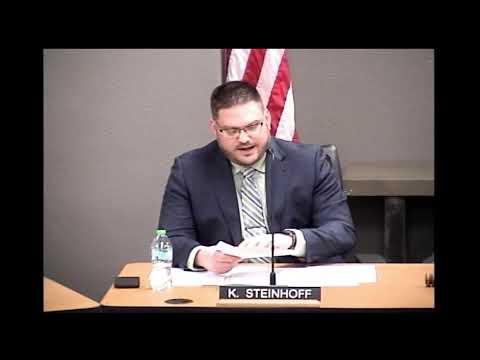
Dr. Steinhoff, the district superintendent, reported at the Feb. 24 special meeting that annual fire inspections by the South Dakota Department of Public Safety’s state fire marshal began that day and will continue through Thursday, Feb. 27. The inspections will cover fire‑alarm systems, HVAC, extinguishers, sprinklers, kitchen hood systems, building occupancy and a review of fire-drill records; inspectors will check individual rooms and note any issues the district must address.
Steinhoff also provided details about the district’s volunteer participation in statewide lead-in-water testing. Dakota Environmental Professionals will collect samples from fixtures that people might use for drinking, hand washing, dishwashing or cooking. Protocols described in the meeting call for a first sample after a faucet has not been used for at least eight hours and a second after the water has run for 30 seconds; a state‑approved laboratory will analyze samples for lead.
Steinhoff said the Environmental Protection Agency’s action level for lead is 10 parts per billion, and that results above that level would prompt steps such as replacing faucets, water fountains or pipe sections or restricting a fixture to hand‑washing/cleaning only. He noted the district volunteered to test early and said that state funding may be available to help replace fixtures if lead is found.
Steinhoff also explained that people concerned about lead exposure can run water for roughly 30 seconds before using it or choose bottled/filtered water; he confirmed the testing work would occur outside normal school hours so testing would not be disrupted. He provided a district contact for questions (district landline 353‑6990) and said the district will share results and next steps with staff, students, parents and the community when laboratory results are available.
These activities are part of the district’s broader facilities and safety initiative and will proceed alongside other maintenance work and the ongoing annual audits and inspections.