Get Full Government Meeting Transcripts, Videos, & Alerts Forever!
Get email alerts on the Open Meetings Ethics topic
No spam. Unsubscribe anytime.
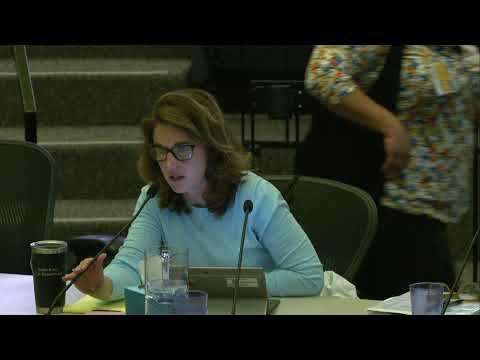
City attorney briefs Santa Rosa Housing Authority on Brown Act and conflict‑of‑interest rules
Summary
Chief Assistant City Attorney Sabrina Wolfson reviewed the Brown Act, serial‑meeting prohibitions, public‑comment rules and conflict‑of‑interest standards (Political Reform Act, Gov. Code §1090 and common‑law bias); commissioners asked practical questions about permissible contacts and staff distribution of materials.
Sabrina Wolfson, Chief Assistant City Attorney and serving as general counsel for the Authority, gave a study session overview of California’s open‑meeting and conflict laws, explaining the Brown Act, serial‑meeting prohibitions and the financial and contractual conflict rules that apply to commissioners.
Wolfson said the Brown Act requires openness for meetings of a legislative body and defines a meeting broadly to mean a congregation of a majority of commissioners to hear, discuss, deliberate or take action on matters within the Authority’s subject matter jurisdiction. She emphasized two frequent pitfalls: serial meetings (daisy‑chain or hub‑and‑spoke communications among a majority of commissioners) and sharing of other commissioners’ views through staff, which can create an inadvertent serial meeting.
Wolfson walked through exceptions commonly used in practice: individual communications with staff (permissible so long as staff do not transmit other commissioners’ views), attendance at public social or ceremonial events (so long as no specific Authority business is discussed), and allowable uses of social media (Commissioners may post informational content but should not engage in threaded back‑and‑forth or use reactions that might be construed as deliberation). She recommended practical measures—brief public explanations to applicants about the Brown Act, routing substantive materials to staff for distribution to the full Authority, and avoiding “reply all” on emails—to reduce the risk of inadvertent violations.
On conflicts of interest, Wolfson summarized three legal frameworks: the Political Reform Act (which disqualifies participation in decisions that will have a material financial effect on a commissioner), Government Code Section 1090 (which prohibits participation in contracts in which a commissioner has a financial interest, with narrower exceptions), and common‑law bias (a broader, fact‑specific doctrine that can cover personal relationships or strong personal interest). She explained the common real‑property test under the Political Reform Act: ownership within 500 feet creates a rebuttable presumption of a material effect; beyond 1,000 feet a presumption of no material effect; and the 501–1,000 foot band requires fact‑specific inquiry about market or development impacts.
Commissioners asked practical questions. Vice Chair Downey asked whether an individual phone call to clarify an acronym would risk Brown Act exposure; Wolfson said individual contact is permitted so long as it does not form part of a serial communication. Commissioners were advised to direct technical or background research questions to staff so material can be disseminated evenly. Wolfson encouraged early consultation with the City Attorney’s Office or the Fair Political Practices Commission for complicated, fact‑specific gift, income or property questions.
Public commenter Dwayne DeWitt urged the Authority to restore a public binder of meeting materials at the dais and to use Brown Act allowances to brief the public during meetings; he expressed skepticism about past practice and urged better transparency. The Chair thanked DeWitt for his comments and Wolfson’s presentation.
Ending: Wolfson closed by urging commissioners to seek advice early, to use staff as a conduit for distributing materials and to avoid “reply all” email chains that could trigger serial‑meeting concerns.