Get Full Government Meeting Transcripts, Videos, & Alerts Forever!
Get email alerts on the Housing Finance topic
No spam. Unsubscribe anytime.
Santa Rosa Housing Authority hears midyear financial update; staff outlines federal funding risks and local reserve options
Summary
Staff reported midyear fiscal 2024–25 figures, including higher rental assistance spending, corrected loan-balance figures and a 15% administrative reserve of about $505,000; commissioners pressed staff on risks from possible federal funding interruptions and local bridging options.
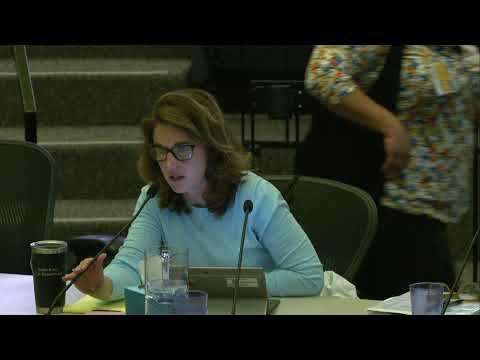
Kate Goldfein, administrative services officer for the Housing and Community Services Department, presented the Housing Authority’s quarter‑2 financial update for the fiscal year 2024–25 (through Dec. 31, 2024), saying, “We are trending well in all areas.”
Goldfein told commissioners that, while dollar expenditures are higher than last year at the same point, the Authority’s percentage of budget spent in most categories remains consistent with prior years. She said administration expenses are being used at roughly the same rate as last year and that subrecipient spending has caught up after low first‑quarter activity.
The presentation corrected an error in the meeting memo: the remaining loan budget was reported as $1,800,000 but the correct remaining budget is $3,200,000 after a late December journal carryover adjustment. Goldfein said those funds are largely already committed to developers and that staff expects most to show as “committed” in the quarter‑3 update as loan documents are finalized.
Goldfein reported nearly $18 million expended in housing assistance payments year‑to‑date—about $2.9 million per month across programs, up from an average of roughly $2.6 million per month at the same point last year. She said the increase tracks higher rental assistance payments this fiscal year. She also reported local revenue collection performing well: housing impact fees were nearly at the budgeted $1.3 million (about $1,275,000 received), compliance monitoring fees were $170,000 versus $128,000 at midyear last year, and loan repayments had increased to $733,000 (versus $631,000 at midyear last year).
On reimbursements, Goldfein and other staff said the Authority has drawn federal grant reimbursements from HUD for CDBG, HOME and HOPWA expenditures and that those federal grants and executed agreements have thus far been reimbursed. Staff noted one exception: a disaster recovery CDBG line (CDBG‑DR) that flows through the state (California HCD) rather than directly from HUD.
Commissioners asked how exposed the Authority would be if federal payments were paused or contracts not honored. Goldfein and Megan (Executive Director) said staff is monitoring developments in Washington, D.C., and drawing down reimbursements quickly when possible. Megan noted the city retains federal lobbyists who are tracking the situation and will share new information with the Authority.
Vice Chair Downey and other commissioners asked what local options exist as a bridge if federal reimbursements were delayed or stopped. Staff recommended two primary tools: 1) appropriating local receipts that exceed conservative budget assumptions (for example, using loan repayments or higher‑than‑expected housing impact fees) as a short‑term bridge, and 2) relying on the housing trust reserve. Staff said the housing trust’s policy requires a reserve equal to 15% of administrative expenditures and that the trust currently holds approximately $505,000 for that administrative reserve. Staff clarified that the Housing Choice Voucher (HCV) program is federally administered and HUD does not permit a local reserve for HCV funds.
Commissioners also raised technical budget questions that staff answered: some federal housing assistance (HCV and Emergency Housing Vouchers) is funded on a calendar basis and provided monthly by HUD rather than reimbursed; HOME tenant‑based rental assistance is included in a HUD grant agreement; and the Authority’s allocation of HCV vouchers is capped at 1,925 and coupled to HUD budget authority, so if per‑voucher costs exceed budget authority the Authority must stop issuing new vouchers until HUD or other funding addresses the shortfall.
Public comment came from Dwayne DeWitt of Roseland, who thanked staff for the presentation, asked for the dollar amount of the 15% reserve, and suggested the Authority explore local philanthropic or foundation support to build a contingency fund. DeWitt also asked about HUD‑VASH vouchers in the county and whether project‑based vouchers could be expanded to assist veterans; staff responded that precise VASH counts are handled with county partners and that project‑based vouchers had been used on past projects.
Staff left commissioners with a clear next step: continue monitoring federal actions, proactively draw down reimbursements, and consider requesting appropriation of any local funds that exceed conservative budgets to create temporary bridging capacity if needed. No formal Authority policy change or budget appropriation was adopted at the meeting.
Ending: Commissioners thanked staff for the detailed briefing and asked for ongoing updates as federal funding and continuing resolutions evolve.