Get Full Government Meeting Transcripts, Videos, & Alerts Forever!
Get email alerts on the School Budget Finance topic
No spam. Unsubscribe anytime.
District presents 2025–26 draft budget with 2.22% tax-levy increase; officials warn of state and federal uncertainties
Summary
Assistant Superintendent/Business Official Mr. Lang presented a preliminary 2025–26 budget update showing a draft that balances revenues and expenditures and incorporates a 2.22% tax-levy increase equivalent to roughly $451,534.
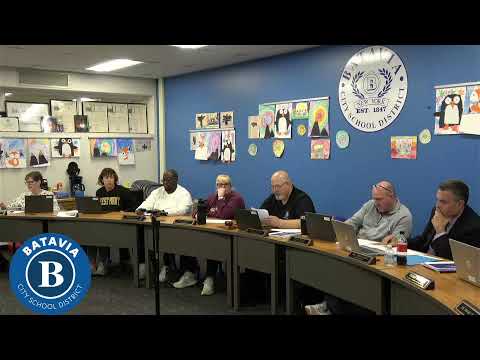
Assistant Superintendent/Business Official Mr. Lang presented a preliminary revenue-and-appropriations update for the 2025–26 budget to the Batavia City School District Board of Education, saying the draft currently balances estimated revenues and expenditures and uses a tax-levy increase within the state tax-cap calculation.
Lang said "the district's firm tax cap, maximum allowable tax levy increase as a percentage is 2.22%" and that the district’s draft budget incorporates a rounded 2.22% tax-levy increase, equivalent to roughly $451,534, which would bring the proposed tax levy to $20,790,870 in the draft.
Lang described the revenue assumptions in the draft: the presentation uses the governor’s proposed Foundation Aid increase of 8.19 percent (a best-case scenario), but Lang warned that if the enacted state budget does not adopt that change, Foundation Aid could be about $515,000 lower than shown in the draft. He also said the district lowered its estimate of the state share for Medicaid payments compared with prior years and adjusted other revenue lines.
On local revenues, Lang highlighted a projected $159,000 increase in utility tax receipts and a roughly $600,000 increase in interest earnings resulting from changes to how the district invests reserves and a stronger rate of return. He also noted increased expected refunds from BOCES (about $90,000) and sale-of-scrap revenue tied to planned equipment replacement.
The draft reduces the amount of appropriated fund balance to about 4 percent of the budget. Lang said the district would appropriate roughly $2.5 million from fund balance in the draft rather than relying on larger draws from reserves used in prior years.
On expenditures, Lang identified major pressures: a projected 12 percent increase in health-insurance costs and an overall medical-insurance projection that compounded to a roughly 9 percent change in that line item. Salaries and benefits remain the largest part of the budget: Lang reported approximately $28,900,000 in salaries and about $13,700,000 in benefits, which together account for roughly 67.4 percent of the general fund budget. He listed current staffing counts referenced in the draft: 18.5 administrators, 268 teachers, 102 teacher aides, 38 custodial staff, 27 clerical staff and a total of 453.5 employees (10‑ and 12‑month staff; excludes cafeteria staff).
Lang said the budget includes additional appropriations to account for growing special-education outplacements and noted that the district expects to put its special-education outplacement transportation contract out to bid, which may increase costs.
Lang and the superintendent described uncertainty over federal grant funding (Title grants, IDEA and similar funds) and said the district has begun to include some federally funded positions in the general fund as a hedge should those grant streams be reduced. "If we pass the budget day that's similar to the one I'm presenting you today... you'll have a lot of those positions built into the general fund," Lang said, noting the district intends to phase grant-funded positions into the general fund over time where feasible.
During Q&A board members asked where the district would cover any shortfall if investment interest did not materialize; Lang said the primary lever would be increased use of fund balance/reserves, which the administration has been trying to reduce as a long-term strategy. He reiterated that the draft is preliminary, that some BOCES figures remain pending, and that the numbers could change before the May 12 budget hearing and the May 20 budget vote.
No formal budget adoption vote occurred at the meeting; the presentation was a preliminary briefing as part of the district’s budget calendar.