Get Full Government Meeting Transcripts, Videos, & Alerts Forever!
Get email alerts on the Innkeeper Ejectment topic
No spam. Unsubscribe anytime.
Committee hears extended‑stay 'innkeeper' bill after hotel industry testifies to repeated nonpayment and safety concerns; bill tabled
Summary
Lawmakers heard extended testimony on House Bill 183, a proposal to clarify rights and remedies for innkeepers when guests overstay or refuse to pay.
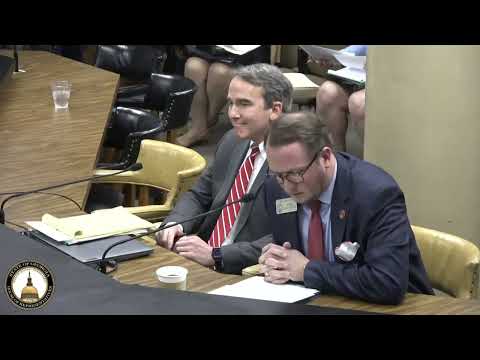
Lawmakers heard extended testimony on House Bill 183, a proposal to clarify rights and remedies for innkeepers when guests overstay or refuse to pay. Sponsors and hotel‑industry witnesses said the bill would provide a clear ejectment procedure, a short notice period and a lien/storage process for guest property; opponents and questioners pressed for due‑process safeguards and circumscription to avoid unintended consequences.
The sponsor, Representative Seebaugh (presenting the measure through an author identified as Bruce), told the committee the legislation “clarifies and strengthens the rights of innkeepers in managing guest occupancy” and said it is intended to prevent a small subset of long‑term nonpaying guests from exploiting landlord‑tenant law to frustrate eviction. The sponsor summarized the bill’s core points: clarifying guest versus tenant status; classifying overstaying extended‑stay guests as trespassers (in specified circumstances); restoring an immediate removal remedy; and providing a process for handling occupants’ property.
Industry testimony and examples: Sam Mollman, outside general counsel for SNA Suites LLC, told lawmakers he is litigating a writ action because a sheriff refused to accept ejectment affidavits under OCGA 44‑11‑30. Mollman said some sheriffs treat nonpaying guests as tenants or claim they are not “intruders,” leaving hoteliers without the ejectment remedy. He told the committee that the bill’s text aims to resolve that uncertainty by declaring that nonpaying guests remain guests for purposes of the ejectment remedy, and by creating a discrete ejectment pathway for innkeepers.
Trade groups and local evidence: Chris Hardman of the Georgia Hotel and Lodging Association and Daniel Niu of the Asian American Hotel Owners Association said the problem is widespread and growing. Hardman told the committee that industry members “found out through a survey… that out of the 80 hotels in that area, 200 rooms were being occupied by individuals who had refused to pay,” and described instances where nonpaying guests remained months at a time. Lisa Anders, chief operating officer of Explore Gwinnett, said Gwinnett County has 105 hotels and “this is truly an ongoing issue… it happens every single solitary week,” and gave an example of one hotel that had accumulated $67,000 in losses connected to a single long‑term nonpayment case.
Legal framework and debate: Witnesses and members discussed several statutory authorities. SNA Suites’ counsel and others cited OCGA 44‑11‑30 (the ejectment/"intruder" statute) and said sheriffs’ reluctance to accept ejectment affidavits leaves hoteliers with only dispossessory proceedings, which require a landlord‑tenant relationship. Opponents and questioning members asked whether the existing Efficiency Lodge decision (a recent case discussed in testimony) or the current statutes already provide guidance; proponents said case law and statutory language have left critical gaps in practice.
Due process, notice and policing: Committee members pressed industry witnesses about notice periods, the opportunity to file a counter‑affidavit, and the risk of inconsistent local enforcement. Witnesses recommended a brief statutory notice window (the bill provides a five‑day removal period in the draft presented) and a subsequent storage/lien regime for occupant property; they also emphasized a preference for peace‑officer assistance rather than hotel staff physically removing occupants.
Committee action: After the testimony and Q&A, a member moved to table the bill. The motion was seconded and carried by voice vote; the bill was tabled from the agenda.
Ending: Supporters told the committee the bill would protect small business hoteliers, their employees and the traveling public by clarifying an ejectment option and standardizing law enforcement response. Critics and questioners sought clearer safeguards for notice, the counter‑affidavit process, and limits to prevent misuse. The committee voted to table the measure pending further work.