Get Full Government Meeting Transcripts, Videos, & Alerts Forever!
Get email alerts on the Court Recording topic
No spam. Unsubscribe anytime.
Georgia panel hears bill to allow optional digital recording in courts; reporters urge protections
Summary
House lawmakers heard testimony on House Bill 179, a measure from the Judicial Council of Georgia that would permit trial judges to use digital recording systems as an optional method to take down courtroom proceedings, with felony jury trials exempted.
House lawmakers heard testimony on House Bill 179, a measure from the Judicial Council of Georgia that would permit trial judges to use digital recording systems as an optional method to take down courtroom proceedings, with felony jury trials exempted.
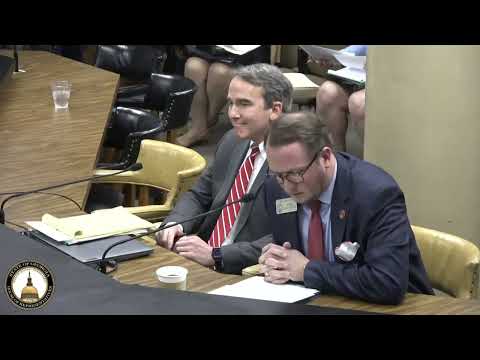
The bill’s sponsor, Judge Ben Land, described the measure as a narrowly scoped change that would let judges “have proceedings digitally recorded via digital recording system, with the exception of certain felony proceedings.” He told the committee the bill is intended to be optional and to address locations where courts cannot secure court reporters.
Why it matters: Proponents said the bill would help courts continue proceedings when reporters are unavailable and allow court reporters to focus on matters that most need verbatim transcripts. Opponents — principally freelance and certified court reporters — said the draft does not yet guarantee reporters a formal role in rulemaking, does not set minimum technical standards statewide, and would not address compensation or staffing pressures that contribute to shortages.
Supporters’ case: Judge Land told the committee that state and local judges have struggled to secure reporters, particularly in state courts, and that the bill would authorize the Supreme Court and the uniform-rules processes to adopt technical standards and training requirements. "By creating this framework, House Bill 179 as filed will not replace the court reporter's role in Georgia courts, but merely supplement it with digital recordings," he said. Land and other proponents said the recordings would not become the official record unless transcribed and certified by a court reporter.
Court reporters’ concerns: Jennifer Pope, legislative chair for the Georgia Court Reporters Association and a certified stenographic reporter, testified that the bill “will fundamentally and forever change the process of justice” if implemented without stronger protections. Pope urged that court reporters — and the Board of Court Reporting — be guaranteed seats in the rulemaking process, and pressed for minimum equipment standards (she cited "a minimum of 4 channels, 5 channels" and "high fidelity" capability) and protections for transcription quality. Pope said long-standing pay-rate issues also drive the shortage, noting that official rates have not risen in many years.
Industry viewpoints and proposed changes: Edward Lindsey, an attorney representing multiple court-reporting services, proposed statutory language to recognize digital recording as an additional method for creating records and to allow digital systems to be considered in depositions; Judge Land opposed including depositions in this bill and said doing so would conflict with the measure’s stated purpose.
Committee disposition: After extended questioning and offers to work on amendments, the committee agreed to move the bill off the floor for further work. Committee members said they would reset the bill for another hearing promptly so interested parties — including court reporters, the Board of Court Reporting and the Judicial Council — can refine technical standards and the rulemaking process. The sponsor asked the committee to pass the bill as filed so rulemaking can begin; others urged additional drafting time.
What the bill would and would not do: The draft would make digital recording an option, not a mandate; it would leave final rule adoption to uniform-rules committees and the Supreme Court; and it would not make a digital recording the official record unless transcribed and certified by a court reporter. The bill explicitly exempts felony jury trials and does not cover depositions in its current form.
Next steps: The committee held the matter for further work and said the bill will be reset this week for additional consideration and potential committee substitution.
Ending: Lawmakers, court reporters and vendor representatives left the hearing with clear differences to resolve: proponents pressed urgency to address immediate reporter shortages, while court reporters sought statutory guarantees for involvement in rulemaking, minimum technical standards, and remedies for long‑standing pay issues.