Get Full Government Meeting Transcripts, Videos, & Alerts Forever!
Get email alerts on the School Closure Transition topic
No spam. Unsubscribe anytime.
Kennedy‑Longfellow closure: district says students will be reassigned and resources redeployed to support transitions
Summary
School leaders said most Kennedy‑Longfellow students are enrolling at King Open and King School; district plans to redeploy special education and other staff, and officials will provide more detailed staffing allocations in March as impact bargaining continues.
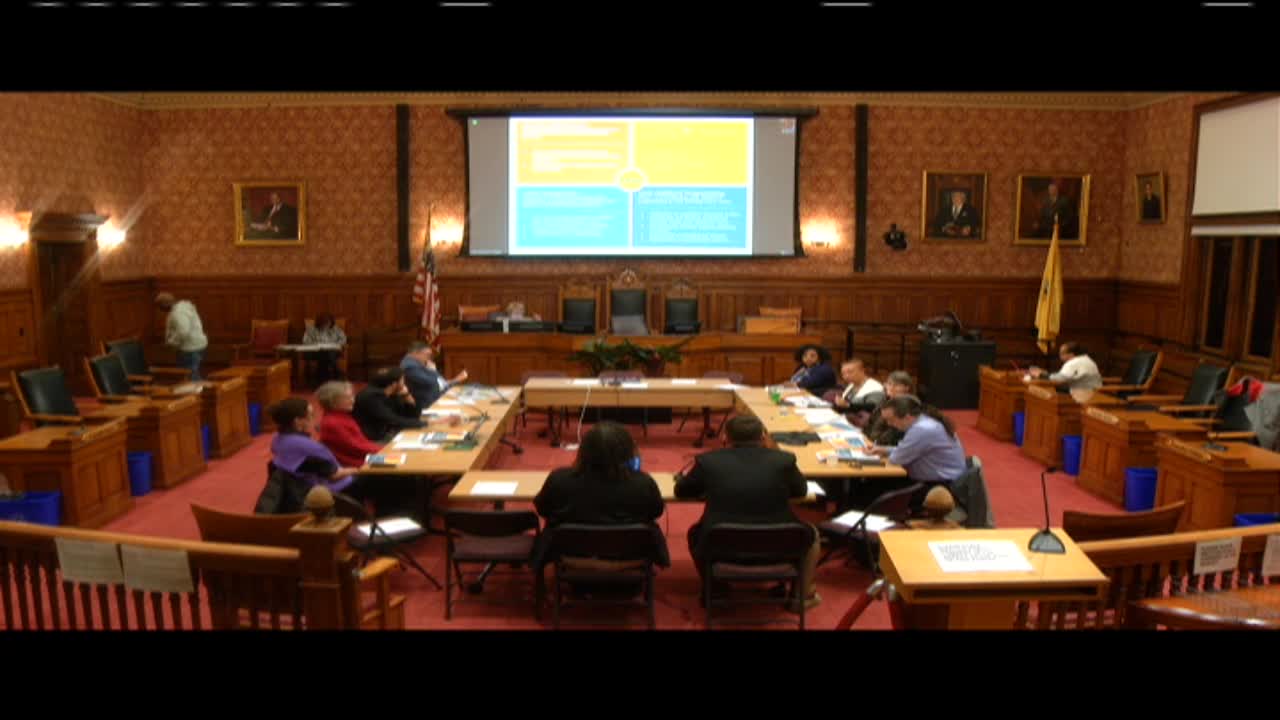
The Cambridge Public Schools administration told a Feb. 24 joint roundtable that the resources and staff associated with the recently closed Kennedy‑Longfellow School will be redeployed to support student transitions, with most students enrolling at King Open and the King School.
Interim Superintendent Dave Murphy said the School Committee directed the district to prioritize transitioning students when it voted on the KLO recommendation in December. The administration reported that many KLO families chose continuity cohorts at King Open (rising first and second graders) or King (rising third through fifth graders), and a significant share of students will be integrated at those two schools.
Murphy said a smaller group — “about 20 to 30” students, according to his remarks — were placed across a number of other elementary schools and that those students will be monitored and supported individually during the transition. He said roughly 20–25 students were spread in small numbers across roughly eight other elementary schools.
On special education, Murphy and CFO Ivy Washington emphasized that resources associated with the Office of Student Services will be retained and “follow the students.” Murphy said the district is well‑resourced compared with most districts and that student supports for those with Individualized Education Programs (IEPs) will be strategically deployed across receiving schools.
Washington and Murphy cautioned that final staffing assignments were not yet complete because the district is engaged in impact bargaining with the Cambridge Education Association (CEA) and is still determining placements. They said the special education department has begun planning based on district lotteries and enrollment information; however, some placements (for example, programs whose testing occurs in May) remain subject to timing constraints.
Council and School Committee members asked for clarity about which staff would be retained, how family engagement would be resourced during transitions, and whether contingency funds would be available for unanticipated needs during the move. The administration said it would provide more specific staffing and budget details at the March 12 formal budget presentation.
Murphy described the KLO closure as part of a broader facilities and assignment strategy intended to create more “durable” school communities and said the administration views the redeployment of staff and resources as an opportunity to better align supports where needed.
The administration cautioned that while resources will follow students, some short‑term disruption is inevitable when a school changes assignment structure or closes, and the district is planning targeted supports to reduce that disruption.