Get Full Government Meeting Transcripts, Videos, & Alerts Forever!
Get email alerts on the Finance Procurement topic
No spam. Unsubscribe anytime.
Cartwright board confronts $2.1 million in IRS penalties, orders records and procedural review
Summary
Board members and community speakers pressed district staff for details after Business Manager Derek Etheridge briefed the board on roughly $2.1 million in penalties to the U.S. Treasury. The board discussed procurement and voucher processes and requested records and possible executive-session follow-up on personnel and legal expenditures.
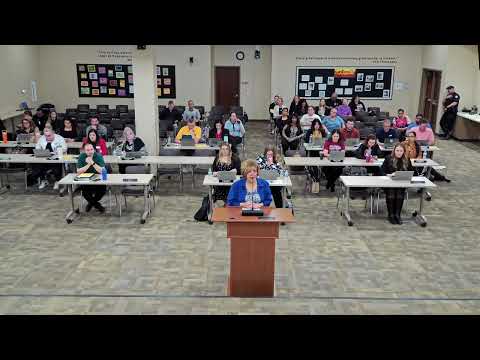
The Cartwright School District governing board discussed an approximately $2.1 million penalty the district reported to the U.S. Treasury and the Internal Revenue Service, with board members pressing staff for documentation and an explanation of how the expenditure was processed.
Board President Lydia Hernandez and Acting Superintendent Watson told the board that district staff are investigating “how that expenditure was made” and working to provide a transparent record. Derek Etheridge, the district business manager, briefed the board in an earlier presentation on the penalties and explained that the charges were submitted as vouchers and paid; Etheridge told the board the amounts at issue were $1.6 million related to a 2017 issue and $500,000 for a separate matter, for a total of about $2,100,000.
The discussion centered on procedural safeguards and whether the board had been properly informed before the payment. Etheridge described the district’s purchasing workflow: a purchase requisition becomes a purchase order, vendors invoice, then accounts payable issues checks and prepares vouchers that are presented to the governing board for approval. He said the board typically authorizes payment of vouchers between meetings and approves them after the fact.
“Those vouchers are what we get that we sign,” Etheridge said (excerpt). He also said expenditures generally brought to the board for approval are over $100,000 and that some expenditures are classified as exempt procurement, such as utilities or private school placements. Acting Superintendent Watson and Hernandez said staff will assemble records showing how the IRS payment was processed and which approvals were obtained.
Board Member Denise Garcia repeatedly said she had not received requested information about a separate personnel investigation and asked how long it took staff to learn about the penalties; Garcia said she would abstain from some roll-call votes in the meeting to register concerns about transparency. Hernandez replied that staff had been working to prepare more-complete meeting minutes and records and that the district intends to provide documents as they become available.
Public commenters asked questions tied to the same financial concerns. Cecilia Moreno asked how the district could afford both a new appointment and outstanding, unaccounted-for funds; she also asked why a prior superintendent’s contract had been terminated and whether a buyout had occurred. Hernandez said, for the legal record, that there had been no buyout and clarified that the interim superintendent (named in board materials) was on administrative leave while Mr. Watson serves as acting superintendent.
Several board members asked that more information about the payments, procurement classification, and timelines be placed on a future agenda; Denise Garcia requested an executive session to receive a detailed update on an ongoing personnel investigation, and she also asked for an itemized list of attorney expenditures. Board members said they will work with the district’s attorney to determine what financial details can be released publicly and what must be discussed in executive session under legal constraints.
The board said it will continue to collect records and bring additional details to a future meeting, including a planned presentation of the single-audit report by the auditor general and a financial assessment and record of bond-override expenditures that staff are preparing.
The board did not make any formal policy changes on the penalties during the meeting; Hernandez said staff will provide additional documentation to the board as part of a continuing procedural review.