Get Full Government Meeting Transcripts, Videos, & Alerts Forever!
Get email alerts on the Constitutional Amendment Article V topic
No spam. Unsubscribe anytime.
Committee advances resolution calling for Article V convention; supporters and opponents clash over 'runaway convention' risks
Summary
The House Education Committee advanced Senate Joint Resolution 1 by a 6-3 vote, asking Congress to call an Article V convention to consider amendments on fiscal restraints, limits on federal power and term limits.
The Wyoming House Education Committee voted 6-3 to pass Senate Joint Resolution 1, a measure instructing Congress to call a convention under Article V of the U.S. Constitution. Sponsor Senator Barlow described the resolution as a mechanism to allow state legislatures to initiate consideration of constitutional amendments on fiscal restraints, limits on federal jurisdiction and terms of federal office.
"There are only two bodies that have the ability to amend the Constitution to initiate that process. One of them is Congress... and one of them is the legislatures of the several states," Barlow told the committee, describing his long involvement with Article V advocacy and saying the proposal contains safeguards such as instructions to delegates and recall language for delegates who exceed their charge.
Supporters at the hearing said the Article V process is a lawful, constitutional way for states to propose structural reforms. Julie Baker, state director for Convention of States Action, told the committee Wyoming has substantial grassroots backing for the measure and urged lawmakers to "join Florida and Texas and Wisconsin, Utah, Nebraska, and 14 other states to bring enduring structural reform." Other supporters who testified included representatives of Wyoming Farm Bureau Federation and grassroots speakers who said they see the convention as a peaceful, constitutional mechanism to address federal overreach.
Opponents said the resolution would risk a “runaway convention” with no binding rules to limit topics and a potential to threaten constitutional protections. Jeanette Ward, speaking for herself, said, "Please vote no on convention of the states. This is a bad idea because it threatens the very foundation of our republic." David Iverson warned that the Constitution has no written rules to constrain a convention and called the idea "profoundly dangerous." The League of Women Voters of Wyoming also opposed the resolution, citing lack of guarantees on representation, rules, and limits on topics.
Sponsor safeguards cited in the resolution include language intended to exclude the Bill of Rights from consideration by Wyoming delegates and provisions for state recall of delegates who exceed their instructions, Senator Barlow said. The resolution also specifies three subject matters it would authorize delegates to consider: imposing fiscal restraints on the federal government, limiting the power and jurisdiction of the federal government, and limiting terms of federal officials.
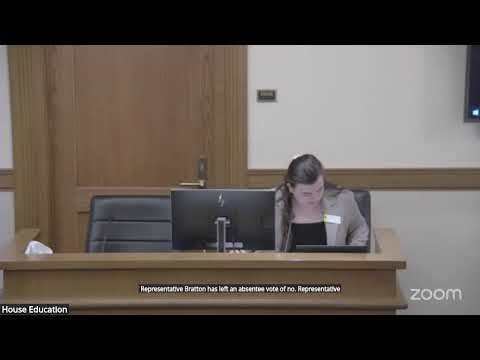
Committee action: Representative Kelly moved the resolution; Representative Singh seconded. On roll call the committee recorded six ayes and three noes. The clerk recorded absentee and presence votes including Representative Kelly (Aye), Representative Singh (Aye), Representative Williams (Aye), Representative Struck (No), with other members recorded as absentee yes/no per committee roll call. The clerk announced "do pass" on Senate Joint Resolution 1.
What supporters said: Advocates argued a convention is the constitutional remedy the framers provided and emphasized ratification requires three-fourths of states, which they said acts as a strong check on extreme outcomes. A senator testifying remotely said the high ratification threshold makes a runaway-convention scenario unlikely and argued federal courts have effectively rewritten constitutional text through decisions.
What opponents said: Witnesses warned there are no built-in procedural rules in Article V, that delegates could set their own rules, and that even if a convention were limited in call language, the practical safeguards may be insufficient. Speakers also expressed concern about special-interest influence, secret rulemaking, and the possibility that long-standing rights could be put at risk.
Next steps: The committee’s passage sends the resolution to the House for further consideration. If adopted by the state legislature and 33 other states in similar form, the resolution’s proponents say it would generate the 34-state threshold necessary to force a congressional call, after which proposed amendments would still require ratification by three-fourths of the states.
Committee debate and public testimony reflected deep disagreement over scope and risk: supporters emphasized state authority and the high bar for ratification; opponents emphasized unknowns about convention rules and the potential for unintended consequences.