Get Full Government Meeting Transcripts, Videos, & Alerts Forever!
Get email alerts on the Education Open Enrollment topic
No spam. Unsubscribe anytime.
House Education Committee advances bill allowing intra-district open enrollment; sets July 1, 2026 effective date
Summary
The House Education Committee voted 8-1 to pass Senate File 109, a bill that would require school boards to adopt intra-district open-enrollment policies allowing pupils to attend any public school within their resident school district, with prioritization rules and capacity exceptions. The measure takes effect July 1, 2026.
The Wyoming House Education Committee voted 8-1 to pass Senate File 109, a bill that would require each public school board of trustees to adopt policies allowing pupils to enroll in any public school within the pupil’s resident school district. The committee advanced the bill after testimony from the bill sponsor, school administrators and education advocates.
Sponsor Senator Brennan told the committee the bill is meant to expand parents’ choices within the public-school system. “This is open enrollment within school districts in Wyoming,” he said, adding the measure was brought because “choice is a big thing and parents want choice for their students.”
The bill would direct school boards to adopt annual policies and procedures for intra-district transfers and require districts to publish the number of vacancies by grade level. It lists three priority categories for enrollment decisions: attendance-area pupils, pupils participating in a school-based education program, and pupils who have a sibling already enrolled at the requested school. Parents or guardians who are denied enrollment decisions by a district may seek review "in accordance with the Wyoming Administrative Procedure Act," the sponsor said.
Senate File 109 includes several explicit limits. A district may decline enrollment when a school lacks sufficient capacity at the appropriate grade level, or when the pupil has been suspended or expelled. The measure also states that districts are not required to establish any particular programs that are not currently offered, and districts are not required to provide transportation for pupils who would not otherwise receive transportation under existing policy.
Campbell County associate superintendent Dave Bartlett and Boyd Brown, executive director of the Wyoming Association of School Administrators, testified about operational concerns. Bartlett warned that capacity and staffing calculations are complex in secondary schools and noted that midyear, transitory enrollment can disrupt staffing: "Anytime a student was forced to relocate during the middle of the year, they lost upwards to a year of academic growth," he said, describing research his district had done on midyear moves.
Wanda Maloney, speaking for the Superintendent of Public Instruction, said the superintendent supports the bill and described her own experience in a district with an open-enrollment system.
The bill sets an effective date of July 1, 2026, to give districts time to adopt policies. Senator Brennan told the committee that timing was intentional: “This is a big policy thing, and we want to give school districts time to get these policies in place.”
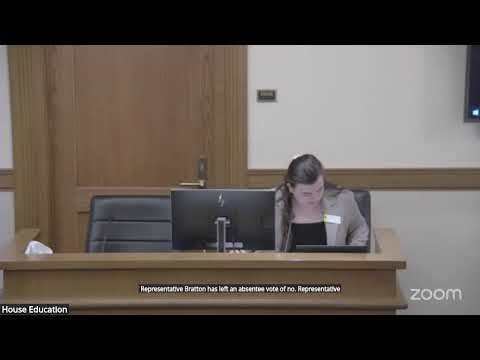
Committee action: Representative Singh moved the bill for passage; the motion was seconded by Representative Stroff. On roll call the committee recorded eight ayes and one no: Representatives Bratton (Aye), Erickson (Aye), Guggenmoss (Aye), Kelly (Aye), Lolli (Aye), Singh (Aye), Strauch (Aye), Williams (No). Chairman Andrew submitted an absentee vote of Aye. The committee’s clerk announced “Senate File 109 has passed the Education Committee.”
What the bill does not do: the text explicitly says districts are not required to create programs they do not already offer and are not required to change transportation policies to accommodate transfers when transportation would not otherwise be provided. The bill also adds protected characteristics that may not be used to deny enrollment, including socioeconomic status, ethnicity, disability and residential address.
Next steps: With committee passage, the file moves to the full House for further consideration. The bill text as presented to the committee directs the Department of Education to post information provided by each district on the department website about the district’s open-enrollment policy.
Additional context: Senator Brennan and several committee members referenced practices in larger districts (he cited Natrona County as an example) while administrators cautioned that rural and geographically large districts face different operational challenges, including long travel distances and tight staffing models.