Get Full Government Meeting Transcripts, Videos, & Alerts Forever!
Get email alerts on the Bge Fiber Easements And Grid Connectivity topic
No spam. Unsubscribe anytime.
Howard County council hears BGE plan to run underground fiber through Rockburn Branch Park; vote on easements set for March 3
Summary
Howard County Council members discussed BGE requests to amend an existing transmission easement (CR 44), grant a new utility easement (CR 45) and a Church Avenue easement so the utility can install underground fiber for grid communications and a middle‑mile network; BGE said the NTIA/IIJA award of $15.4 million partially funds the project and that construction must be completed by 2027.
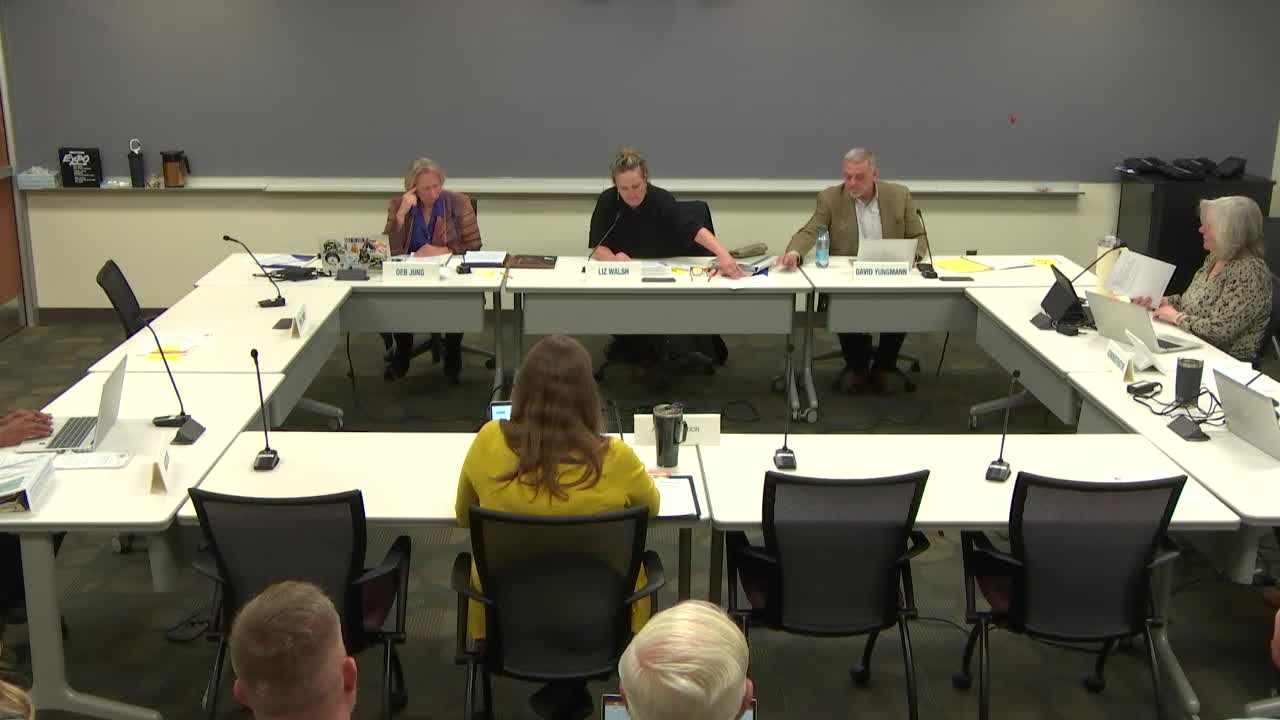
Howard County Council members discussed requests from Baltimore Gas & Electric (BGE) on Tuesday during the council’s regular February work session to amend an existing transmission easement (CR 44), grant a new utility easement (referred to in the presentation as CR 45), and approve a small Church Avenue easement so BGE can install underground fiber as part of its grid communications and connectivity program.
BGE officials said the 70‑mile program is funded in part by an Infrastructure Investment and Jobs Act (IIJA) grant administered by the National Telecommunications and Information Administration (NTIA) and that the company received $15,400,000 for the project. "We received $15,400,000, and we have until 2027 to complete this work," said Candice Butterworth, program lead for BGE’s grid communications and connectivity program. BGE staff told the council the work in Howard County includes a roughly 9.6‑mile segment they call the Howard route that detours through Rockburn Branch Park due to easement limitations on nearby private parcels.
Why it matters: BGE said the underground fiber will be used primarily for grid modernization and real‑time communications with substations, which the company says reduces outages and improves storm resilience. Sonia Harbaugh, BGE director of strategy, described the program as a "grid communications" effort that also creates a middle‑mile network for potential dark‑fiber leasing to internet service providers and data centers, but she emphasized, "We're never going to be an Internet provider." BGE said the company expects some conduits to be reserved for utility operations and the remainder to be available for third‑party leasing; revenues from leasing would be returned to customers through FERC‑regulated rate formulas.
What BGE presented: Project and technical details provided to the council include: - Project scale and funding: BGE described a roughly $30,000,000 program to build about 70 miles of underground middle‑mile fiber; the NTIA/IIJA award is approximately $15.4 million with BGE contributing matching funds. - Howard route specifics: The Howard route is about 9.6 miles and was described as the critical path to reach an Internet access point for the larger loop. Because a small number of private landowners would not agree to amendments to older overhead transmission easements, BGE proposed a deviation that runs through Rockburn Branch Park and along Landing Road. BGE said the CR 44 easement amendment would affect about 1.074 acres in the park and that the proposed new utility easement is roughly 0.5 acres (a 10‑foot wide strip) following the roadway. - Construction methods and design: BGE said installations will be underground using horizontal directional drilling, with a minimum depth of about 3.5 feet (an average closer to 5–6 feet), and that the fiber will be pulled inside bundles of HDPE conduit (a bundle roughly 6 inches in diameter containing multiple conduits). Hand holes at grade are planned for maintenance access; BGE said no tree clearing is anticipated for the park segment and disturbed areas will be restored. - Timeline and permitting: BGE noted it must complete work by the NTIA grant performance deadline (2027). The company said it received a one‑year delay while awaiting a categorical exclusion from NTIA but that the environmental approval is now in place. BGE identified permitting and rights‑of‑way negotiations as the key remaining risks to the schedule.
Why BGE is proposing the detour: According to BGE, some older transmission easements granted in the 1930s do not include language authorizing underground communications infrastructure. When negotiations with current private landowners failed to secure amended rights, BGE said the most cost‑effective alternative was to route through public rights of way and the park. "The current easement does not allow us to install underground communications and so we requested an amendment to that easement but the landowner has not been cooperative to grant us that," said Dan Fleming, project manager for the program.
Council concerns and follow‑up items: Several council members and the public raised questions about the program’s benefits to ratepayers, timing, and broader electric prices. Councilmember Deb Walsh summarized constituent concerns about monthly bills: "My rate payers and the rate payers in the all BGE rate payers ... are extremely concerned about the incredible, incredible increase in their bills." BGE officials responded that the IIJA award and potential leasing revenue are intended to reduce net costs to customers and that shareholders carry a major portion of the project match; BGE said leasing revenues would flow through rate formulas subject to regulatory review.
BGE also answered technical questions from the council about how fiber supports distribution automation and recloser operation to reduce outage counts and restoration times. As an example of the program’s grid benefits, BGE staff said fiber communications helped avoid an estimated 230,000 additional outages regionally during a recent storm because it enabled remote monitoring and operation.
Formal next steps: County staff and BGE said they are drafting the amendment and new easement documents and expect the council to take a vote on the requested easement actions at the March 3 council meeting. Council administration confirmed the items will return to the council packet for formal consideration; no final county action occurred during the February work session.
Context and caveats: BGE described the utility‑owned underground fiber as a transmission asset that plays two roles in its presentation: (1) support utility operations (redundant low‑latency links to substations and remote devices to improve reliability), and (2) create a middle‑mile resource that third parties can lease (dark fiber) to improve broadband availability and affordability. The company said it has had preliminary interest from ISPs and data centers but that commercial leases cannot be finalized until the infrastructure reaches the access point. BGE officials repeatedly cautioned that the project faces schedule and permitting risks and that any revenue forecasts depend on reaching market while demand and market rates remain dynamic.
Status: No council vote was taken at the work session. BGE and county staff will continue negotiating and preparing paperwork for the March 3 council meeting, where councilmembers indicated they expect to consider the easement amendments and grants.
Ending: County staff will post the formal easement exhibits and the council packet ahead of the March 3 meeting; BGE offered to share the slide deck and additional technical visuals for council and public review. The council invited BGE to return with further detail on outage‑reduction metrics and to answer follow‑up questions about rate impacts and lease opportunities.