Get Full Government Meeting Transcripts, Videos, & Alerts Forever!
Get email alerts on the State Aid Education topic
No spam. Unsubscribe anytime.
County budget staff outline 2026 state aid changes, warn of potential net county cost increases
Summary
Prince George’s County budget staff told the County Council committee of the whole on Feb. 24 that while FY 2026 state aid is estimated at about $2.0 billion, proposed BRFA and education changes could shift new costs to the county and create a potential net budget gap.
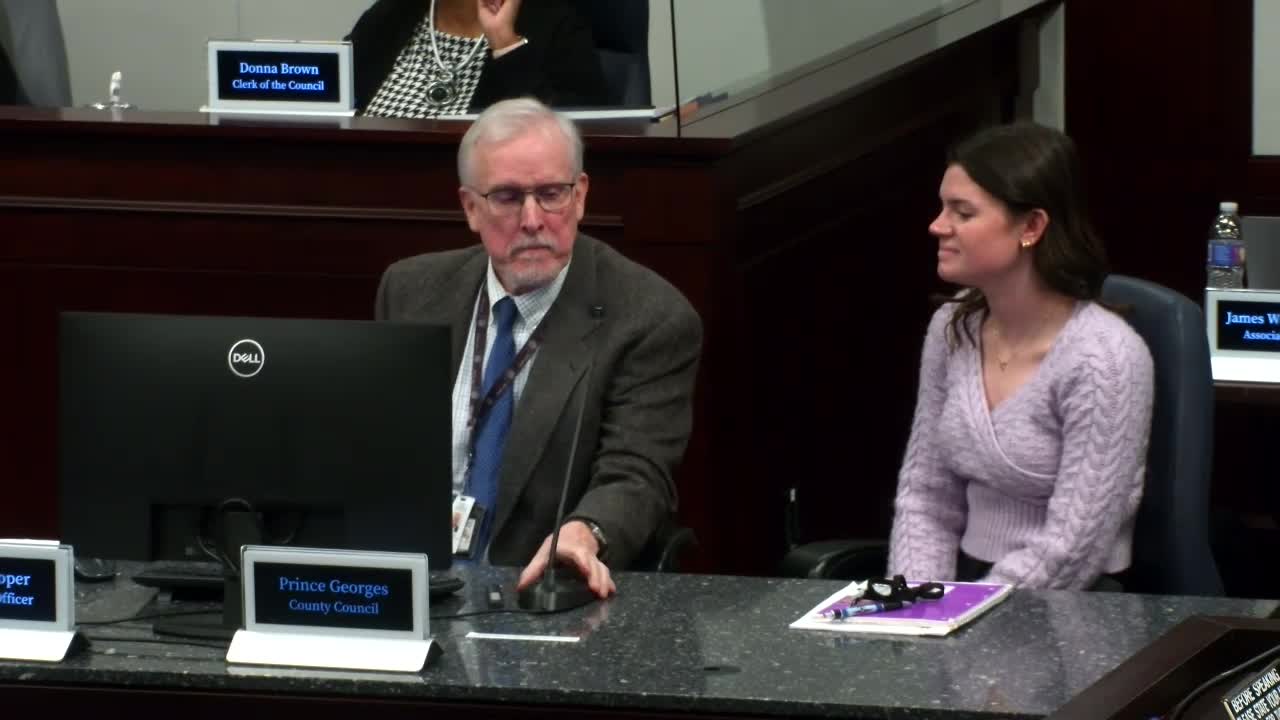
Prince George’s County budget officials presented an annual state‑aid briefing to the County Council committee of the whole on Feb. 24, detailing proposed FY 2026 changes and a set of governor’s proposals and budget reconciliation items that could shift costs onto the county.
David Yupay, revenue and legislation manager in the county Office of Management and Budget, told the committee the county is estimated to receive about $2,000,000,000 in state aid in fiscal 2026 — roughly a $81,000,000 (4.4%) increase from the prior year — but several proposed changes in the governor’s Budget Reconciliation and Financing Act (BRFA) and in the Excellence in Maryland Public Schools Act could raise county expenses or reduce targeted aid.
Why it matters: County officials said some state proposals would increase mandated local spending (for example, a phased reduction of the teacher retirement supplemental grant and proposals to shift retirement liability costs) while other changes to state tax law could offset or change revenue flows to counties. Council members asked how the net impact would affect the county school budget and the general fund.
Key figures and program changes
- Total and education aid: Yupay said the county’s FY 2026 state aid estimate is about $2.0 billion, with K‑12 education formulas driving most of the growth (about $90 million). Foundation aid increases by roughly $11 million, and the Blueprint’s education effort index rises by about $24 million.
- Enrollment and demographics: Morgan Wiseman, budget analyst intern, reported the county’s enrollment at 125,706 students for the September count used in formulas. Prince George’s ranks fifth for share of students qualifying for free and reduced‑price meals (68.5% of enrollment) and first in the state for percentage of English language learners.
- Disparity grant: A formula‑driven disparity grant fell from pandemic‑skewed highs to a more typical level. The county’s disparity grant is estimated at about $56 million for FY 2026; the staff explained prior years were inflated by pandemic‑era capital gains and federal aid, which altered the underlying tax‑year comparisons.
- Teacher retirement supplemental grant: The BRFA proposal would phase out the state’s teacher retirement supplemental grant — the county would lose 50% of the funding in FY 2026 and the remainder in FY 2027. Yupay estimated this change would reduce county aid by about $4.8 million in FY 2026.
- Mandated cost proposals: BRFA also includes proposals that, if adopted, would increase county shares for state functions (for example, raising county operating-share proposals for the State Department of Assessments and Taxation and asking counties to absorb additional retirement liability increases). Yupay said one proposal would ask counties to pay a $12.6 million fixed annual amount representing half of an increase in unfunded teacher retirement liability, and could add roughly $25 million of mandated spending in some staff scenarios.
- Tax changes and revenue estimates: The governor’s proposal to eliminate itemized deductions for state income tax and expand standard deductions to $5,600 — along with marginal bracket changes — was estimated by the comptroller to add roughly $31 million in annual revenue to the county on an ongoing basis; county staff said timing and distribution mechanics likely reduce first‑year receipts to an estimated ~$17 million.
- Other education items: A proposed increase in county share for nonpublic special education placements (from 30% to 40% in FY 2026, then 50%) could cost the Board of Education about $3.8 million in FY 2026, staff said. The Excellence in Maryland Public Schools Act would pause or delay some Blueprint funding increases and create new competitive grants and recruitment initiatives; staff said that could alter how collaborative‑time funding is delivered and might shift costs or benefits across districts.
Council reaction and next steps
Council members asked detailed questions about eligibility counting (September 30 counts for free and reduced‑price meals), timing of state revenue distributions, and how much the county might need to fill budget gaps. Yupay said the county’s estimates show a range of potential net impacts that depend on which BRFA provisions survive legislative action and how the state distributes income‑tax changes across fiscal quarters.
Yupay summarized a working scenario: combined effects of lost aid and new mandates could raise county costs by roughly $20 million while reducing revenues by about $5 million in FY 2026, for a net estimated gap on the order of $25 million — with offsets from income‑tax changes estimated at about $17 million in the first fiscal year under county distribution assumptions. He cautioned that final numbers depend on legislative action in Annapolis.
Ending: Staff encouraged the council to watch BRFA deliberations closely and signaled further briefings will be needed as the General Assembly acts; council members asked staff to return with district‑level breakdowns and to track changes to special‑education and retirement mandates.