Get Full Government Meeting Transcripts, Videos, & Alerts Forever!
Get email alerts on the Critical Infrastructure Drones topic
No spam. Unsubscribe anytime.
Committee approves bill to restrict drone activity over critical infrastructure, adds wildlife/farm-animal harassment language and immediate effective date
Summary
Senate File 132 would prohibit unlawful operation of unmanned aircraft over or near critical infrastructure; the committee adopted amendments to add "harassment of wildlife and/or farm animals" and to make the bill effective immediately, and recommended the bill for passage by a 9-0 vote.
Senate File 132, introduced by Senator Stacy Jones, would make it unlawful to operate an unmanned aircraft system (UAS) over or near designated critical infrastructure or critical systems without authorization, and it provides law enforcement and the governor additional authority to respond to unlawful UAS activity.
The bill defines prohibited conduct to include intentionally photographing, loitering over, or taking other actions that could facilitate criminal activity at a listed category of critical facilities. Exceptions in the draft preserve lawful FAA-authorized operations, owner-authorized flights over private property, government and emergency agency use, and routine commercial inspections. The bill also authorizes law enforcement to take reasonable actions to disable, damage, or remove an unlawful aircraft and allows the governor to direct the Wyoming Air National Guard to assist.
Senator Jones told the committee the bill grew out of multiple unexplained sightings last winter of large UAS above the Jim Bridger power plant in Sweetwater County. "These aren't small drones. These are giant drones the size of SUVs," Jones said, describing reports of several large aircraft accompanied by dozens of smaller units flying at roughly 5,000 feet overnight.
Why it matters: testimony from energy and infrastructure stakeholders, farming organizations, and local law enforcement described operational and safety concerns. Dave Pickard of Continental Resources testified that organized drone activity has been used elsewhere to damage industry facilities and that unauthorized flights could endanger workers and the public. A Sweetwater County Sheriff's Office representative said pilots reported multiple large unmanned aircraft with lights operating overnight and that local law enforcement has so far been unable to identify who is operating them.
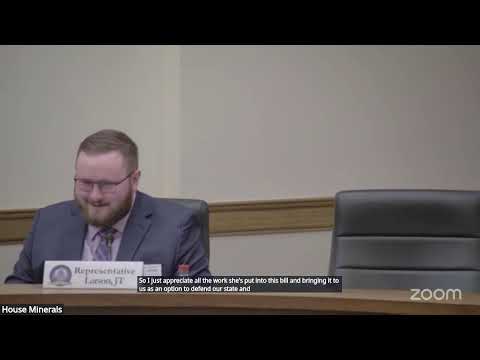
Amendments and enforcement features: Committee members raised questions about how lawful contractors and private users would be distinguished from unlawful operators and whether notice mechanisms would help reduce alarm. Several witnesses urged communication when legitimate inspections occur. The committee adopted Representative Tarver's amendment to add a subsection explicitly covering "harassment of wildlife and or farm animals." Representative Larson moved, and the committee adopted, an amendment making the bill effective immediately so enforcement and response tools could be available promptly.
Committee deliberations and vote: After discussion the committee voted 9-0 to recommend Senate File 132 as amended. Representative Larson moved the bill in committee; the motion was seconded by Representative Laally. Committee members clarified that enforcement would generally follow a complaint-based model and that law enforcement would use discretion when contractors present FAA authorization or explain authorized activity.
Next steps: With a committee recommendation to pass, Senate File 132 will proceed to the chamber. Supporters said the statute is intended to give law enforcement and the governor clearer authority to address unexplained or potentially dangerous drone activity while preserving lawful commercial and emergency uses.