Get Full Government Meeting Transcripts, Videos, & Alerts Forever!
Get email alerts on the Conflict M23 Drc topic
No spam. Unsubscribe anytime.
MONUSCO urges immediate ceasefire as M23 advances destabilize eastern DRC
Summary
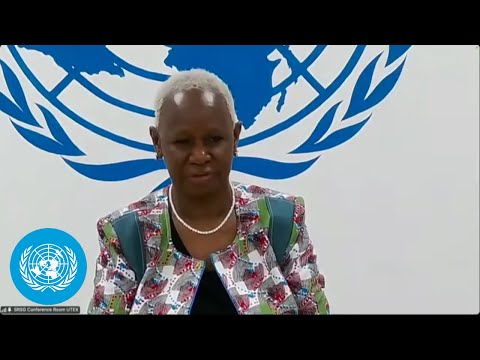
Bintu Keita, the U.N. secretary-general’s special representative in the Democratic Republic of the Congo and head of MONUSCO, told reporters that the mission is calling for an immediate, unconditional ceasefire by the M23 as its operations destabilize eastern DRC.
Bintu Keita, the U.N. secretary-general’s special representative in the Democratic Republic of the Congo and head of the U.N. peacekeeping mission (MONUSCO), told reporters that MONUSCO is calling for an immediate, unconditional ceasefire by the M23 rebel group as its military actions continue to destabilize eastern DRC.
Keita said MONUSCO has sheltered thousands and continues to protect civilians despite “freedom of movement restrictions, including roadblocks and 48‑hour advanced notification requirements” that prevent the mission from carrying out lifesaving operations. “There is no military solution that will end this suffering,” she said.
Why it matters: Keita described an urgent humanitarian problem and a security risk to civilians and U.N. personnel. She called on Rwanda to end support for M23, urged armed groups to enter disarmament and reintegration processes, and asked for international help to transfer protected people to secure sites if relocation becomes necessary.
Following the fall of Goma on Jan. 28, Keita said, more than 1,400 high‑risk individuals sought MONUSCO protection, including women and children. She said the mission is protecting “hundreds of thousands” of internally displaced people across eastern provinces and that, in recent responses to attacks, MONUSCO set up two temporary operational bases and sheltered smaller groups — for example, 204 civilians in Erinyeti, North Kivu.
Keita described multiple operational constraints: restricted movement because of roadblocks and advance‑notice rules, a surge of misinformation and hate campaigns that have endangered peacekeepers, and the sheer number of people under MONUSCO protection leading to unsustainable living conditions and limited supplies. She said MONUSCO continues to assist national forces where possible, for example by facilitating supplies and medical evacuations.
On regional diplomacy and accountability, Keita reiterated MONUSCO’s appeals to regional and international actors. She urged Rwanda to end any support for M23 and to “respect the territorial integrity of the DRC,” citing commitments made in regional processes including statements by the East African Community, the Southern African Development Community and the African Union Peace and Security Council. She also said the Nairobi and other regional processes should be used to bring armed groups into the official disarmament, demobilization, reintegration and stabilization framework (referred to in the briefing as PDDRCS).
When pressed about troop numbers and the capacity of the Armed Forces of the DRC (FARDC), Keita declined to give her own estimates and directed reporters to the Group of Experts’ report for detailed counts and sanctions‑committee materials. On a forthcoming U.N. Security Council vote she said she had no inside knowledge but expected the resolution to be adopted unanimously.
Keita described MONUSCO’s recent operational history in eastern provinces: the mission withdrew from South Kivu last year at the DRC government’s request and from Tanganyika in 2022 as part of a previously agreed drawdown and transition plan; she said that pattern of withdrawals, together with recent M23 advances, helps explain current territorial shifts. Keita warned that public statements by M23 indicate an intention to advance as far as Kinshasa and said MONUSCO is monitoring movements toward South Kivu, Tanganyika and other localities such as Kalemie and Kisangani.
Journalists asked about allegations of Rwandan involvement in M23‑run parallel administrations. Keita said she did not have elements to substantiate a role for Rwanda in those local administrations and limited her public comments to what MONUSCO could verify: the appointment of local administrators by M23 in places such as Goma and Bukavu.
Keita repeatedly called for inclusive political processes and for the central role of Congolese women in peace efforts. She condemned atrocities by all armed groups, including the Allied Democratic Forces (ADF), and urged that those groups commit to the regional disarmament and reintegration framework.
No formal U.N. decisions were announced at the briefing. Keita asked for an internationally supported, safe and dignified solution for relocating the many people under MONUSCO protection should relocation be necessary, and she said the mission will continue to work with the DRC government, regional partners and U.N. colleagues to pursue durable security and stability.
The briefing included an extended question‑and‑answer session in which Keita reiterated several points of uncertainty — notably precise fighter counts and exact timetables for any M23 advance — and deferred to the Group of Experts and Security Council for technical assessments and formal actions.