Get Full Government Meeting Transcripts, Videos, & Alerts Forever!
Recology seeks three‑year, three‑decade rate reset; trash processing and vehicle electrification drive debate
Summary
Recology San Francisco on Wednesday presented a three‑year rate application that would raise residential collection rates beginning Oct. 1 to cover one‑time “true‑up” shortfalls, higher payroll and benefit costs, new business taxes and capital needs including a vehicle electrification reserve.
Recology San Francisco on Wednesday presented a three‑year rate application that would raise residential collection rates beginning Oct. 1 to cover one‑time “true‑up” shortfalls, higher payroll and benefit costs, new business taxes and capital needs including a vehicle electrification reserve.
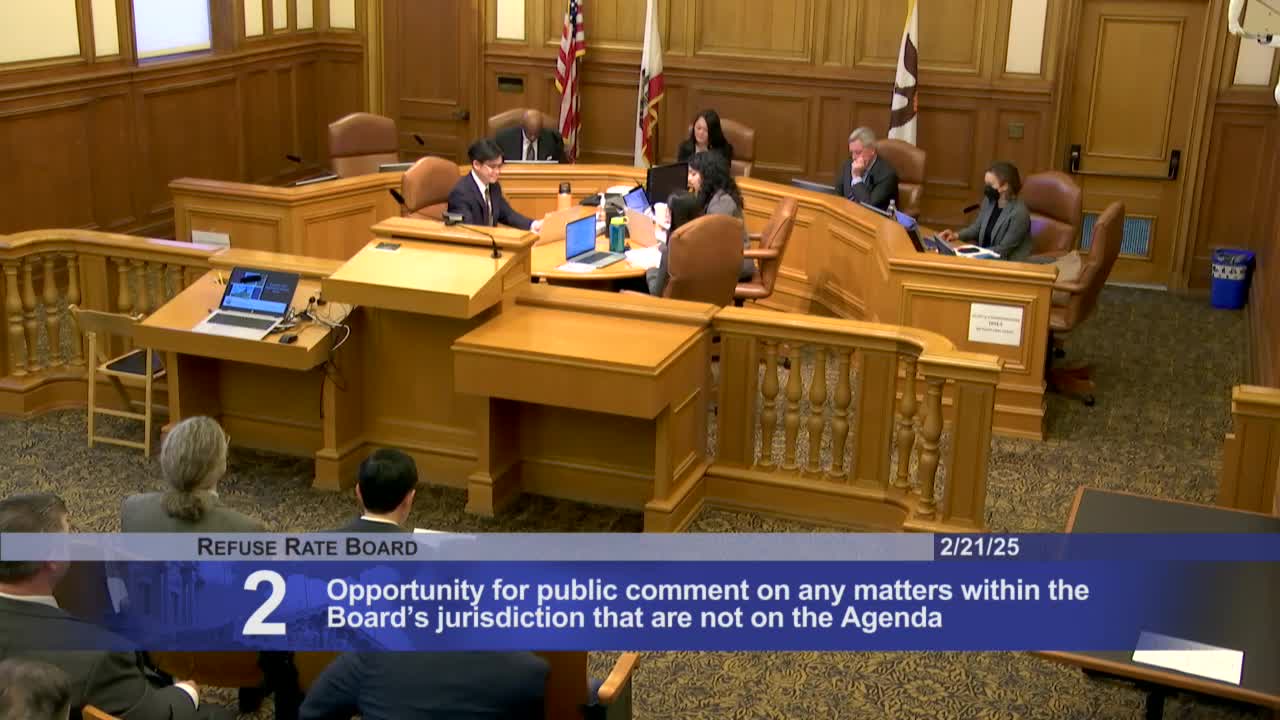
The company’s presentation to the Refuse Rate Board and the Refuse Rate Administrator focused on an 18.18% requested increase in the first year, followed by 7.53% and 3.86% in the second and third years — a three‑year cumulative request Recology described as a “true up” after slower‑than‑expected post‑pandemic revenue recovery. “San Francisco’s residential collection rates have remained flat for over 2 and a half years,” Evan Boyd, Regent Vice President for Recology San Francisco, told the board. “This three year rate application, if approved, will take effect on October first of this year and ensures the continued delivery of industry leading waste reduction, recycling, and composting programs.”
Why it matters
The application would shift costs to ratepayers and create a capital planning fund to pay for advanced clean fleet (ACF) requirements and potential facility modernization. Refuse Rate Administrator Jay Liao said the board must weigh rate fairness and stability against projection risk and transparency, and flagged several items his office is still validating, including corporate allocations, post‑collection tip fees and capital reserve levels.
What’s in the request
Recology and its operating companies described multiple items driving the first‑year increase: unrealized revenue projections from the prior cycle, payroll and benefits adjustments tied to collective bargaining assumptions, and a new business tax increase. Rich Lancer, region controller for the San Francisco operating companies, said roughly 12.46 percentage points of the 18.18% first‑year increase are “one‑time true‑up items,” with the remainder attributable to payroll, service enhancements and other drivers.
The company proposed several program enhancements: afternoon abandoned‑material collection (three new afternoon sweep routes seven days a week), camera systems to document overloaded…
Already have an account? Log in
Subscribe to keep reading
Unlock the rest of this article — and every article on Citizen Portal.
- Unlimited articles
- AI-powered breakdowns of topics, speakers, decisions, and budgets
- Instant alerts when your location has a new meeting
- Follow topics and more locations
- 1,000 AI Insights / month, plus AI Chat