Get Full Government Meeting Transcripts, Videos, & Alerts Forever!
Get email alerts on the Waste Management topic
No spam. Unsubscribe anytime.
Recology seeks three‑year, three‑decade rate reset; trash processing and vehicle electrification drive debate
Summary
Recology San Francisco on Wednesday presented a three‑year rate application that would raise residential collection rates beginning Oct. 1 to cover one‑time “true‑up” shortfalls, higher payroll and benefit costs, new business taxes and capital needs including a vehicle electrification reserve.
Recology San Francisco on Wednesday presented a three‑year rate application that would raise residential collection rates beginning Oct. 1 to cover one‑time “true‑up” shortfalls, higher payroll and benefit costs, new business taxes and capital needs including a vehicle electrification reserve.
The company’s presentation to the Refuse Rate Board and the Refuse Rate Administrator focused on an 18.18% requested increase in the first year, followed by 7.53% and 3.86% in the second and third years — a three‑year cumulative request Recology described as a “true up” after slower‑than‑expected post‑pandemic revenue recovery. “San Francisco’s residential collection rates have remained flat for over 2 and a half years,” Evan Boyd, Regent Vice President for Recology San Francisco, told the board. “This three year rate application, if approved, will take effect on October first of this year and ensures the continued delivery of industry leading waste reduction, recycling, and composting programs.”
Why it matters
The application would shift costs to ratepayers and create a capital planning fund to pay for advanced clean fleet (ACF) requirements and potential facility modernization. Refuse Rate Administrator Jay Liao said the board must weigh rate fairness and stability against projection risk and transparency, and flagged several items his office is still validating, including corporate allocations, post‑collection tip fees and capital reserve levels.
What’s in the request
Recology and its operating companies described multiple items driving the first‑year increase: unrealized revenue projections from the prior cycle, payroll and benefits adjustments tied to collective bargaining assumptions, and a new business tax increase. Rich Lancer, region controller for the San Francisco operating companies, said roughly 12.46 percentage points of the 18.18% first‑year increase are “one‑time true‑up items,” with the remainder attributable to payroll, service enhancements and other drivers.
The company proposed several program enhancements: afternoon abandoned‑material collection (three new afternoon sweep routes seven days a week), camera systems to document overloaded commercial containers and contamination on commercial routes, expanded outreach, a restored citywide compost giveaway, free mattress recycling through the Mattress Recycling Council (MRC), and pilot and contingent plans for a mixed waste (trash) processing system at Tunnel Avenue.
- Afternoon abandoned‑material routes: Anthony Crescentry, general manager for Sunset Scavenger, said Recology would add three afternoon sweep routes at an estimated cost of $700,000 per year (three drivers) to respond to late‑day 311 calls and to reduce material that now sits overnight on sidewalks.
- Cameras and overload/contamination programs: Kevin Flanagan, general manager for Recology Golden Gate, described overload cameras for 168 routes (projected three‑year cost $1,840,000 and projected revenue $2,730,000) and contamination cameras on six routes (projected cost $716,000; projected revenue $412,000). Flanagan said public‐receptacle service‑verification cameras would cost about $44,000 over three years. He and Recology emphasized that much of the administrative review and human validation would accompany automated detection before any customer charge is applied.
- Outreach and other enhancements: Recology proposed a three‑year outreach program costing about $1,560,000 to expand education to single‑family, multifamily and commercial customers, and to support battery and bulky‑item recycling work.
- Mattress recycling: Maurice Quillen of Recology said the company would transition to the state‑run Mattress Recycling Council program, which would provide free drop‑off for residents. Recology estimated the number of mattresses handled could increase from about 5,000 to roughly 10,000 per year; the application adds one material‑handler position to cover projected program growth.
Post‑collection processing and the Tunnel Avenue proposals
Recology presented a contingent mixed‑waste processing plan that would repurpose existing material recovery facility space at 501 Tunnel Avenue to sort municipal solid waste (MSW) to recover recyclables and compostables otherwise landfilled. Maurice Quillen said vendor testing of a depackager (to separate organic material from packaging) on San Francisco feedstock recovered 66.18% of the total tonnage in a test and that Recology projects the depackager could recover roughly an additional 10,400 tons of organics annually compared with the trommel screen it replaced in testing. Recology’s application includes a contingent capital estimate of about $35,000,000 for MSW processing and an estimate the city‑operated option would be cheaper than sending the tonnage to an off‑site facility; the company presented an operational cost comparison it characterized as $6,960,000 annually in‑city versus $10,660,000 to ship off‑site (a $3,700,000 annual operational savings in their analysis). Recology and its consultants stressed the trash‑processing proposal is contingent on Bay Area Air Quality Management District permits and downstream processing agreements.
Outside analysis and cautions
HF&H Consultants, retained by the board, urged caution. Rob Hilton, HF&H president, said trash processing can recover 40–60% where it works but carries “technology risk” and high per‑ton costs relative to other diversion strategies. HF&H recommended continued piloting, starting small (one truckload per day) and focusing on organics‑rich loads rather than processing residential household trash citywide. HF&H also urged a measured rollout of contamination and overload camera programs, noting potential false positives and likely customer service costs for validating charges; the firm proposed guardrails that would suspend charging if revenue from enforcement exceeded behavioral‑change objectives.
Capital and rate‑stabilization accounts
Recology requested a capital reserve calculated at 1.75% of revenue in rate years 2027–28, which the company estimates would generate roughly $21,000,000 to help smooth the cost of future zero‑emission vehicles and facility modernization. Recology and the administrator said the current balancing account shows a significant shortfall driven by prior revenue overestimates: Recology estimates a $13,700,000 balancing‑account shortfall booked to ratepayer amortization (noting a combined $27,400,000 recovery gap when including Recology’s 50% share of the balancing account mechanism). Jay Liao said the administrator’s office will validate the amortization schedule and consider alternative amortization timelines to moderate rate impacts.
Process and next steps
Jay Liao described an extended timeline: a Refuse Rate Administrator’s report in early May, a proposed rate order on May 9 and Prop. 218 mailers and a 45‑day protest period leading to a June 25 hearing as the potential initial protest hearing window. Liao said his office has closed most information requests to Recology but is still validating corporate allocations, post‑collection cost drivers and capital reserve justification; those open items will inform the proposed rate order.
What the board discussed
Board members and staff pressed Recology and HF&H on capital cost detail, timing and the potential rate impacts of electrifying frontline vehicles under the state’s Advanced Clean Fleet rules. HF&H and the administrator urged phasing heavy‑duty electrification and reserving for future compliance while prioritizing lower‑cost compliance steps now. Recology said frontline battery electric vehicle purchases will require infrastructure and may require substation‑level power upgrades for heavy‑duty charging.
No action taken
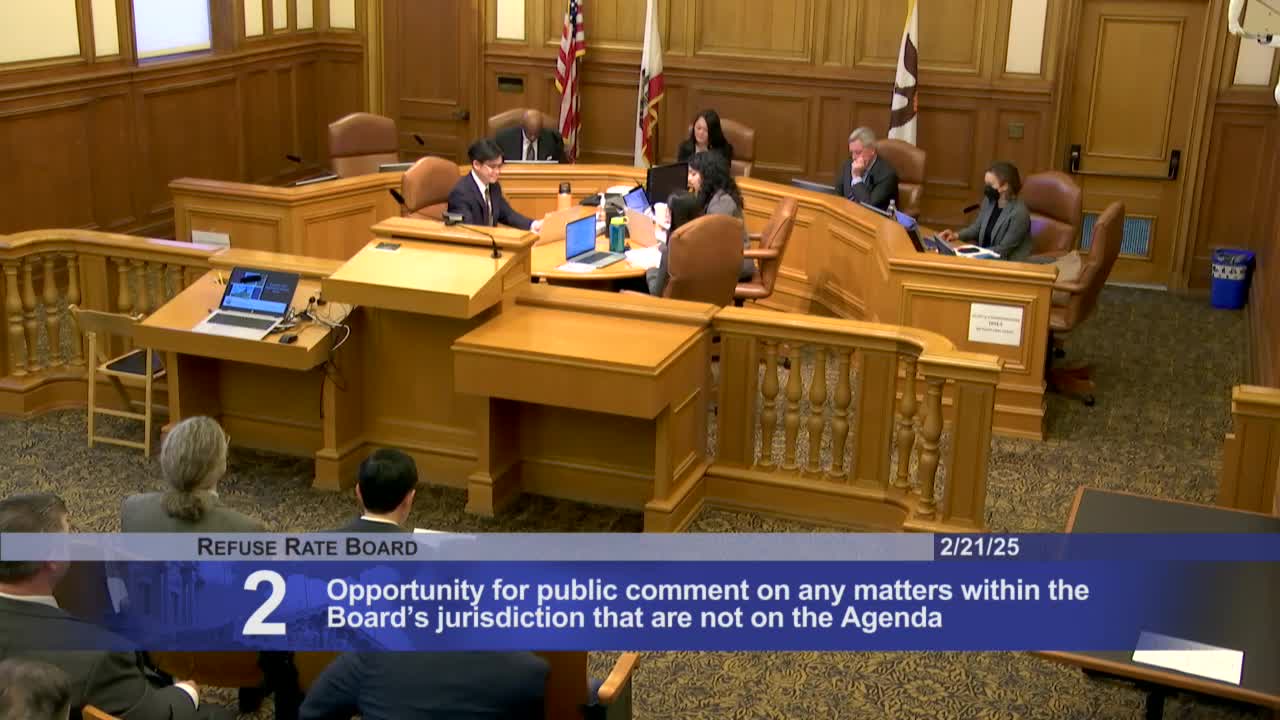
The hearing was a discussion item; the board took no vote. The Refuse Rate Administrator will issue a report and a proposed rate order for future hearings and public comment.
Quotes
“San Francisco’s residential collection rates have remained flat for over 2 and a half years,” Evan Boyd, Regent Vice President for Recology San Francisco, said. “This three year rate application, if approved, will take effect on October first of this year and ensures the continued delivery of industry leading waste reduction, recycling, and composting programs.”
“Our recommendation is to go slow, continue piloting,” Rob Hilton, president of HF&H Consultants, told the board in urging phased testing of trash‑processing technology. “It is a large capital investment.”
Ending note
Members of the Refuse Rate Board and staff said they will continue technical validation of Recology’s submission, with additional hearings and a public protest period on the calendar before any final rate order is set.