Get Full Government Meeting Transcripts, Videos, & Alerts Forever!
Get email alerts on the Education topic
No spam. Unsubscribe anytime.
Wyoming House debates limits on school-year boundaries, adopts local-option amendment
Summary
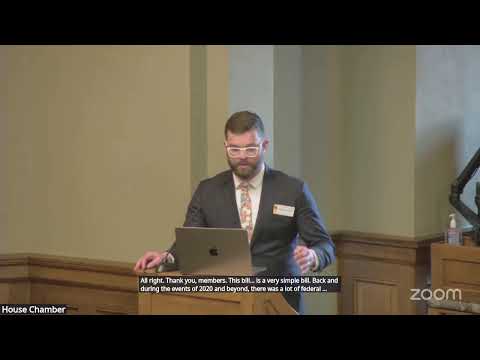
Cheyenne — The Wyoming House spent a prolonged session on Feb. 20 debating Senate File 72, the Summer Vacation Preservation Act, which would set Labor Day and Memorial Day as default calendar boundaries and allow districts to adopt a shorter school year.
Cheyenne — The Wyoming House spent a prolonged session on Feb. 20 debating Senate File 72, the Summer Vacation Preservation Act, which would set Labor Day and Memorial Day as default calendar boundaries and allow districts to adopt a shorter school year. Lawmakers debated amendments over whether the measure would remove local control or simply encourage a later start to the school year.
The measure drew repeated concern from lawmakers representing rural districts and from members who said teachers and administrators oppose making calendar changes by statute. Representative Yin, sponsor of a second-reading amendment, framed her change this way: "this amendment... remove that restriction that forces a school board to go to the State Board of Education and ask for an exemption." She said the amendment aimed to preserve local flexibility for districts that already operate outside the Labor Day–Memorial Day window.
Supporters said the bill would encourage family time and provide scheduling predictability; opponents warned of unintended consequences for teacher pay, extracurricular participation and rural four-day-week districts. Representative Jarvis said, "if a school district ... go down to the hundred and 65 days, they have to add 21 minutes to their day," noting extra minutes would affect bus schedules, athletics and classified staff pay. Representative Harshman, offering a different amendment, proposed moving the start to not less than one week after the Wyoming State Fair to accommodate fair schedules.
Debate highlighted three recurring concerns: the effect on teacher and classified staff pay (some pay is determined by a daily rate), potential loss of four-day-week options in rural districts, and administrative burdens if districts must apply to the State Board of Education to keep previously approved calendars. Representative Campbell and others successfully moved language that replaced several mandatory "shall" provisions with "may," making the shorter school year an option for districts rather than a mandate.
Votes on the amendment package were split. A first amendment meant to preserve district autonomy was debated and ultimately failed on a 27-27 division after an initial voice vote. A later amendment to move the start date to one week after the State Fair failed on division. A final amendment, which changed mandatory wording to optional language (replacing "shall" with "may" in several places), was adopted by the House and the bill was ordered to be read a third time.
The floor debate featured more than two dozen members and included a range of perspectives: rural representatives explained how rodeos, agriculture and state fair schedules intersect with school calendars; urban representatives emphasized continuity of instruction and summer learning loss; and former educators warned against reducing professional development time embedded in the current statutory schedule. Representative Brown, who chaired committee work on related issues, said lawmakers should consider broader deregulatory approaches but defended the targeted changes for districts and military families who seek local flexibility.
With the adopted language, school districts would have the option to operate within the Labor Day–Memorial Day window but could retain or seek alternative calendars through existing exemption pathways; the bill’s wording was adjusted on second reading to reflect option rather than mandate. The House set the bill for third reading; the transcript does not record final passage on the floor.
Lawmakers signaled further work may follow on technical details such as how reduced days would affect the state’s block grant funding formula and professional development requirements for teachers. Those implementation details remained subject to additional amendment or committee work.
Votes at a glance for items on this bill's second reading: a proposed amendment to preserve local control failed on a 27-27 division; a timing amendment tied to the Wyoming State Fair failed on division; an amendment replacing mandatory language with optional language ("shall" → "may") passed, and the bill was set for third reading.