Get Full Government Meeting Transcripts, Videos, & Alerts Forever!
Get email alerts on the Securitization topic
No spam. Unsubscribe anytime.
Minnesota senators hear bill to let gas utilities seek securitization after extraordinary costs
Summary
A bill that would let regulated natural gas utilities ask the Minnesota Public Utilities Commission to securitize extraordinary, one-time costs was presented and laid over after technical amendments and questions about prudence, hedging and equipment hardening.
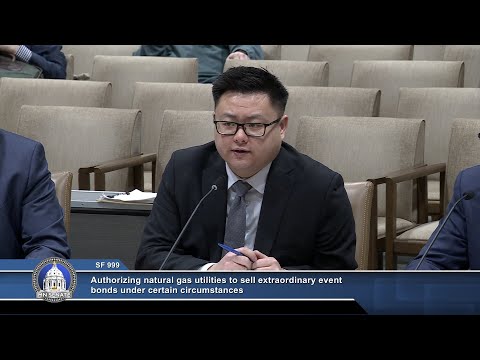
Senators laid over Senate File 999 on Feb. 19 after testimony and member questions about a proposed securitization framework that would let regulated natural gas utilities petition the Minnesota Public Utilities Commission to spread extraordinary, one-time costs over a longer period through low-cost bonds.
Supporters said the tool is optional and would be available only if the PUC determines securitization is in customers' best interest. "This bill provides us with an optional tool. If the PUC finds it's in the best interest of consumers, not with the company, they can use this tool," said Jason Luce, associate general counsel at CenterPoint Energy, which serves about 900,000 customers in Minnesota.
The bill's chief author, Senator Jeong, offered the A2 amendment, described to the committee as largely technical with two exceptions. The committee adopted the A2 amendment by voice vote and then laid the bill over for possible inclusion in an energy omnibus bill.
Eric Swanson, an attorney at Winthrop & Weinstine testifying on behalf of CenterPoint Energy, said securitization is an affordability tool used in more than 30 states and can reduce financing costs when an unforeseen event—such as a major storm—creates extraordinary costs. "It's a whole lot better to have the tool and not use it than need the tool, but not have it," Swanson said. He and other witnesses noted securitization would be optional for utilities and subject to PUC review and stakeholder input.
Several senators questioned how the PUC would review requests and whether securitization could create perverse incentives for utilities to defer risk-management actions such as equipment hardening, storage, or hedging. Senator Dibble pressed witnesses on whether the PUC would scrutinize utilities' prior risk-management decisions before approving securitization and whether partial securitization would be an option.
Swanson answered that the PUC already reviews whether costs were prudently and reasonably incurred before allowing recovery; he pointed committee members to the bill language describing required findings (noting language on pages 7–8 of the bill text). He said the PUC would first determine whether costs were reasonable and prudently incurred and then determine whether securitization or traditional ratemaking is the better recovery mechanism.
Committee staff told members a fiscal note had been requested but was not available at the hearing. The committee chair said it was not the intention to pass the bill that day; the measure was laid over for further consideration and additional conversations among members and stakeholders.
Votes and formal actions taken in the hearing were limited to the A2 amendment adoption and laying the bill over; no final approval on the underlying securitization authorization occurred.
The measure would apply only to regulated natural gas utilities and would not affect electric, water, or municipal utilities, according to testimony.