Get Full Government Meeting Transcripts, Videos, & Alerts Forever!
Get email alerts on the Behavioral Health topic
No spam. Unsubscribe anytime.
DMHAS proposes staff cuts in prevention but seeks funding for 988 expansion and safety measures; lawmakers ask for details
Summary
DMHAS told the Appropriations subcommittee that the governor's budget reduces prevention staff and some grants while requesting funds to expand 988 text/chat coverage and to fund staff safety measures; lawmakers pressed the agency on how cuts would affect programs and asked for ARPA accounting and OSAC opioid‑settlement details.
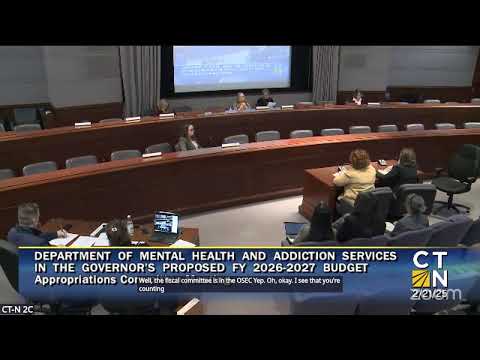
Department of Mental Health and Addiction Services Commissioner Nancy Navarretta and CFO Cheryl LaVora briefed the Appropriations subcommittee on the department’s budget proposals, which include reductions to some prevention positions and grant lines alongside funding for safety and expanded 988 text/chat coverage.
Prevention cuts
Lawmakers noted a proposed reduction of seven prevention positions described in the budget as a 58 percent drop in prevention staff and a nearly 45 percent cut to that state line. Commissioner Navarretta characterized the cuts as an efficiency measure and said the department would work with the prevention network and state partners to mitigate service impacts, but several legislators asked for a roster of current grantees and the specific programs that would be affected.
988 expansion and sustainability questions
The budget includes funding to expand 988 text/chat coverage for additional shifts. DMHAS staff told the panel that initial operations were funded through a mix of ARPA and federal grants and that the governor’s budget seeks state support for additional shifts and sustainability; legislators requested a detailed schedule of ARPA funding, its expiration, and the state cost to continue operations after ARPA lapses.
Safety, overtime and Kronos timekeeping
DMHAS asked for staff‑safety investments including panic buttons, upgraded phones and targeted perimeter security or escort services in parking areas. The agency also proposed funding to implement Kronos timekeeping hardware/software to better manage scheduling and reduce mandated overtime; DMHAS said mandated overtime and double‑time pay have fallen from earlier post‑pandemic peaks but remain a significant cost driver.
Opioid settlement and OSAC process
Members discussed how OSAC (the opioid settlement advisory council) and the referral process prioritize evidence‑based uses for settlement dollars; DMHAS said any OSAC allocations are evaluated by the referral committee and may require fiscal and research scrutiny before approval. Lawmakers asked whether proposed off‑budget opioid settlement allocations in the governor’s package should be treated as assumptions in the budget and requested a clear map of which services would need state funding if settlement‑based support is not approved.
Follow up: DMHAS agreed to provide (1) a list of prevention grants and which programs/grantees would be affected by the staffing reductions; (2) a schedule of ARPA and federal support for 988, with expiration dates and the state cost to continue services; (3) overtime trend data, including historical mandated overtime totals and the staff categories driving overtime; and (4) an exhibit of OSAC decision and referral pathways and current settlement disbursement status.
Ending: Lawmakers and DMHAS staff agreed to reconvene with the requested detail. DMHAS said it would prioritize preserving core crisis and treatment functions while seeking efficiencies in administration and overtime management.