Get Full Government Meeting Transcripts, Videos, & Alerts Forever!
Get email alerts on the Student Immigration Data topic
No spam. Unsubscribe anytime.
Idaho committee deadlocks on proposal to record students' immigration status and nationality
Summary
A proposal (RS 32-405) to require schools that receive state funds to record and publish students' immigration status and nationality failed to advance after a 7-7 committee tie amid privacy, cost and constitutional concerns.
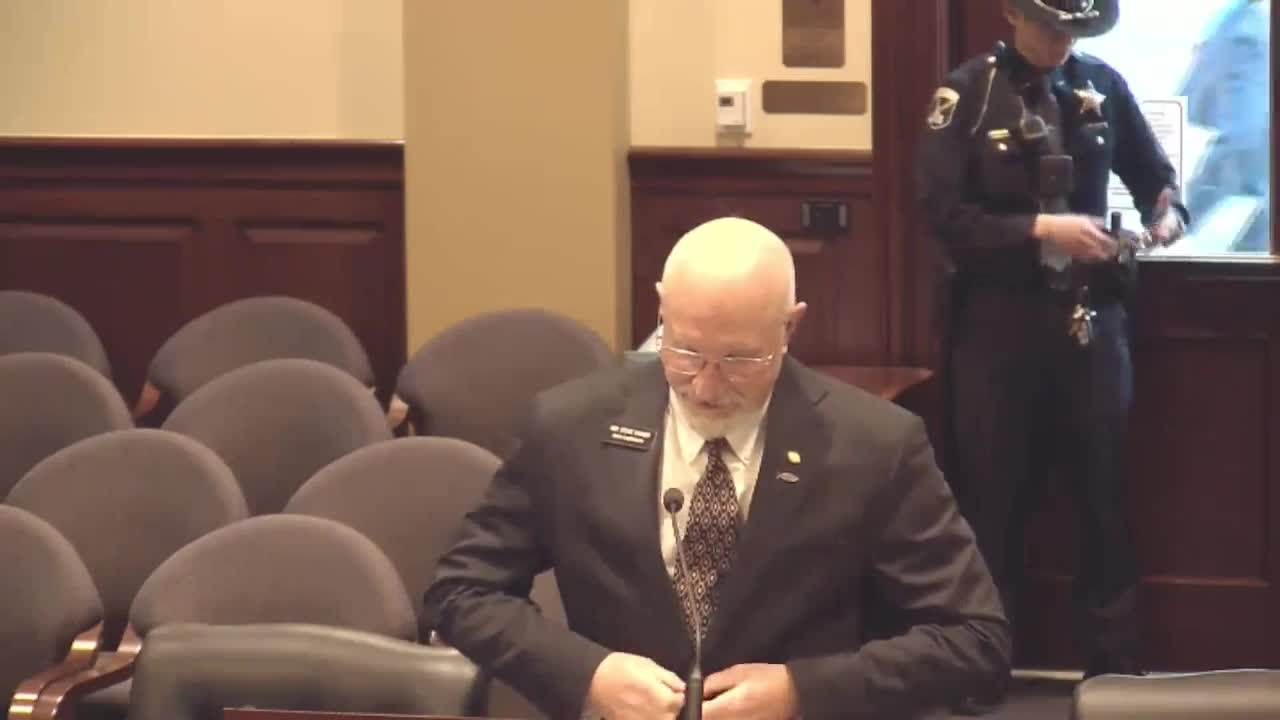
Representative Steve Tanner asked the House Education Committee to introduce RS 32-405, a request that would create a new chapter in the education code (Title 33, Chapter 68) requiring schools and districts that receive state funds to record students' immigration status and nationality and make aggregated information public.
Tanner told the committee he intended the draft to provide definitions for elementary and secondary schools, accredited higher-education institutions and five immigration-status categories aligned with federal law. "I am for the record Steve Tanner, representative from District 13," Tanner said, and described the bill's basic elements.
Supporters said the data would allow policymakers to quantify burdens on public instruction. "How do we do the analysis unless we quantify the need?" Tanner told colleagues. He said enrollment intake procedures already require parents to provide documentation and that recordkeeping should be an administrative task for existing staff.
Opponents raised questions about cost, privacy and constitutionality. Representative Mathias pressed Tanner on the fiscal note and asked, "how did you arrive at the conclusion that collecting ... the immigration status and nationality of probably just over 400,000 people won't cost any money?" Representative Clow asked, "this says that the immigration status and nationality of all enrolled students, how do I prove the nationality of my children?" Tanner suggested birth certificates or immigration paperwork could be used for proof and said undocumented children would be designated as undocumented if no documentation exists.
Other members said districts already report counts of English-language learners and questioned whether this new data collection would add value. Representative Mathias and others warned of litigation risk and potential constitutional problems from singling out a group for data collection. Representative Thijs asked whether the state could show a "compelling state interest" required to justify singling out a population for that level of reporting.
Committee members also debated how the information would be made public. An amendment was offered to remove the phrase "in a publicly accessible location" and instead require the data to be reported "each year and recorded to the superintendent of public instruction and made public." The committee voted on two motions: first to return the RS to the sponsor and then to introduce the RS with the proposed amendment. Both motions failed on roll-call ties.
On the final vote to introduce RS 32-405 with the amendment, the committee recorded seven yes votes and seven no votes, and the motion failed. The committee moved on to other business.
The committee record shows the discussion centered on data collection methods, proof of nationality, privacy and constitutional concerns; no formal direction to staff or further action on RS 32-405 was adopted at the hearing.