Get Full Government Meeting Transcripts, Videos, & Alerts Forever!
Get email alerts on the Juvenile Prevention topic
No spam. Unsubscribe anytime.
Juvenile judge urges community programs, ‘wall of success’ to reduce youth arrests
Summary
Superior Court Judge Ruben Villalobos told the Modesto Community Police Review Board that reducing youth arrests requires more community time, affirming programs and wraparound services; several public commenters and board members pressed for expanded local youth activities and job pathways.
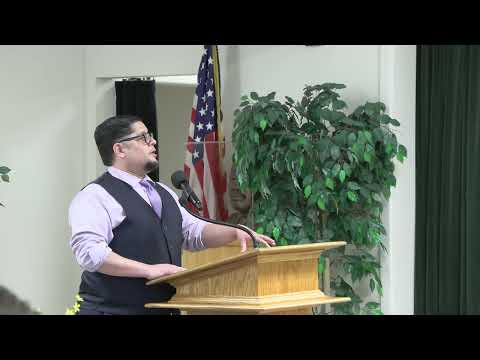
Superior Court Judge Ruben Villalobos told the Modesto Community Police Review Board on Feb. 19 that reducing juvenile arrests requires community-based supports, time and positive reinforcement rather than heavier court involvement.
Villalobos, who said he has served on the bench for about 10 years and has presided extensively in juvenile court, described courtroom practices he uses to encourage youth: a bulletin he calls “Judge V’s wall of success,” stickers for short-term achievements and what he termed a “compliment sandwich” that opens and closes hearings with praise while putting difficult issues in the middle. "Every single night that they spend in our juvenile hall is a failing," Villalobos said.
The judge framed his remarks around prevention and rehabilitation, telling the board that many young people who appear before him lack stable homes or adults in the household: "...so many of my kids don't have the reaffirmation, the support, the structure..." He also said the two issues that most keep him awake are guns, then the need for a supportive family or adult outside the home.
Why it matters: Villalobos and public speakers argued the city and community should shift resources toward programs that give children productive time and adult mentorship. Multiple residents urged expansion of sports, mentoring, summer and employment programs; one public commenter described how AAU basketball opened college pathways for teammates.
Board members pressed Villalobos on racial and ethnic trends in the juvenile system. The judge cited a pre-pandemic study he recalled from about 2017 that found African American youth were detained at roughly nine times the rate of white youth and Latino youth at about four times the rate of white youth, and noted the state later passed legislation requiring judges to consider such disparity.
Public commenters echoed the judge’s prevention emphasis. Speakers urged more city funding for youth activities, neighborhood-based programs, partnerships with merchants to hire youth and the revival of neighborhood centers such as the Maddox Youth Center. John Beloz, a West Modesto resident, urged stronger role models and local job opportunities for teenagers. Community organizers and nonprofit staff highlighted existing programs — Legacy Alliance, Project Uplift and the West Modesto Community Collaborative — and said they could be expanded if funding and coordination improved.
Villalobos offered limited operational suggestions rather than policy prescriptions. He said he can convene stakeholders and share best practices but stressed judicial ethics limit the role he can play in explicit policymaking. He invited board members and community groups to contact him; the judge said staff in the room would distribute his email and phone number.
The board did not take formal action on the judge’s remarks. Members discussed potential follow-up: maintaining contact with local nonprofits, presenting ideas to city or county budget-makers, and planning a “know your rights” and youth outreach event later in the year.
Villalobos closed by urging community-based, wraparound services and more time spent with young people: "The more time we can spend with the kiddos, the better results we'll see."