Get Full Government Meeting Transcripts, Videos, & Alerts Forever!
Get email alerts on the Open Government topic
No spam. Unsubscribe anytime.
City attorney gives Brown Act refresher; planning staff previews sign workshop, housing inquiries and Wildwood EIR
Summary
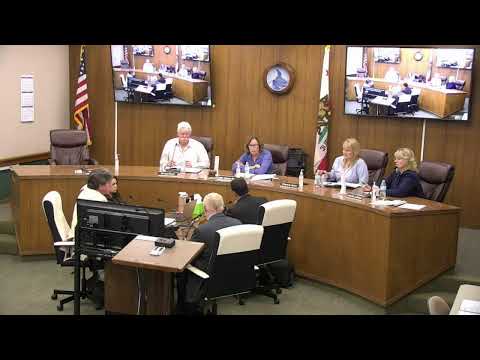
Assistant City Attorney Dave Fleishman reviewed Brown Act, conflicts of interest and Public Records Act rules with the DRC. Planning staff announced a March 13 sign and design workshop, a Cottage Hospital MRI pre‑application, approval of a Wildwood EIR contract and early interest in converting vacant village commercial space into housing.
Assistant City Attorney Dave Fleishman gave a broad Brown Act refresher to the Design Review Committee, covering open‑meeting rules, serial contacts, social‑media cautions, teleconferencing statutes and conflicts of interest under the Political Reform Act. Fleishman told commissioners that the Brown Act’s core purpose is public access and oversight: “People have a right of access to the information and concerning the conduct of their business,” he said, summarizing the legal baseline.
Key points from the Brown Act presentation
- Serial communications and social media: Fleishman warned that back‑channel exchanges and social‑media interactions can create Brown Act risks, including “hub‑and‑spoke” and “daisy‑chain” discussion patterns. He cautioned that even nonverbal social‑media signals can be problematic: a “like” may telegraph a position and contribute to a prohibited nonpublic deliberation.
- Teleconferencing and AB 2449: Fleishman summarized recent legislation governing remote participation, noting procedures for medical or emergency remote attendance and more stringent requirements for teleconferenced meetings.
- Conflicts and disclosures: Fleishman reviewed the Political Reform Act standard for material financial interests, the approximate 500‑foot rule for real property proximity, the Form 700 filing obligation and avenues for seeking formal FPPC advice when a conflict is unclear.
Why it matters: Fleishman said adherence to open‑meeting and disclosure rules protects both public oversight and individual committee members from post‑hoc enforcement. He urged members to consult staff early on conflict questions and to avoid using personal devices or private accounts for city business when possible because those messages may be public records.
Planning staff updates and announcements
After the legal presentation, the Planning Manager provided operational updates and community planning news:
- Sign and design workshop: Staff set a public workshop on signs and objective design standards for March 13 at 6 p.m.; the DRC and Planning Commission will be invited for an interactive session on palettes and proposed objective sign rules.
- Wildwood EIR: City Council approved the Wildwood EIR contract; city staff will meet with the consultant team to begin the environmental review and initial study.
- Cottage Hospital pre‑application: Staff has received a pre‑application for a new MRI room addition at Cottage Hospital; the matter could appear before the DRC in March depending on timing.
- Denmark Square tree removals and replacement: Staff confirmed a permitted parking‑lot rehabilitation included removal of problematic sycamore trees; the property owner is replanting with more suitable species as part of the permit.
- Zoning ordinance effects and housing conversions: Planning staff reported that the city’s recently adopted zoning ordinance changes for the Village Mixed Use zone have already generated pre‑applications and inquiries seeking to convert vacant commercial spaces into residential units. Staff said two separate property owners have approached the city about conversions that could yield a combined total of roughly 40 new housing units in the village core.
Staff closed by encouraging commissioners to attend the March workshop and inviting members to ask staff for briefing materials if they could not attend.
Public comment and committee follow up
No substantive public policy actions resulted from the training. Committee members asked clarifying questions about remote attendance and public‑records obligations; Fleishman and staff offered to distribute the slide deck and to advise members individually on conflicts and communications best practices.