Get Full Government Meeting Transcripts, Videos, & Alerts Forever!
Get email alerts on the Fiscal Fiduciary Code topic
No spam. Unsubscribe anytime.
Committee advances wide-ranging fiduciary code rewrite, approves technical amendments
Summary
A House Judiciary Committee advanced House Bill 327, a broad fiduciary-code update that modernizes trust, probate and guardianship law and authorizes many trustee notices and consents to be sent electronically, while preserving traditional formalities for creating trusts and wills.
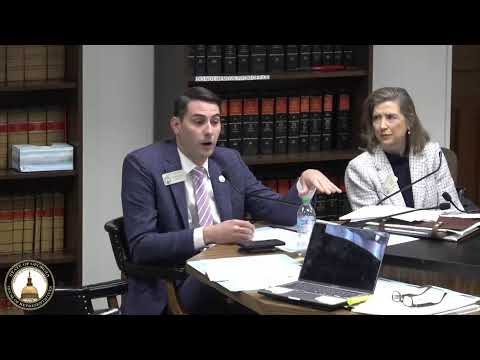
A House Judiciary Committee hearing moved forward a lengthy package of technical changes to Georgia's fiduciary laws, approving the bill known in committee as House Bill 327 (LC 481418) after discussion and two floor-style amendments.
Supporters said the 96-section bill mostly modernizes existing trust and probate rules, aligns language across Title 53 (probate) and Title 19 (family law), and updates trust and fiduciary provisions to reflect electronic communications and modern practice.
"A number of changes are from practitioners around the state who have run into trouble in court or in practice," said Nick George of the fiduciary law section during the hearing. "Almost all of them are ones that have come up from practitioners," he added, describing the bill as an incremental modernization rather than a wholesale rewrite.
Why it matters: The bill touches many routine but consequential parts of estate and trust administration. It would (among other things) (1) bring probate rules into alignment with paternity and DNA standards in Title 19; (2) create clearer duties and notice requirements for personal representatives and trustees; (3) permit most trustee-beneficiary communications, accountings and consents to be delivered electronically (while preserving paper requirements for creation of trusts and wills); and (4) adopt new, clearer rules on trustee removal, nonjudicial trust settlements, decanting, and how charities and donors are treated.
Practitioners who helped draft the bill said the changes were driven by problems surfaced in court and day-to-day practice. Kyle King, who testified as a fiduciary-practice specialist, said the proposal makes the law reflect common practice: "This allows communications to occur in a way that reflects the way we actually do business," he said, referring to electronic notices and portals for trust administration.
Committee action and changes: The committee approved the bill after two amendments offered on the floor. Representative Kelly successfully moved to strike language that would have allowed certain entities organized as LLCs or partnerships to serve as trust directors without individual joint-and-several liability (lines cited in committee as 2436'-2438 and 2455'-2462). The committee also approved a separate amendment adding a narrow cross-reference exempting the Department of Early Care and Learning from certain donor privacy protections passed in prior legislation (the amendment was presented as an insertion to protect child nutrition program reporting).
What the bill does not do: Sponsors emphasized the measure is not intended to change substantive trustee fiduciary duties or to authorize wills to be executed electronically. The bill preserves that creation of a trust or execution of a will require the traditional written/signature formalities, while modernizing notification, accounting and some delegated-authority rules.
Next steps: The bill was reported favorably out of committee with the two approved amendments. Sponsors said they expect additional drafting adjustments as the measure moves through the legislative process.
Quotes
"Almost all of the provisions in the bill have come up from practitioners," Nick George said, describing the bill as practitioner-driven updates.
"This is designed to allow that type of notification, communication relating to trust, except when it comes to creating a trust," Kyle King said, describing the proposal to allow electronic notices and portals for reporting and consent.
Ending
The package is one of the larger statutory housekeeping efforts scheduled this session; the committee approved it with targeted amendments aimed at limiting new entity-based trust-director structures and clarifying a small set of reporting exceptions. Sponsors said they will continue technical work before floor consideration.