House veterans committee re-refers bill to Commerce after divided testimony on electronic pull-tab rules
Loading...
Summary
The Minnesota House Veterans and Military Affairs Division voted 6-5 to re-refer House File 733 — a bill to restore certain electronic pull-tab (e‑pull tab) game features — to the Commerce Committee after competing testimony from charities, veterans groups, tribal representatives and anti‑gambling advocates.
The Minnesota House Veterans and Military Affairs Division voted 6-5 to re-refer House File 733 to the Commerce Finance and Policy Committee after more than an hour of testimony and member discussion on whether to restore electronic pull-tab game features removed by the 2023 law.
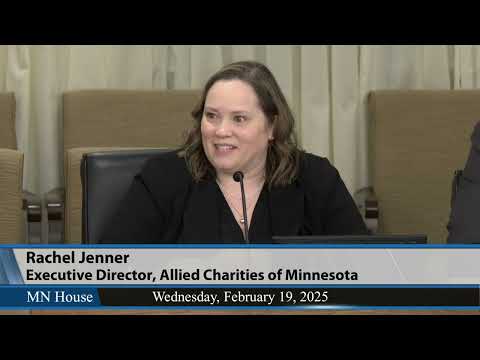
Supporters of the bill, including charitable groups and American Legion representatives, told the committee that the 2023 restrictions on e‑pull tab features have sharply reduced fundraising revenue that local charities, veteran groups and school foundations use to fund community programs. “We have long relied on stable and predictable income from charitable gambling,” Rachel Jenner, executive director of Allied Charities of Minnesota, told the committee. Jenner said some organizations reported revenue declines of 20 percent or more after the new rules took effect on Jan. 1.
The bill's opponents, including the Minnesota Indian Gaming Association and Citizens Against Gambling Expansion, argued that the changes are necessary to preserve the legal distinction between charitable pull-tabs and slot machines and to uphold tribal gaming interests. “Tribes strongly stand by the clarified game feature rules of 2023 and ask the committee to oppose this bill,” Andy Plato, executive director of the Minnesota Indian Gaming Association, said.
Why it matters: Charitable e‑pull tabs are a major fundraising source for many small community organizations and veterans posts, and the dispute raises competing priorities: restoring features that charities say boost revenue versus maintaining the post‑2012, post‑lawsuit limits intended to prevent handheld devices from operating like slot machines and to honor tribal gaming compacts.
What happened in committee: After public testimony from veterans groups, charitable‑gaming managers and tribal representatives, committee members debated whether the bill should advance. Representative Hamilton Yeager moved to delay the bill (a table motion), which failed on a roll call that produced a 5‑yes, 6‑no tally. A subsequent roll call on re‑referral produced 6 ayes and 5 nays, and the committee chair announced: “There being 6 ayes and 5 nays, House File 733 is re‑referred to Commerce Committee.”
Key testimony and figures presented to the committee: - Rachel Jenner, Allied Charities of Minnesota: testified the state’s nearly 1,200 charities that use charitable gambling have seen interruptions to revenue after the 2023 changes; she cited an example packet showing the Claremont Chamber of Commerce (town population cited as 542) raising $232,000 a year across four charitable‑gambling sites and paying $364,000 in state tax in 2024. - Barry Hendrickson, state adjutant/quartermaster (American Legion): said some posts reported January‑to‑January double‑digit revenue decreases and warned of a “vacuum” in community funding if revenues continue to fall. - Tim Engstrom, communications director for the American Legion Department of Minnesota and gambling manager for Bloomington Post 550: said one location saw net receipts down 29% January‑to‑January, with paper pull tabs down 24% and e‑tabs down 44% at that site. - Andy Plato, Minnesota Indian Gaming Association (represents nine of Minnesota’s 11 federally recognized tribes): argued the 2023 clarifications corrected regulator overreach and that tribes rely on slot‑machine revenue to fund tribal services; he also cited fiscal figures presented to the committee claiming charitable gambling produced $4.25 billion in sales in FY22 with roughly $126 million to charitable missions, and $4.57 billion in FY23 with less mission‑directed dollars. - Jack Meeks, Citizens Against Gambling Expansion (CAGE): argued that returning slot‑like features to e‑pull tabs would expand gambling into thousands of neighborhood establishments and could increase problem gambling and youth exposure. - Laura Wade, executive director, Minnesota Gambling Control Board: described the underlying lawsuit as focused on the “open all” feature; she said the administrative and court proceedings ultimately limited the regulatory approach and that the court ruling addressed the open‑all feature.
Discussion highlights: Committee members expressed a mix of priorities. Several members urged bipartisan work to find direct state support for veterans and community programs rather than relying on gambling revenue. Others emphasized honoring the 2012 legislative intent and the 2023 clarifications made after legal challenges and regulatory disagreements. Representative Ray Rauer and others urged working on bipartisan alternatives such as targeted appropriations or other tax relief measures for charities.
Votes and next steps: The committee rejected a motion to table the bill (failed, 5‑yes to 6‑no) and then approved re‑referral to the Commerce Finance and Policy Committee on a 6‑5 roll call. The Commerce Committee will receive House File 733 for further consideration; no final legislative change was adopted at this meeting.
Concise listing of formal actions recorded in the meeting: - Motion: Delay/table House File 733 (roll call requested). Outcome: failed (5 yes, 6 no). No mover/second recorded on the transcript for the table motion. Note: the transcript shows a roll call and the chair announcing the count. - Motion: Recommend House File 733 be re‑referred to the Commerce Finance and Policy Committee. Outcome: approved on roll call, 6 ayes, 5 nays. The committee chair announced the re‑referral.
Context and constraints: Witnesses on both sides said broader market and regulatory factors complicate direct causal claims about revenue shifts. Tribal representatives and gaming officials said some data (tribal casino revenues, for example) are not public, and committee members noted that experts and more complete fiscal data may be required before the Legislature acts. Several members repeatedly asked for additional stakeholder engagement and for bipartisan solutions to support veterans and local charities without undermining tribal compacts.
Ending: With the referral, House File 733 will receive further review in Commerce, where lawmakers will weigh whether to restore e‑pull tab features, pursue tax relief, or seek alternative measures to support charities and veterans programs while respecting the legal distinctions and tribal gaming interests articulated in testimony.