Get Full Government Meeting Transcripts, Videos, & Alerts Forever!
Get email alerts on the Ethans Law topic
No spam. Unsubscribe anytime.
Judicial Juvenile Committee passes amended House Bill 253 to limit court-ordered out-of-state reunification programs
Summary
The committee approved a committee substitute for House Bill 253 (LC 481514S), amending it to prohibit judges from ordering certain family ‘reunification’ camps and out-of-state stays and to bar orders that enforce no-contact periods inconsistent with court orders; the measure passed by voice vote.
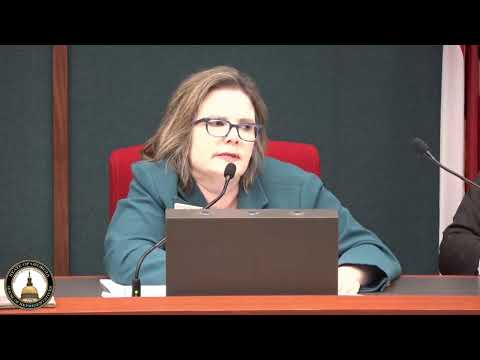
The Judicial Juvenile Committee approved a committee substitute to House Bill 253 — the measure commonly described during the hearing as “Ethan’s Law” — and amended it to narrow the bill’s scope and add two specific prohibitions before passing it by voice vote.
Representative Clark guided the committee through the substitute (LC 481514S) and the proposed amendment. Committee members and witnesses said the substitute narrowed the bill to focus on prohibiting court-ordered family reunification or unification programs that remove a child from a custodial parent and place the child in camps or out-of-state stays that limit contact with the child’s guardian. The amendment the committee adopted added two express prohibitions: (1) no-court-ordered periods of no contact between a child and a parent or legal guardian as part of such programs, and (2) out-of-state stays as part of a reunification program.
The committee’s discussion included legal and practical questions. Judge Neil Bridal, president of the Council of Juvenile Court Judges, told the committee that juvenile court judges appeared unlikely to have ordered such programs and that many instances identified by the committee occurred in superior court proceedings. Committee members also expressed concerns about payment and oversight of counselors or evaluators; Representative Clark said language requiring appointment of a counselor had been removed from the substitute.
After a brief floor reading of the amendment (labeled “amendment A” in committee), a member moved to pass the bill as amended and another member seconded. The committee voted by voice; members answered “aye,” and no recorded oppositions were raised on the transcript. The chair announced the bill passed the committee as amended.
The amendment and passage change the substitute by explicitly forbidding judges from ordering family-reunification camps, workshops or similar programs that (a) violate an existing court order requiring no contact, (b) rely on private youth transporters that use force or create acutely distressing circumstances, or (c) place a child in an out-of-state stay as part of a reunification program. The committee did not record a roll-call tally in the transcript; the record shows a voice vote in favor and the chair’s announcement that the bill passed.
Next steps: the committee signed the substitute and Representative Clark took the paperwork; the committee then adjourned and members indicated they might follow up with staff for clarifying language.
Votes at a glance: House Bill 253 (LC 481514S), as amended by amendment A — Passed by voice vote (aye recorded; no recorded opposing votes on the transcript).