Get Full Government Meeting Transcripts, Videos, & Alerts Forever!
Get email alerts on the Education topic
No spam. Unsubscribe anytime.
Committee approves K–8 "bell-to-bell" ban on student cellphones
Summary
A House education committee approved House Bill 340 (LC492272S), prohibiting student cellphones during the school day for kindergarten through eighth grade with limited exceptions; the measure passed by voice vote and advances to the full chamber.
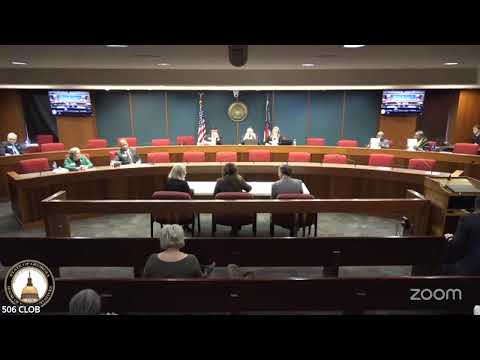
A House education committee on Oct. 27 approved House Bill 340 (LC492272S), a proposal that would prohibit students in kindergarten through eighth grade from carrying or using personal cellphones during the school day, while preserving exceptions for students with individualized education plans and virtual charter students and allowing school-owned devices for instruction.
The bill’s sponsor, Representative Scott Hilton, told the committee the measure is designed to reduce distractions, improve academic performance and help school safety in emergencies. "Bell to bell, no cell," Hilton said, describing the policy’s intended scope as kindergarten through eighth grade. He told the committee, "In an average school day, a child receives over 237 notifications on their phone," and said some students spend "upwards of 90 minutes" on devices during the school day.
Supporters told the committee research and district experience showed early grades saw the clearest gains after implementing similar policies. Miranda Williams of ExcelinEd said statewide action is growing and that in 2024 at least 19 states passed or enacted restrictions on student phone use; she urged a full-day ("bell-to-bell") approach so teachers do not have to enforce device rules each class period. Dr. Grant Rivera, superintendent of Marietta City Schools, described local results after limiting phone access in middle grades: "68 percent of our middle school teachers ... said they're better able to do their job and they're less stressed," and he said middle-school students reported classrooms were better. Rivera also told the committee Marietta purchased protective pouches and that the pouches cost $25.50 each.
Teachers and education groups who testified said the policy helps instruction and student social interaction. Sally Stanhope, a teacher at Chamblee High School, supported the bill’s K–8 scope as a first step and urged a future expansion to high schools. Student speakers offered mixed views: a Dunwoody High School student asked that high school students retain access during lunch and for after-school responsibilities.
The bill preserves local discretion on how to hold devices (examples cited included boxes, pouches or teacher desks) and explicitly allows school-owned laptops or tablets to be used for instruction. It also includes exceptions for students whose medical needs require devices and for virtual charter students. Hilton said the bill’s text intentionally left implementation details to local districts, and several committee members discussed possible funding options for implementation (suggested examples included local school safety funds or ESSER funds), though no dedicated state appropriation was specified in committee testimony.
Committee members asked about costs, classroom operations and whether the policy should also cover high school; several members and witnesses said high school implementation presents additional logistical challenges and that K–8 is a pragmatic first step. The committee debated whether staged implementation or a delayed expansion to grades 9–12 could be included in subsequent action.
The committee approved the bill by voice vote and sent it to the full chamber. The committee record shows only a voice vote; no roll-call tally was recorded in the transcript excerpt.