Get Full Government Meeting Transcripts, Videos, & Alerts Forever!
Get email alerts on the Public Health Report topic
No spam. Unsubscribe anytime.
Custer County public health director reports local outbreaks, preparedness needs and grant balances
Summary
Public Health Director Sarah Wilson told the Custer County Board of Health on Feb. 20 that the county has seen several contained infectious-disease outbreaks, is preparing for state septic regulation changes, and held $67,145.94 in active grant funds. She urged vaccinations, testing and use of available local services.
Public Health Director Sarah Wilson told the Custer County Board of Health on Feb. 20 that local teams had contained multiple contagious outbreaks, that state regulatory changes for septic systems are coming, and that the department has $67,145.94 in active grant funds.
Wilson summarized local illness activity first, saying two hand‑foot‑and‑mouth clusters affected 14 people, mostly children, and a separate COVID outbreak affected 10 adults; both were contained. “Hand‑foot‑and‑mouth is a highly contagious viral illness that causes fever, mouth sores, rash in your hands and feet,” Wilson said, and advised handwashing, surface disinfection and keeping sick people away from others.
Wilson also reported statewide and national trends that she said could affect Custer County. She described a hepatitis A cluster traced to contaminated juice in Boulder, a wave of norovirus cases locally and statewide, and avian influenza detections in wild birds in other Colorado counties. On measles, she described an outbreak in Gaines County, Texas, that had reached 58 cases with 13 hospitalizations as of her latest check; four of those cases were recorded as vaccinated. She warned the board that the Custer County School District’s MMR (measles‑mumps‑rubella) immunization rate stood at 89.2 percent of 323 enrolled students—below the commonly cited 95 percent herd‑immunity threshold—and asked the board to consider outreach ahead of spring travel. “If we were to have cases, we would have to think about different strategies to protect our local children,” Wilson said.
On other communicable‑disease items, Wilson said the county had access to tuberculosis testing (describing the skin test procedure and noting the $25 cost) and reminded residents that avian influenza can be passed to backyard flocks and that people should not touch dead or sick birds. She noted federal stockpiles of avian‑flu vaccine exist but are not available to the public.
Wilson ran through program work and preparedness projects. She said the county has emergency generators and will take part in a regional medical response exercise with neighboring counties. The department is recruiting Medical Reserve Corps volunteers, expanding AED/CPR training and exploring standardized AED purchases (she cited a ZOLL unit that costs about $1,400, replacement pads at about $223, and a full kit price in the $1,800–$2,000 range). Wilson said naloxone kits have been distributed to the Lighthouse Pregnancy Center and that kits are now placed on school transport vehicles.
On prevention and children’s services, Wilson said staff applied for a Children’s Health Fund grant to provide up to 100 free sports physicals (award decisions expected in March) and described ongoing vision and dental grant work that includes a $1,000-per‑child cap for dental services paid from that fund. She said the department’s family‑focused programs (including HCP for children with special needs) are active and that free vision and dental services had helped several local children in the prior year.
Wilson also announced radon outreach: the public health office has 90 free home radon test kits and can supply information on the state’s low‑income mitigation program.
On regulatory and staffing matters, Wilson said proposed changes to state septic regulations will be the subject of a March 10 hearing conducted via Zoom; if adopted, counties would generally have a year to implement changes. She described uncertainty about whether septic permits and inspections should be administered by county planning and zoning or by the public health office, and she asked the board to consider workshops to sort roles and departmental separation.
Wilson reported operational statistics for environmental health: over the past 18 months the department logged 104 compliance issues tied to septic or sanitation matters, with 54 closed, 35 in progress (letters sent, awaiting response), 11 with counsel and 4 under active investigation; she said one case was considered urgent. She added that 14 septic systems were installed following public health efforts during that period.
On finances, Wilson said the department hosted an internal grant workshop and that active grant funds available in the public health account totaled $67,145.94. She said staff are coordinating with the county’s financial director to plan for possible federal funding delays or cuts.
Finally, Wilson informed the board that long‑time nurse and county collaborator Beth Raines died Feb. 18; she asked members to consider outreach to Raines’s family.
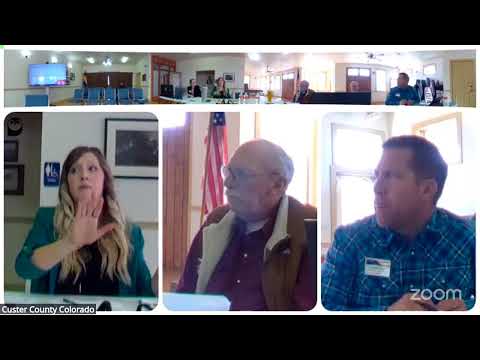
Votes and formal actions taken during the meeting included approval of the Nov. 27, 2024, minutes and the board’s selection of a chair. The meeting convened on Zoom and included board members and staff participating remotely.
“We do have vaccines available,” Wilson said of MMR and other routine immunizations, and she urged residents without insurance or with access concerns to contact public health for assistance.