Get Full Government Meeting Transcripts, Videos, & Alerts Forever!
Get email alerts on the Eastern Drc Security Crisis topic
No spam. Unsubscribe anytime.
UN brief warns M23 advance risks wider war in Great Lakes region
Summary
A Security Council briefing warned that recent advances by the M23 rebel group, including the capture of Goma and Bukavu, raise the risk of a regional war and called for an immediate ceasefire, renewed political dialogue and a coordinated regional response anchored in existing agreements.
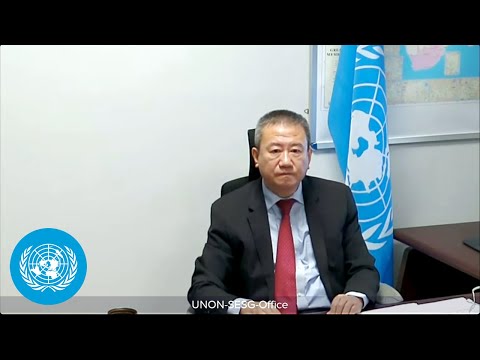
Mister Xiao, a briefing speaker to the Security Council, told council members that the situation in eastern Democratic Republic of the Congo has deteriorated rapidly and now risks triggering a wider regional conflict.
He said the M23 rebel group "stormed the city of Goma" in January and, "after only 3 weeks, M23 now controls Bukavu," and warned that the group was advancing toward other strategic areas in North and South Kivu. "The risk of a regional conflagration is more real today than ever before," he said.
The briefing stressed why the situation matters: if hostilities spread, the humanitarian, human rights and security consequences would be severe across the Great Lakes region. Xiao pointed to recent regional and continental diplomatic activity — including summits of the East African Community (EAC), the Southern African Development Community (SADC), and a heads-of-state meeting of the African Union Peace and Security Council on Feb. 14 — as evidence of a rapidly evolving regional response.
Xiao urged three immediate priorities he said should guide international and regional action: an immediate ceasefire and compliance with international law; the resumption of direct political dialogue drawing on existing negotiation processes; and a "holistic regional approach" to address root causes of instability. He specifically called for efforts to merge the Nairobi and Luanda processes and to revitalize the Addis Ababa framework agreement and the pact of the International Conference on the Great Lakes Region.
He repeated appeals made at regional summits that emphasized respect for the DRC's territorial integrity and condemned the M23 offensive and "the support afforded to that group." The speaker also said secretariats of regional organizations and the African Union Commission had agreed to follow up on a joint technical coordination mechanism and that preparations for a joint chiefs-of-staff meeting of EAC and SADC were underway.
Xiao called for women to be "duly included" in mediation mechanisms, commended Congolese civil society and religious leaders for facilitating consultations, and said the United Nations stood ready to provide political and technical support to regional efforts. He told the council that implementation of summit outcomes and coordination among regional actors must be "expeditious and effective."
The briefing noted uncertainties the council was not asked to resolve: Xiao said the council did not yet have full information about the M23's agenda, the identity and aims of its backers, or how far the group would advance. He framed the response as contingent on coordinated regional political will and implementation of decisions by heads of state. "We must act quickly, collectively, and in a decisive fashion," he said.
The session ended with the president of the council thanking Mister Xiao for his briefing.