Get Full Government Meeting Transcripts, Videos, & Alerts Forever!
Get email alerts on the Civil Rights History topic
No spam. Unsubscribe anytime.
California senators welcome Japanese American survivors, recall WWII internment and Manzanar
Summary
Senators introduced and welcomed 14 Japanese American guests who survived wartime internment, and several senators offered remarks recalling Executive Order 9066, the wartime camps and the later federal reparations effort.
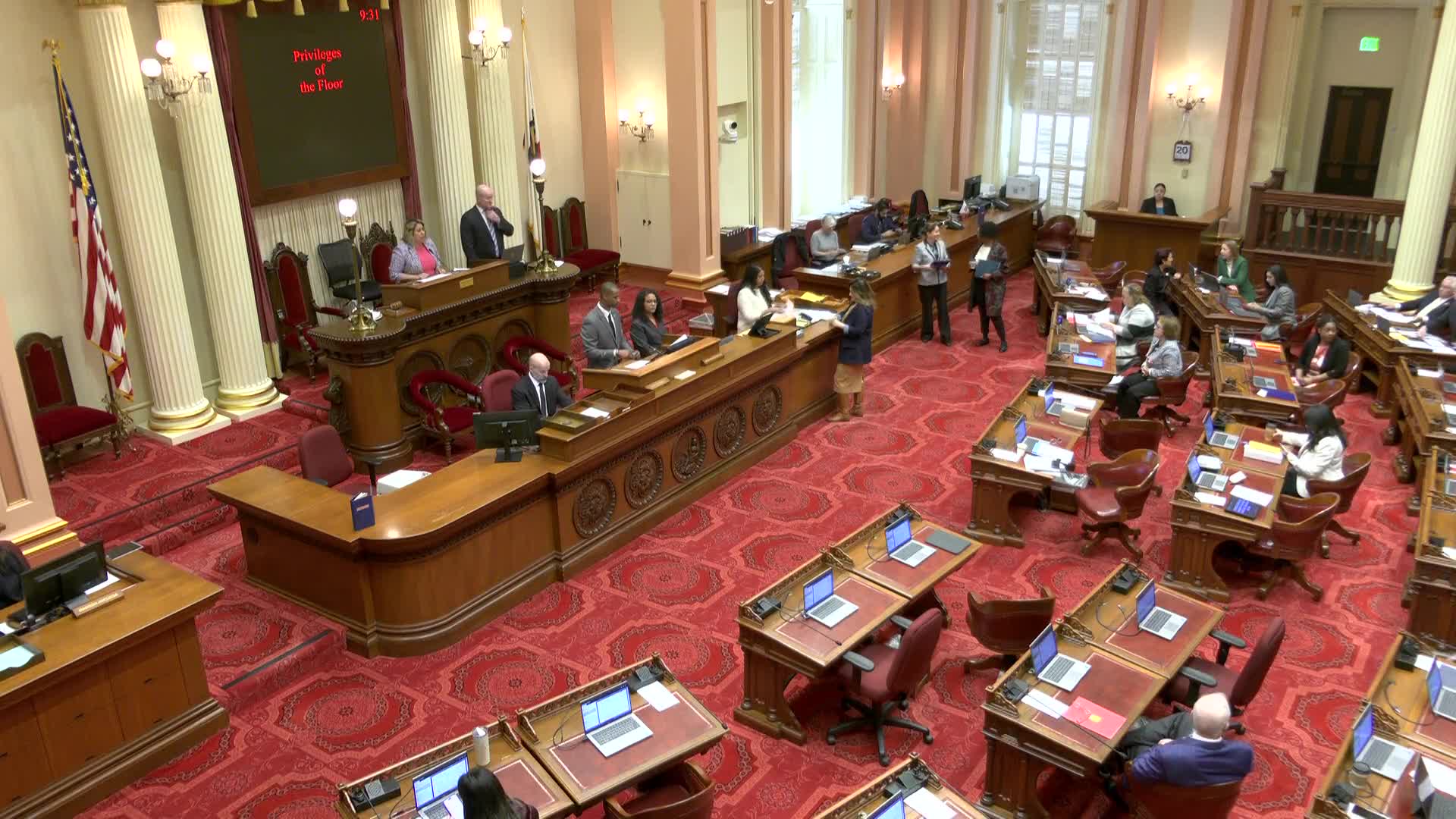
On Feb. 20 the California State Senate recognized 14 guests who survived wartime incarceration of Japanese Americans and used the floor to recount the history and consequences of the internment program initiated after President Franklin D. Roosevelt issued Executive Order 9066 in 1942.
Majority Leader Senator Cabaldon introduced the guests and described the historical context of exclusionary immigration laws, land ownership prohibitions and the 1942 executive order that authorized mass removal and detention of people of Japanese ancestry on the West Coast. “It is absolutely essential that we stand up for our people, and the consequences when we fail,” Cabaldon said, welcoming the guests and urging colleagues to remember the past.
Multiple senators addressed the chamber. Senator Jones shared a family story about wartime service and the importance of visiting Manzanar. Senator Robert (O'Hiel) described Manzanar as a National Historic Site in Inyo County and emphasized the site’s value as a memorial and educational resource. Senator Hamburg and others recalled the 442nd Regimental Combat Team — a highly decorated U.S. Army unit composed of many Nisei soldiers — and noted the resilience of internees who later volunteered to serve in the U.S. military.
Speakers traced the policy arc from World War II removal to postwar return and loss of property, and then to later remedies: Cabaldon mentioned the federal redress law and the 1988 reparations program and the 1998 creation of the California Civil Liberties Public Education Fund.
The Senate welcomed the guests with a group photo and then recessed briefly before resuming business. No formal legislative action was taken; the floor recognition was ceremonial and educational in purpose.