Get Full Government Meeting Transcripts, Videos, & Alerts Forever!
Get email alerts on the Campaign Finance Security topic
No spam. Unsubscribe anytime.
Committee approves bill allowing campaign funds for candidate security measures
Summary
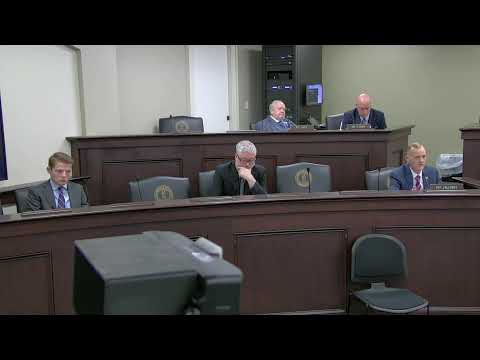
A Kentucky House committee on [date not specified] gave favorable approval to House Bill 373, sponsored by Representative Wade Williams, to let state candidates and officeholders spend campaign funds on reasonable security measures for themselves, family members and campaign or office staff.
A Kentucky House committee on [date not specified] gave favorable approval to House Bill 373, sponsored by Representative Wade Williams, a bill that would allow state candidates and officeholders to use campaign funds to pay for "reasonable cost of security measures" for the candidate, members of the candidate's family and campaign or office employees.
The bill's sponsor told the committee the language aligns state practice with a recent change in federal guidance from the Federal Election Commission and that the funds would come from campaign accounts rather than taxpayer dollars. "This bill modernizes campaign finance laws to allow for the protection of candidates and their loved ones," Representative Wade Williams said while introducing the measure.
Supporters said the change responds to a rising number of threats and safety incidents involving elected officials and candidates. Williams listed example security items covered by the bill as "security hardware, alarm systems, motion detectors, security cameras" and said the intent is to include "everybody in state office" and close family members. Several members described personal or well-publicized incidents during discussion as evidence of need for the measure.
Some members urged caution about potential misuse and cost. Representative Marzian said the measure "opens it up to a lot of, maybe fraud," and expressed concern that broad authorization could allow unnecessary or expensive security spending. Representative Chester Burton, explaining his yes vote, recounted having known public officials who faced threats and said he appreciated the bill's intent. Representative Roberts urged cooler tone in public discourse and called the bill "a crucial issue to ensure that candidates know that they can make sure that they are safe."
The committee recorded a motion and second, took roll call, heard several members explain their votes, and the bill "passed with favorable expression," according to the committee chair. The transcript records multiple members speaking for and against the bill; the committee did not specify statutory citation changes beyond the bill number in its introduction.
The bill text reported to the committee specifies that only campaign funds—not state funds—may be used, and lists examples of covered security measures but does not in the transcript record set dollar limits, an approval process for specific expenditures, or an enforcement mechanism. Those details would remain to be reviewed on the House floor and in committee markup if the bill proceeds.
Votes at a glance: the transcript shows several members explaining votes (both yes and no) and the chair announcing the bill passed with favorable expression; the transcript does not provide a full numerical roll-call tally in a single, explicit count.
The committee moved on to other business after the vote; no additional directions to staff or implementation assignments for HB 373 are recorded in the transcript.