
CareerTech staff outline draft funding formula to redistribute $75 million and reduce inequities
Get AI-powered insights, summaries, and transcripts
Sign Up Free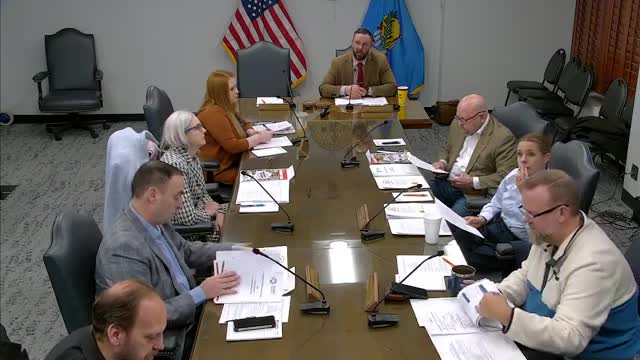
Summary
Agency staff presented a draft funding formula that would use a $75 million state input to recalculate allocations to Oklahoma technology centers, replacing the current $50.4 million baseline and phasing changes over three years to limit budget disruption.
Agency staff presented a draft of a revised funding formula at the Oklahoma CareerTech State Board meeting that would reprioritize state aid using a proposed $75,000,000 funding input instead of the current $50.4 million distribution.
The presenter described the formula as a multi-part allocation that begins with local ad valorem revenue, sets aside campus and instructional allotments, and creates program-level funding amounts that are then averaged and prorated so smaller districts move closer to an equity benchmark. Staff emphasized the proposal is a draft and would be implemented over a three-year rollout to avoid abrupt budget decreases for affected centers.
Under the draft, roughly 60–70% of local ad valorem receipts would be considered available to support full-time programs. A statutory campus allotment of 10% of the overall allocation would remain, and a second 10% would be allocated for student services and instructional costs based on audited expenditures. The formula also includes performance incentives tied to student service rates for 11th- and 12th-grade participation; high-yielding centers would receive bonuses, while low-yield centers would not receive that portion.
Agency staff said the $75 million figure represents the agency's current base plus the $25 million in one-time funding it received last year; staff will ask the legislature to fold that one-time appropriation into the base so it can be used in the formula going forward. The presenter told the board that if the $75 million is not secured, the formula could be run with a smaller input but warned the changes would be less viable at the current $50.4 million level.
Staff walked the board through sample outputs for individual centers. The presentation highlighted Western Technology Center as an example of a center the formula would raise materially (noting a current state aid figure of about $572,000 compared with a formula outcome near $1.9 million). Conversely, a few large centers that have grown local ad valorem would see reductions under the draft; staff proposed phasing such reductions over multiple years and holding back portions of the allocation during an initial implementation period to avoid immediate cuts.
Board members asked how the formula would react to declining ad valorem and whether allocations would swing unpredictably. Staff explained the allocation uses a three-year average on local revenue and includes an October audit and a small midyear adjustment so changes are gradual. Staff also described a process of spring-number allocations to begin the fiscal year and an October 15 audit that would trigger midyear adjustments if necessary.
Staff framed the draft formula as intended to drive outcomes: encourage adding programs, increase student participation and certifications, and better align state aid with current local revenue. They said the proposal is still under review by the agency finance committee and will return for more discussion and possible future action. No formal vote on the funding formula occurred at the meeting.
Impact and next steps: staff said they will continue consultations with the finance committee and superintendents, refine the model, and pursue legislative action to secure the $25 million one-time amount as base funding. Any change would include a multi-year implementation schedule to protect centers experiencing declines in state aid.