Get Full Government Meeting Transcripts, Videos, & Alerts Forever!
Get email alerts on the Data Privacy topic
No spam. Unsubscribe anytime.
Council presses OCFO on property‑tax data privacy and use of AI to detect tax noncompliance
Summary
Councilmembers pressed OCFO officials about whether property tax search tools expose personally identifiable information, how the agency masks sensitive records (including federal judges) and whether the Audit Division’s use of vendors to scan public social media could put personal data at risk.
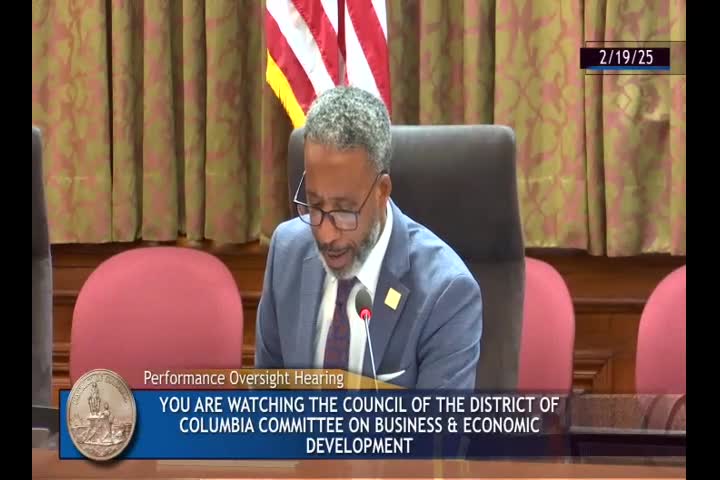
During the Committee’s Feb. 19 oversight hearing, Councilmember Kenyon McDuffie raised public testimony alleging the Office of Tax and Revenue’s (OTR) Integrated Tax System publicly exposes sensitive personal data through search and extract tools. The committee sought clarity from OCFO and OTR leadership about whether public extracts contain personally identifiable data and whether the office is taking additional steps to protect privacy.
OCFO and tax leadership response: OCFO representatives said they had reviewed the testimony and that the office believes it is complying with current law for property‑tax records. Deputy CFO and Tax Commissioner Keith J. Richardson told the committee that property information — specifically name and address — is commonly published across U.S. jurisdictions and that OCFO follows the statute and long‑standing practice in the District.
Masking and limited disclosure: Richardson said the District masks some records — for example, federal judges are masked consistent with federal law — and that OCFO does mask information for victims when requests are submitted. He also told the committee he could not speak to what every other jurisdiction does but that the District’s practices include some targeted masking and victim protections.
Recommendations and next steps: CFO Lehi Lee told the committee OCFO would work with the Council on possible legislative changes if the Council determined existing law does not adequately protect privacy. Lee said the office’s first step was to establish whether practices complied with current law and that OCFO staff were prepared to engage in dialogue about potential statutory changes.
Audit division using outside data and AI vendors: The committee asked whether OCFO’s Audit Division’s discussions with an outside vendor, IVECS (referred to in hearing as Ivex Tech / I V I X Tech, Inc.), to use automated tools to collect publicly available social‑media and online business information could expose individualized personal data or otherwise be exploitative. OCFO officials said the planned work would focus on business‑level information and publicly posted business data; they described the effort as a standard audit practice to detect noncompliance. The CFO declined to detail “audit methods” publicly citing investigative confidentiality, and emphasized that vendors would gather public information for business‑focused purposes.
Quote: “We are responding to this testimony and wanted to assure you that we…the first step was to figure out whether or not we were violating the law,” Lehi Lee said.
What the committee is asking next: Councilmembers pressed OCFO to consider whether statutory changes are required to limit search inputs and outputs for public property records, restrict access to historical tax documents or revisit public‑facing rules for extracts. OCFO said it will meet with the committee to explore options and left open the possibility of drafting or supporting legislation if Councilmembers seek statutory change.