Get Full Government Meeting Transcripts, Videos, & Alerts Forever!
Get email alerts on the Sustainability topic
No spam. Unsubscribe anytime.
Douglas County sustainability staff present climate, food‑system and open‑space initiatives
Summary
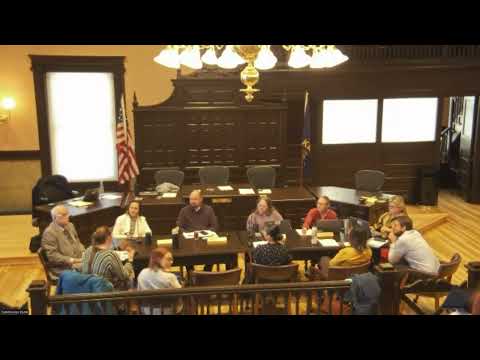
At a Feb. 19 work session, Sustainability Manager Kim Kreiner Ritchie and staff outlined the county's ADAPT climate plan actions, an energy hub and incentives, the Food Policy Council's work including an Indigenous food systems study, and an open‑space program focusing on Lone Star Lake and the Wakarusa River Valley.
Kim Kreiner Ritchie, the Douglas County sustainability manager, told the Board of County Commissioners at a Feb. 19 work session that the office is implementing strategies from three county plans, including ADAPT Douglas County, the county’s community climate adaptation and mitigation guide.
“Because our work can sound like a lot of big abstract ideas sometimes, we have lined up some brief examples in each of these areas, just to illustrate for you how the strategies in these plans can translate into real action,” Kreiner Ritchie said.
Climate and energy: Jamie Hoffling, the county’s sustainability impact analyst, said a local greenhouse‑gas emissions inventory shows the transportation sector and the built environment are the largest contributors. Hoffling described two county facility projects — lighting upgrades and solar arrays — and estimated that lighting replacements at several county buildings and fairgrounds would “save us about $15,000 annually” and that planned solar panels are expected to offset “more than a third” of projected energy consumption at new county facilities. Hoffling said the county is building an online energy hub that will list financial incentives for residents, businesses and nonprofits, and that the county has submitted a concept for grant funding aimed at reducing energy costs for income‑eligible households.
Electric vehicles and charging: Hoffling said regional planning is underway with the metropolitan planning organization and cities to assess public charging needs. She also noted that the state charges registration fees intended to help make up for road funding lost to reduced gasoline purchases: “when a person drives a hybrid or an electric vehicle, they are charged extra at the time of registration,” she said, describing current registration surcharges of about $100–$150 for electric vehicles and about $100 for hybrids.
Food systems and equity: Connie Fitzpatrick, the county’s food systems specialist and staff liaison to the Douglas County Food Policy Council, described a community‑led approach used by Forward Cities’ E3 initiative to support equitable food entrepreneurship. Fitzpatrick said the council backed a mobile‑vendor study that led to programming — the Online Restaurant Academy — to help new food businesses. The council also participates in the Kansas Food Action Network and took part in a recent advocacy day in Topeka.
Indigenous food systems: Star Her Many Horses, a sustainability intern, described work to develop an Indigenous Food Systems Study and Action Plan and outreach to regional tribal programs, including a recent visit to the Meskwaki Nation’s Red Earth Gardens in Tama, Iowa, as part of preliminary relationship building.
Open space and waste: Kreiner Ritchie described the new Douglas County Land Protection Program (a partnership with Kansas Land Trust) and facility improvements at Lone Star Lake — including picnic shelters, dock replacements and interpretive signage — intended to increase access. She also described a new Wakarusa River Valley Vision and Area Plan that will use spatial analysis and stakeholder engagement. On solid waste, staff said the county is preparing an update to its waste management plan — last comprehensively reviewed in 1996 — to meet Kansas Department of Health and Environment requirements and that the county is coordinating with the City of Lawrence and consultants to complete a modernized plan.
Why it matters: The presentation tied climate mitigation and adaptation to county facilities and services, outlined steps to support local food entrepreneurs and Indigenous food sovereignty work, and launched technical and engagement work for land conservation and waste planning. Several commissioners asked staff to track equity and tenant/renter impacts when promoting energy incentives.
Ending: Staff recommended continued coordination with local cities, regional partners and community groups as projects move from planning to implementation. The session was informational only; no formal decisions were made.