Get Full Government Meeting Transcripts, Videos, & Alerts Forever!
Get email alerts on the Heritage Conservation topic
No spam. Unsubscribe anytime.
Douglas County outlines heritage grant program, archaeological survey and land‑protection work
Summary
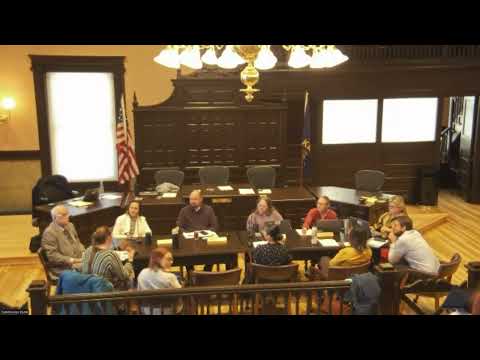
At a Feb. 19 Douglas County work session, Heritage Conservation Coordinator Caitlin Amerlin summarized the county’s Natural and Cultural Heritage Grant Program, which has funded more than 100 projects and $3 million in investments, and described plans for an updated archaeological survey and a private‑land protection program.
Caitlin Amerlin, the heritage conservation coordinator for Douglas County, told the Board of County Commissioners at a Feb. 19 work session that the county’s Natural and Cultural Heritage Grant Program has funded “over a hundred projects in Douglas County and totaled to over $3,000,000 worth of investment,” supporting projects ranging from prairie and riverbank restorations to museum and brick‑and‑mortar historic preservation efforts.
The grant program dates to the county’s Natural and Cultural Heritage Task Force recommendations and remains the “bedrock” of the county’s heritage work, Amerlin said. The Heritage Conservation Council (HCC), a seven‑member advisory body created in February 2011, provides volunteer oversight; the county currently staffs heritage work with one full‑time coordinator.
Amerlin said the county completed systematic surveys of rural historic resources, largely funded by Historic Preservation Fund grants through the State Historic Preservation Office, and produced a searchable map and a Rural Historic Resources Guide intended to inform future planning and preservation work.
The office is preparing an archaeological survey to update a countywide study carried out in 1996. Amerlin said the county will fund the survey from reserve funds approved by the county commission in 2022 and is close to issuing a request for proposals. She added the county has been doing outreach to state and tribal historic preservation offices to address “a lot of sensitivity around archaeological data.”
Amerlin said the HCC and staff are shifting toward a convening and support role — focusing on strategic planning, partnership building and a needs assessment for local historical societies — while continuing to manage the grant program. She said the county’s recent budgets have also transitioned some professional services funding to support events and celebrations tied to living heritage projects.
On private‑land conservation, Amerlin described a partnership with the Kansas Land Trust and a newly named Douglas County Land Protection Program that will offer cost‑share support for conservation easements on properties that provide “significant public benefit.” She said applications were open through February and that staff hoped to receive submissions this cycle.
Why it matters: Amerlin framed the program as an unusual, sustained local funding source that enables small museums, historic societies and conservation projects to proceed with work that often would lack other funding. Commissioners and staff discussed using major upcoming events — including World Cup visitors referenced during the meeting — and tours to better showcase the county’s heritage sites and to measure economic impacts in collaboration with regional tourism partners.
The work session was informational; no formal actions were taken.
Ending note: Amerlin said staff will present grant recommendations in mid‑April and that she expects the archaeological RFP and land protection applications to be the major near‑term deliverables for the heritage program.