Get Full Government Meeting Transcripts, Videos, & Alerts Forever!
Get email alerts on the Retail Regulation Smoke Shops topic
No spam. Unsubscribe anytime.
Planning Commission recommends smoke‑shop text amendment to City Council with changes after extended public comment
Summary
The Fresno Planning Commission voted Feb. 19 to recommend that City Council adopt a text amendment creating a regulatory framework and caps for smoke shops, forwarding the draft with several commission amendments including a higher per‑district cap and a longer amortization period.
FRESNO, Calif. — The Fresno City Planning Commission voted Feb. 19 to recommend that the City Council adopt a proposed text amendment to the development code that would create a regulatory framework for smoke shops, limit the number of smoke shops, require conditional use permitting for new smoke shops, and establish operational standards. The commission made a set of amendments to the draft before forwarding the measure to council.
Planning staff presented the proposal as a text amendment to the development code that would add definitions (including “smoke shop,” “smoke shop operator,” “smoking paraphernalia,” “tobacco retailer”) and replace the existing Section 15‑2706 regulations with a new regime (added definitions would be placed in Section 15‑6208). Philip Segrace of the Planning and Development Department summarized the draft: new smoke shops would require a conditional use permit (CUP) and a city business license; operational requirements would cover landscaping, lighting, signage, window glazing, limits on vending machines, anti‑loitering measures, staff training, prohibited products and annual inspections; the draft also proposes an amortization process for existing smoke shops and a numerical cap — 49 citywide (described in staff materials as seven per council district) — and location limits, including a 1,000‑foot buffer from sensitive uses such as schools, day care centers and parks.
Segrace told the commission that staff maintained the draft after meeting with business owners and operators following a Jan. 15 continuance. He described the draft’s scope as targeting smoke shops — businesses where the sale of smoking paraphernalia, tobacco and vapor products is the primary retail activity — rather than tobacco retailers that sell tobacco incidentally (for example, convenience stores).
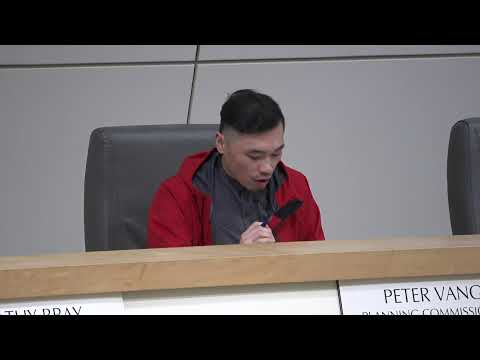
Public comment filled much of the hearing. Several tobacco‑control advocates urged broader regulation. Abel Rebello, co‑chair of the Fresno County Tobacco Free Coalition, said public health advocates support stronger oversight and urged a tobacco retail licensing (TRL) program that would regulate all retailers that sell tobacco. “These stores contribute to over saturation of tobacco availability and exacerbates health inequalities in Fresno,” Rebello said.
Business owners and operators said the draft would close longstanding, licensed businesses and leave employees jobless. Multiple shop owners described repeated, sometimes large enforcement actions and said the city’s enforcement practices and state guidance were unclear or inconsistent. One owner who identified himself as a long‑time operator told the commission he has run businesses in Fresno for 15–20 years and asked the city to enforce illegal operators while grandfathering compliant shops.
The department head for Planning and Development (name not specified in the transcript) responded to questions about enforcement. The department head said the department had inspected roughly a hundred locations and that the shops inspected “had some form of violation” and that follow-up inspections were scheduled to check compliance. Staff confirmed the draft would include unannounced inspections and a schedule of fines tied to violations, including selling to minors and failing to meet signage requirements.
An attorney representing the California Smoke Shop (Todd Weingroup, McCormick, Barstow) argued the draft would retroactively penalize lawful investments and said the ordinance raised constitutional concerns. “This ordinance will put 61 business men out of business,” he told the commission, arguing the draft focused on a defined group and did not address illegal retailers that operate without licenses.
After testimony, Chair Vang moved a motion recommending approval of the environmental assessment and the text amendment to City Council with several changes suggested during the hearing and in commission discussion. The commission’s refinements, as recorded at the hearing, included: raising the per‑district cap from seven to ten; lengthening an 18‑month amortization period for existing smoke shops to 24 months; making the 1,000‑foot sensitive‑use buffer and other locational rules apply only to new smoke shops while grandfathering existing lawful businesses in place when feasible; favoring a merit‑based selection system rather than a random lottery if applications exceed available permits; retaining the conditional use permit requirement for new smoke shops; and directing council to consider whether similar regulation or a tobacco‑retailer licensing regime should apply to incidental tobacco sellers.
Vice Chair Bridal seconded the motion. Commissioners voted to forward the item to City Council with those recommendations.
What the draft would do: Staff’s proposal and the commission’s recommended changes, as explained in the hearing, would (1) create a definition and regulatory category for smoke shops, (2) require CUPs and a business license for new smoke shops, (3) set operational standards (landscaping, lighting, signage, training, no internal/external vending machines, transparency/window glazing), (4) prohibit sales of specified products (including certain cannabis/cannabinoid products and products banned by state law), (5) permit annual and unannounced inspections and penalties for violations, (6) establish a citywide cap (staff proposed 49 citywide, seven per district) with a council resolution pathway to increase the number, and (7) include an amortization process for existing shops in sensitive locations unless businesses secure a CUP.
Speakers at the hearing requested additional steps the commission cannot itself enact: multiple commenters and public‑health advocates asked the council to consider a tobacco retail license that would regulate all retailers selling tobacco, not only stores defined as smoke shops; business owners requested better clarity from code enforcement and a formal workshop so staff and enforcement could explain permissible products and practices.
The commission’s vote transmits staff’s environmental assessment and the recommended text amendment, with the changes described above, to the City Council for formal consideration. Commissioners and staff repeatedly noted the commission’s role is advisory: the council must take final legislative action.
Next steps: The item will appear on City Council’s docket for formal review; council staff will prepare ordinance language and any legal analysis requested by council. The commission recommended that council also consider whether the proposed regulatory approach should be broadened to apply to all tobacco retailers and to study a TRL model as an alternative or complement to the smoke‑shop rules.