Get Full Government Meeting Transcripts, Videos, & Alerts Forever!
Get email alerts on the Public Health Tobacco topic
No spam. Unsubscribe anytime.
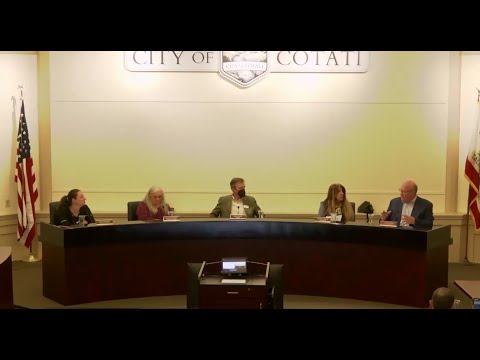
Public health advocates urge Cotati to adopt tobacco retail licensing; council asks staff to add item to workplan
Summary
Speakers urged Cotati to require tobacco retail licenses to curb youth vaping and flavored tobacco sales; council instructed city manager to add a tobacco retail licensing item to the strategic/projects list for staff review, including enforcement considerations.
Several public commenters urged the Cotati City Council to adopt a tobacco retail licensing ordinance to reduce youth access to vaping and flavored tobacco products.
Pam Granger, chair of the Tobacco Free Sonoma County Community Coalition, told the council she recommended a tobacco retail license that would allow the city to fund local enforcement and education, and to levy fines and revoke permissions to sell products. “Tobacco retail license is one way of reducing young people's access and availability to tobacco products,” Granger said during the public‑comment period. Granger provided the council with a model policy packet and asked the city to join neighboring jurisdictions that have already adopted similar ordinances.
A second speaker, Ashley Portillo, identified herself as a Sonoma State University nursing student and student leader and described personal loss among young people she knew to vaping and nicotine addiction. “These products are harmful and easy to get and socially acceptable,” Portillo said, citing regional youth survey data and national Centers for Disease Control statistics on long‑term health effects.
During the staff discussion that followed, Council Member Sparks asked whether a tobacco retail license appeared on the department project lists. City Manager Damien responded that the topic was not yet on the active project list in the packet but that a comment letter and tonight’s public comment had been received. He said staff would “add it when we get to looking at the projects, for sure.”
Council members noted enforcement and funding as the key implementation questions. Staff and commenters both said a local licensing fee is intended to fund education and enforcement, and that without a local fee and penalty structure, state restrictions can be difficult to enforce locally. Council directed staff to include a tobacco retail license option on the city manager’s office project list for council review; the council did not adopt an ordinance or take a formal vote at the special meeting.
If the council pursues a licensing ordinance, staff said it will present options that include a proposed fee, enforcement structure and possible partnerships with Sonoma County and neighboring cities to coordinate compliance checks and retailer education.
Public‑comment materials submitted with the packet identified Petaluma, Sebastopol, Windsor and Santa Rosa as examples of local jurisdictions that have recently adopted tobacco retailer regulations. The council did not set a deadline for staff to return with a draft ordinance or ordinance options.