Get Full Government Meeting Transcripts, Videos, & Alerts Forever!
Get email alerts on the Water Rate Proposal topic
No spam. Unsubscribe anytime.
Queen Creek staff propose interim 15% water rate increase to shore up utility finances
Summary
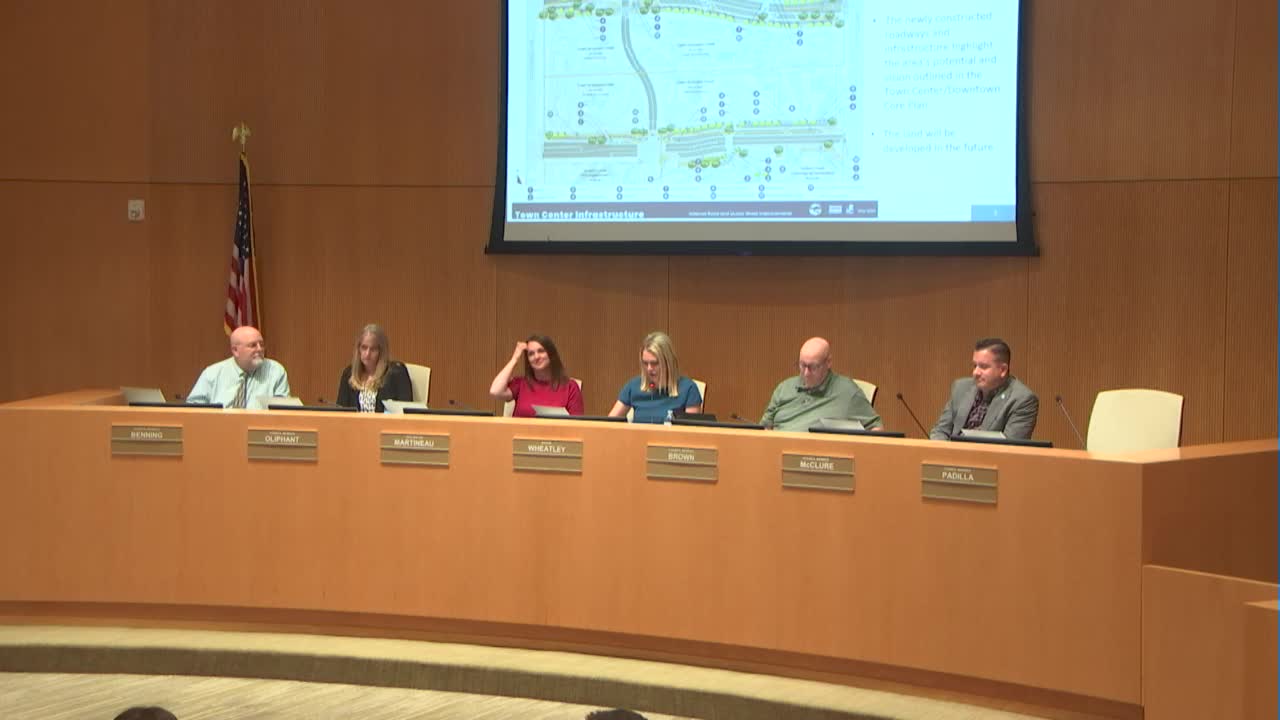
Scott McCarty, the town’s deputy town manager and chief financial officer, told the Town Council on Feb. 18 that staff is proposing an interim 15% increase to town water rates to stabilize utility finances and help address a working deficit while a comprehensive rate study is completed.
Scott McCarty, the town’s deputy town manager and chief financial officer, told the Town Council on Feb. 18 that the town needs to increase water revenues to sustain service for more than 40,000 water customers and to address a multi‑million‑dollar shortfall.
“We need to ensure we provide safe, reliable water to our 40 plus thousand customers,” McCarty said, opening a technical presentation that traced rapid growth in accounts and infrastructure investments and explained the mechanics of the town’s monthly water bill and its separate Central Arizona Groundwater Replenishment District (CAGRD/CAGRID) assessment.
McCarty said staff is proposing an interim 15% increase in the town’s water rates that would raise about $4.3 million annually if consumption stays constant. The 15% adjustment would apply to both the base charge and consumption tiers; for a typical single‑family account staff estimated the change would increase monthly bills by about $3 to $6 depending on seasonal use. Under the staff schedule, the council could adopt a notice of intent to increase rates on March 5, hold a public hearing on May 7 and have new rates reflected on bills issued after July 29.
McCarty described a multi‑year context: the utility’s service area has grown substantially in recent years, staff estimates the town has invested nearly $300 million in water infrastructure and the utility carries about $240 million in debt tied to acquisitions and system expansion. He said the water fund showed a deficit of “a little over $11,000,000” at the end of fiscal 2022–23, and that the reported cumulative deficit stood near $23,700,000 with a working deficit “just shy of $17,000,000” after anticipated reimbursements. McCarty said the interim rate increase is intended to stabilize operating results while staff completes a comprehensive rate and capacity fee study later this year.
McCarty also detailed the town’s long‑running work to reduce CAGRD assessments by acquiring water supply and recharge credits. He said the town’s actions have reduced CAGRD charges by about $45.1 million in aggregate and that, in 2024, the town’s management of replenishment assets lowered those charges significantly for many customers. Paul Gardner, the town’s water resource director, told council that bringing more properties into sewer would affect recharge calculations and that at full build‑out sewer conversions could represent roughly one million gallons per day of additional return flows.
Council members pressed staff on fairness between customers inside the town boundary and those outside it (about 35% of water sales occur outside town limits), on how capacity fees and monthly rates should share costs, and on monitoring direct program costs. Several members, including Vice Mayor Martineau and Council member Benning, voiced support for the town’s strategic goal of becoming a designated water provider so the town can control replenishment decisions and reduce long‑term costs. Council member Brown asked staff to track and report direct administrative costs that might offset the revenue gained from rate changes.
Constance Townon Wilson, the town’s communications and marketing manager, reviewed outreach plans including an online bill‑modeler on the town website, a news release, e‑blast to utility customers, bill inserts and targeted outreach to senior programs and stakeholders. She said staff would place concise signage in high‑traffic town facilities explaining the proposed 15% increase and directing residents to the website for full details.
Council did not vote on a rate increase at the meeting. The council did approve earlier routine consent items and later moved to adjourn into executive session; staff said the rate discussion will return in a more formal calendar with public hearings and a draft rate study later this spring and summer.