Get Full Government Meeting Transcripts, Videos, & Alerts Forever!
Get email alerts on the Education topic
No spam. Unsubscribe anytime.
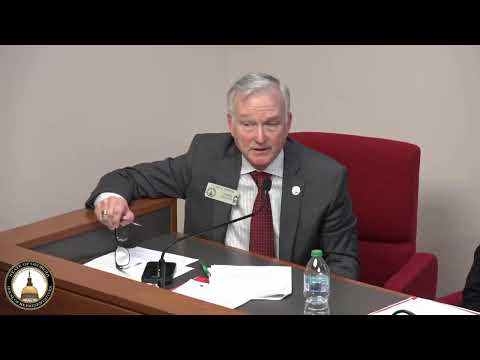
Education subcommittee gives due‑pass to bill restricting transgender student participation in school athletics
Summary
The House Education Subcommittee on Policy voted to advance HB 267 — the "Riley Gaines Act" — after testimony both supporting and opposing the bill on how schools should define sex for athletics, locker‑room access and related code revisions.
ATLANTA — The House Education Subcommittee on Policy voted to give a due‑pass recommendation to House Bill 267, known in the hearing as the "Riley Gaines Act," advancing legislation that would limit participation in K‑12 and collegiate athletics and regulate single‑ and multiple‑occupancy changing areas and overnight accommodations based on an individual’s sex as recorded at or before birth.
The measure, presented to the committee by Chairman Bonner, the bill’s sponsor, instructs schools and athletic organizations to designate athletic spaces and to verify an individual’s sex for the purpose of athletic competition and certain changing facilities. The committee voted to advance the bill on a voice vote after about two hours of testimony from medical providers, education and civil‑rights advocates, clergy, students and representatives of religious organizations.
Supporters told the committee the bill is meant to protect female athletes and preserve what they called a level playing field. Opponents argued the bill would harm transgender students, invite invasive scrutiny of children, and introduce legal and administrative complications across state law.
"All we're attempting to do through this legislation ... is simply provide a level playing field for the girls in Georgia," Chairman Bonner, the bill’s author, said while describing provisions that would use a birth certificate or other verification to establish an individual’s sex for athletics and locker‑room access. Bonner also outlined a broad set of code revisions intended to replace references to the more general term "gender" with a definition of sex to be used in state code.
Public comment at the hearing was sharply divided. Dr. Jason Schneider, an internal‑medicine physician who said he provides care to gender‑diverse patients, urged the committee to defer to medical and sports‑medicine experts and warned of unintended public‑health and safety consequences if the state adopts the bill’s broad definitions. "Participating in sports is linked to better outcomes in academics, self‑esteem, confidence," Schneider said.
A student athlete who identified herself as Riley Jones told the committee she had won state titles competing only against girls and said competing against biological males would have undercut her confidence and opportunities. "If I went against boys, they would have killed me," she said of the difference she experienced in pole vault distances at the high‑school level.
Transgender advocates and several students described harms they believe would follow if the legislation becomes law. "This bill does not protect students. It harms them," Bella Bautista, who identified herself as a transgender woman and college athlete, said in testimony. Other speakers, including representatives of Georgia Equality and the YWCA Greater Atlanta, opposed the bill on grounds it would increase stigmatization and could lead to invasive enforcement practices.
Key provisions described by the bill’s sponsor include: - Applicability to K‑12 public schools and to collegiate competition as written in the draft discussed in committee; the sponsor said the intent is to cover both levels. - Definitions that identify an individual’s sex as the designation on the birth certificate "at or near the time of birth," and language tying that definition to athletic team designation and to certain state code uses where "gender" appears now. - Requirements that schools offer a "reasonable accommodation" (for example, a single‑use changing area) if a student is uncomfortable with the facility designated for their sex during an athletic event; exceptions for custodial or emergency situations; and provisions addressing overnight accommodations on trips tied to athletics. - Enforcement language that initially referenced the Professional Standards Commission (PSC) as the adjudicating authority for certain complaints and contemplated civil causes of action for parents or students who allege harm under the statute. During committee debate, members discussed aligning PSC authority with its existing statutory powers and whether PSC can impose and collect civil fines as written in the original draft.
Committee members offered and the committee approved at least two amendments during the hearing. Representative Ballard successfully proposed language that the bill "shall not be construed to authorize a public school, local school system, postsecondary education institution, or athletic association to verify or confirm a student's sex through visual inspection of the student's external sexual organs" for purposes of athletic participation, while still permitting reliance on medical records or standard school medical procedures for verification. Several members and the sponsor also discussed, and agreed to ask counsel to help align enforcement language with PSC statutory authority for individuals covered by the commission.
A voice vote followed a motion by Chairman Chokas to give HB 267 LC 492204 a due‑pass recommendation; a second was offered and the chair announced the bill had passed the committee. The committee did not record a roll‑call tally in the transcript of this hearing.
Supporters, including a public‑affairs representative from the Georgia Baptist Mission Board, said the bill aligns with their view that male and female athletes should compete separately. Opponents — including medical professionals, civil‑rights groups, teachers, students and attorneys — urged the committee instead to let sport and medical organizations set eligibility rules and warned the measure could produce litigation and unanticipated administrative consequences if enacted.
The bill now moves to the next stage in the legislative process. Committee members on the record asked legislative counsel to draft clarifying language about how the bill would apply to post‑secondary institutions and to confirm that enforcement mechanisms conform to the PSC’s statutory authority.
Votes at a glance - Motion: "HB 267 (LC 492204) receive the due pass recommendation." Mover: Chairman Chokas. Second: not specified in the transcript. Outcome: passed (voice vote). No roll‑call tally recorded.
Speakers quoted in this article appear in the meeting transcript and were identified at the hearing as listed in the speakers section below.
The committee hearing included written letters of support presented to members and roughly an hour of public comment; the committee had scheduled two hours for the meeting and began with opening remarks and the bill presentation by Chairman Bonner.