Get Full Government Meeting Transcripts, Videos, & Alerts Forever!
Get email alerts on the Disaster Recovery Finance topic
No spam. Unsubscribe anytime.
Committee approves small-business emergency bridge loan program, allocates revolving fund
Summary
The Appropriations Committee approved Senate File 195, a small-business emergency bridge loan program that establishes a revolving fund to deliver rapid, short-term loans after governor-declared disasters.
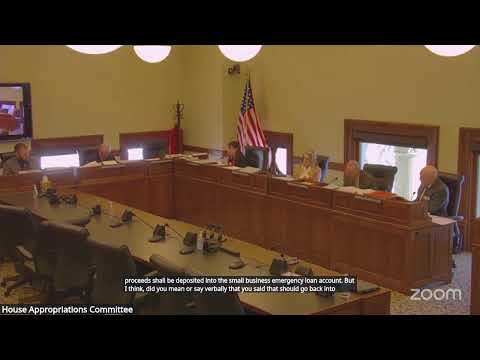
The Appropriations Committee passed Senate File 195 as amended, establishing a small-business emergency bridge loan program intended to provide rapid, short-term financing to businesses affected by governor-declared natural disasters or catastrophic infrastructure failures.
Cindy Delancey, appearing in a personal capacity as an attorney and bill proponent, described the bill as a tool to deliver fast capital through local lenders. The program would use local banks and credit unions to originate loans; loan applications and underwriting would be conducted by those local lenders, and the state’s role would be to approve funding recommendations quickly so borrowers could receive proceeds within days. Delancey said the design is meant to provide a “hand up” to affected businesses and to use local financial expertise to assess collateral and repayment ability.
Key program features discussed in committee include a maximum loan amount (committee discussion referenced a cap of $750,000), 0% interest for the short term, an origination fee (2 percent, with the borrower paying half), and up to three years to repay. The program is available only after a governor’s disaster declaration and includes exclusions for lenders, gaming, short-term rentals and similar ineligible activities. Delancey said that the fund amount in the bill was amended on third reading from $50 million to $25 million; the committee’s amendment adjusted how the funding is held and managed by placing proceeds into an identified small-business emergency loan account and aligning it with prior state emergency loan structures.
Representative Harrelson described an amendment to keep the $25 million appropriated funds under state loan authority (to avoid multiple disparate “coffee cans” of cash) and to have repayments and interest flow back into the same loan account. Committee members discussed ensuring the program can deliver cash immediately when needed; staff confirmed the amendment is not intended to delay disbursement and that an account structure will provide a landing platform for funds when the loans are made.
Delancey compared the proposal to similar programs used in other states, including Florida’s hurricane-response loan tools, and said the program is intended both for ag businesses and for other small businesses affected by disaster. The committee passed the bill with the Harrelson amendment; the roll-call vote recorded 7–0.
Votes at a glance Senate File 195 — Do pass with amendments (committee): 7 aye, 0 no.
Speakers quoted or referenced in this article are listed in the speaker roster below.