Get Full Government Meeting Transcripts, Videos, & Alerts Forever!
Get email alerts on the Earned Wage Access topic
No spam. Unsubscribe anytime.
Committee approves bill to clarify regulation, consumer protections for earned wage access
Summary
Chairman Trey Rhodes said the Banks & Banking Committee passed House Bill 241 to clarify how earned wage access services are regulated in Georgia and to add consumer protections.
Chairman Trey Rhodes said the Banks & Banking Committee passed House Bill 241 to clarify how earned wage access services (EWA) are regulated in Georgia and to add consumer protections.
The bill allows EWA providers that operate their advances as loans to fall under Georgia’s existing lending statutes and explicitly permits a convenience fee of up to $5 for advances structured as loans, provided the provider is licensed as a Georgia installment lender and complies with applicable law. "This bill provides regular regulatory clarity for certain types of earned wage access in Georgia and enhances consumer protections for our consumers," Chairman Trey Rhodes said.
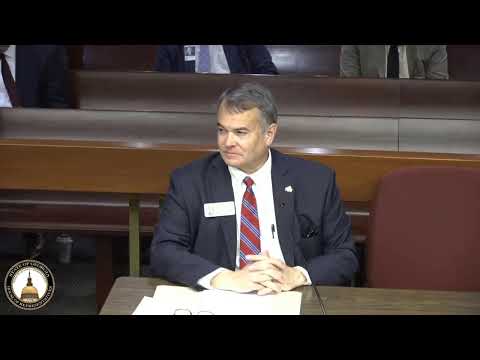
Nick Stowell, representing Chime Financial, told the committee Chime’s product MyPay allows customers to access earned wages either for free if they accept a 24-hour transfer or instantly for a fee. "Chime specifically allows for access to up to 50% of your earned wages up to $500 during a pay period," Stowell said. He described the company's instant-access option as $2 and said the bill would permit up to a $5 convenience fee for licensed providers who classify the product as a loan.
Liz Coyle, executive director of Georgia Watch, said her organization has tracked EWA products and supports the bill’s approach to regulating providers that function as lenders. "We have been concerned that in some cases, these earned wage access products have been effectively functioning like payday loans," Coyle said, urging protections to avoid recreating payday-style harms. Georgia Watch suggested an amendment to lower the maximum convenience fee from $5 to $3 and asked that the bill include explicit 24-hour language so consumers clearly know the free option’s timeline.
Committee members asked about the fee structure and the interaction between an instant-access fee and existing expedite options. Stowell confirmed Chime offers the free option within 24 hours and the instant transfer for $2, and that the bill’s $5 cap would cover the instant-transfer fee. Committee discussion also addressed licensing and oversight: committee members noted that the Department of Banking and Finance would regulate licensed providers under existing law.
A motion to pass HB 241 carried by voice vote; the committee recorded the bill as passed. The transcript records a voice vote with members saying "aye," and no roll-call tally was recorded on the record.
The measure, as discussed, does not create a new licensing framework; it directs that EWA advances treated as loans be subject to the state’s existing lending statutes and to licensure as installment lenders where applicable. Supporters said the change aims to reduce regulatory uncertainty and improve consumer protections for workers who use EWA to cover short-term expenses.
The committee did not adopt the amendment Georgia Watch recommended during the hearing. The bill passed the committee and will move forward through the legislative process.
Less critical details: committee members who asked technical questions were referred to the Department of Banking and Finance for implementation details; no departmental representative appeared during the hearing to give a line-by-line administrative perspective.