Get Full Government Meeting Transcripts, Videos, & Alerts Forever!
Get email alerts on the Regulatory Review topic
No spam. Unsubscribe anytime.
Committee advances bill to fund economic analysis of executive rules, adds two LSO economists
Summary
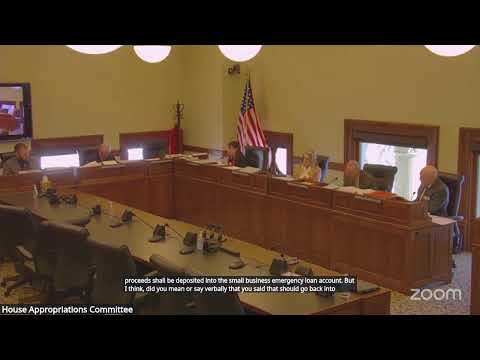
The Appropriations Committee voted to pass Senate File 127, a bill that would fund a Legislative Service Office unit to perform economic analyses of executive-branch rules. The bill provides funding for two economists and an appropriation to begin the program before it is folded into the regular budget process.
The committee voted to pass Senate File 127, a bill that would create a legislative review process for economic analysis of executive-branch rules and includes an appropriation to hire two economists within the Legislative Service Office (LSO) to conduct analyses.
Senator Bonner, who presented the bill, said the program is modeled after a “RAIN-style” act: lawmakers would conduct economic reviews to identify rules with disproportionate burdens on the private sector and, where appropriate, bring legislative orders to nullify rules. The appropriation funds two economist positions and start-up costs to give the LSO capacity to provide factual economic analyses and an evidentiary basis for any legislative action.
Representative Sherwood asked whether the appropriation could instead be handled through the regular legislative budget process. Senator Bonner said the appropriation would “get us started” and could be folded into the biennial budget or FY-appropriation processes in the future.
Representative Harrelson asked whether the $400,000 figure for two FTEs covered an 18-month or biennial period and what the positions’ seniority would be. Senator Bonner said the positions would be economist-level staff, likely above-average compensation given experience requirements, and that committee members considered three positions before settling on two as the minimum to start the program. He said the bill sets an effective date of July 1, 2026, to allow time to staff the unit.
Committee members heard no public opposition and voted to pass the bill; the roll call recorded the vote as 7–0. The committee sponsors described the appropriation as initial seed funding pending future inclusion in the regular legislative budget cycle.
Votes at a glance Senate File 127 — Do pass (committee): 7 aye, 0 no.
Speakers quoted or referenced in this article are listed in the speaker roster below.