Get Full Government Meeting Transcripts, Videos, & Alerts Forever!
Get email alerts on the Municipal Operations topic
No spam. Unsubscribe anytime.
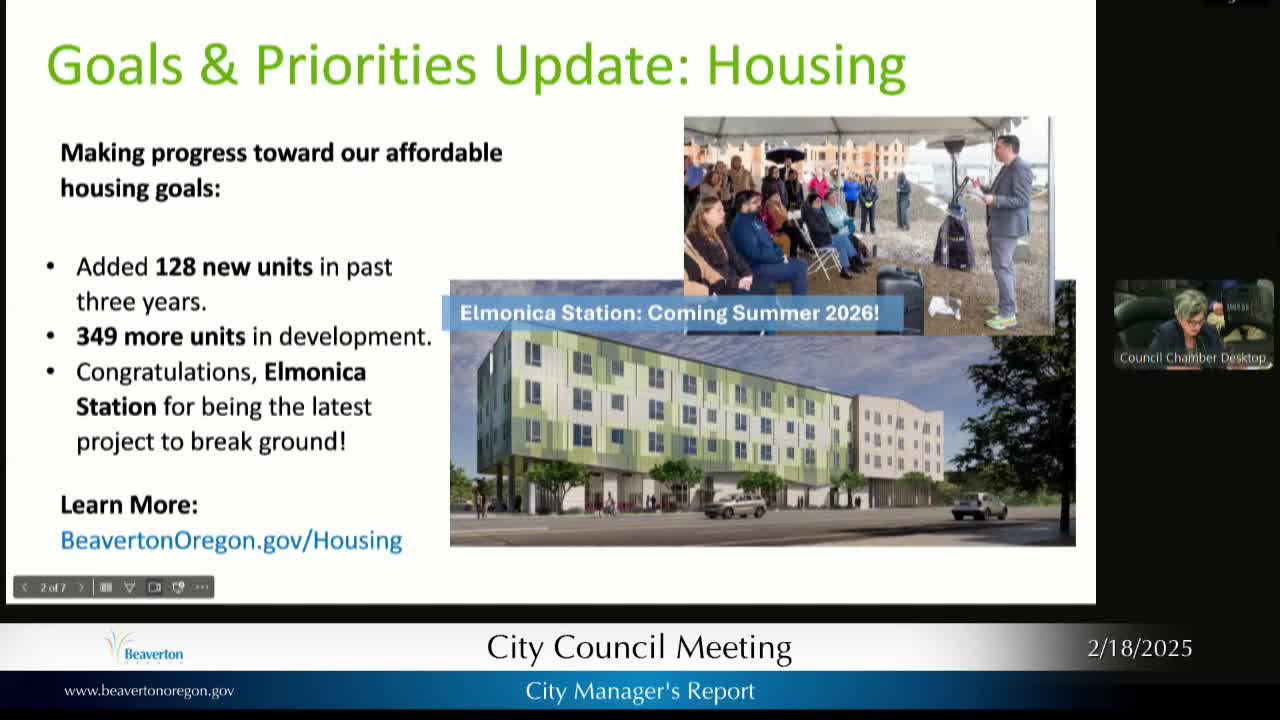
City manager highlights affordable housing additions, El Monico Station project, meter rollout, grants and Be Sober court recognition
Summary
The city manager updated council on recent housing additions—including El Monico Station—Lombard West redevelopment efforts, the rollout of new advanced water meters through 2027, the open social‑services grant process, and recognition for the city’s Be Sober treatment court.
The Beaverton city manager briefed the council on several items, including affordable housing developments, urban‑redevelopment work, utility meter upgrades, social service grant timing, and emergency‑weather responses.
On housing, staff said Beaverton has added roughly 128 affordable housing units over the past three years through the Metro affordable housing bond and highlighted the El Monico Station project, an energy‑efficient development expected to bring about 81 affordable units near the El Monico MAX station next summer. The city manager thanked councilor John Duggar and staff for their roles in recent groundbreaking activities.
The manager also spotlighted the Lombard West redevelopment, a priority of the Beaverton Urban Redevelopment Agency (BUREA). Staff noted an active request for qualifications and directed interested developers to the city's RFQ web page.
On utilities, staff announced an advanced metering infrastructure (AMI) program: new remote‑reading water meters that can help detect leaks and reduce unnecessary charges will be installed through 2027. The city manager noted the program's benefits for leak detection and customer service.
Social service grant applications for the city's social‑services funding round are open through Friday, March 14, and the manager encouraged eligible organizations to apply. The city also congratulated Beaverton’s Be Sober program, a treatment‑court model for repeat driving‑under‑the‑influence offenders; the program was named among the top 10 treatment courts by the All Rise Treatment Court Institute and has had more than 175 graduates with a reported recidivism rate under 6%.
Staff also reviewed the city's winter storm response: crews cleared roads and downed trees, the city activated an inclement‑weather shelter that housed more than 50 people and five pets, and officers and bike‑team members helped residents in need.
Why it matters These updates touch on housing supply, downtown redevelopment, utility modernization and services for vulnerable residents—issues that shape growth, budgets and the city's ability to deliver services.