Get Full Government Meeting Transcripts, Videos, & Alerts Forever!
Get email alerts on the Debanking topic
No spam. Unsubscribe anytime.
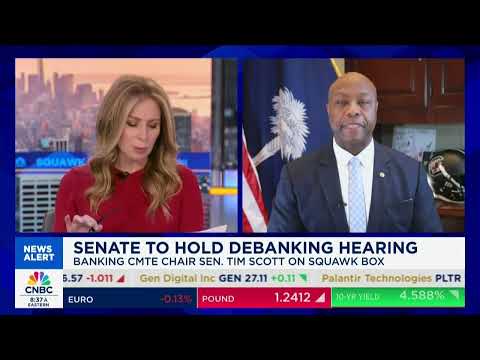
Sen. Tim Scott: Senate Banking Committee will hold hearing on "debanking" after Trump remarks
Summary
Senate Banking Committee Chairman Tim Scott said the committee will hold a hearing on alleged "debanking" practices after President Trump publicly challenged bank CEOs. Scott said witnesses will include Old Glory Bank and Anchorage Digital; he blamed both regulators under the Biden administration and bank policies for removing customers.
Senator Tim Scott, chairman of the Senate Banking Committee, said the committee will hold a hearing on so-called "debanking" after President Donald Trump raised the issue with bank executives at the World Economic Forum.
Scott announced the hearing during a television interview, saying it is scheduled for tomorrow and will include testimony from Old Glory Bank and Anchorage Digital. "The politicalization, the weaponization of our banking system should never happen," Scott said, adding he has received "over a thousand calls" from people who say they were cut off by financial institutions.
The senator framed the inquiry as part of his oversight responsibilities and said he first included the topic in an agenda announced in late December. "Do we have the responsibility of oversight? The answer is emphatically yes," Scott said. He also said he wants broader conversations with CEOs next week and expects the new administration's regulatory team will help inform the committee's work.
The interview included a quotation attributed to Jamie Dimon, chief executive officer of JPMorgan Chase, which the interviewer read back: "We are responsible in the law to fight *** trafficking, money laundering, tax avoidance," and regulators, he said, identify what is high risk. That quote was presented in the program as an explanation from some bank executives for why institutions may close customer accounts or cut ties with certain industries.
Scott said banks also make business decisions for reasons such as environmental concerns. "About 18 months ago, I spoke before a lot of the large GSIBs [global systemically important banks], and they talked about their decision to not bank certain industries because of the environmental impact," he said. In the interview he named cryptocurrency firms, oil and gas, and the firearms industry as sectors he said have been targeted.
The program's interviewer noted a consent order between Anchorage Digital Bank and the Office of the Comptroller of the Currency and asked whether supervisory actions constituted discrimination or prudence. Scott replied that the Senate has an oversight role and that he expects information from the hearing to clarify whether pressure from regulators or private risk decisions drive debanking.
Scott declined to assign sole blame to banks or regulators in his interview, saying both questions deserve scrutiny. He said he expects the hearing to shed more light on whether institutions are refusing service because of politics or because of regulatory and compliance risks.
The hearing was described on air as an opportunity to hear both industry representatives and regulators. The interview did not include a formal vote or legislative action; Scott said the committee will continue oversight and hold additional conversations with bank leaders.
Looking ahead, Scott said he expects to have more information after the hearing and to convene broader discussions with industry leaders. "Will I have more information at the end of tomorrow? 1000%."