Get Full Government Meeting Transcripts, Videos, & Alerts Forever!
Get email alerts on the Consumer Banking Access topic
No spam. Unsubscribe anytime.
Senate hearing highlights consumer harms: overdraft fees, unbanked households and do‑not‑bank lists
Summary
Witnesses and senators emphasized consumer harms from account closures and costly banking practices; the Consumer Financial Protection Bureau and payment modernization proposals were discussed as remedies.
Senators and witnesses at a Senate Banking Committee hearing described the consumer side of ‘‘debanking,’’ focusing on overdraft fees, do‑not‑bank lists and the millions of Americans who lose access to basic banking services.
Senator Elizabeth Warren, the committee’s ranking member, said her staff identified 11,955 complaints in the Consumer Financial Protection Bureau database over the past three years from people who reported they were unable to open accounts or had accounts wrongly closed. “People shouldn't be arbitrarily denied access to their banks, locked out of their accounts, or stripped of their banking privileges,” Warren said.
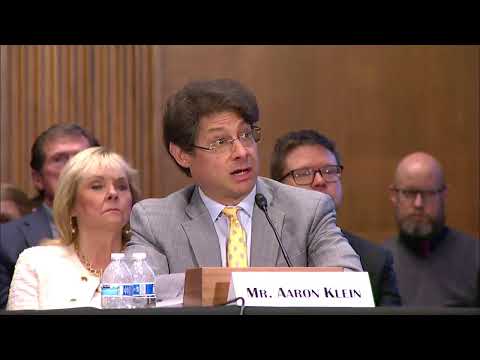
Aaron Klein, senior fellow at the Brookings Institution, told senators roughly 10% of U.S. households are unbanked or were unbanked for part of the last year and outlined five reforms he said would reduce debanking and financial fragility. Klein’s proposals included requiring BankOn‑style affordable accounts at federally insured banks and credit unions, curbing surprise penalties and overdraft practices, accelerating payment modernization to enable near‑real‑time payments, reforms to anti‑money‑laundering (AML) reporting practices and stricter oversight of third‑party do‑not‑bank lists such as CheckX.
Klein argued that outdated payment rails increase overdraft costs for people living paycheck to paycheck and that real‑time payments could reduce overdraft and check‑cashing fees substantially. “If America had instituted real time payments when England did, people would have saved over a hundred billion dollars in overdraft fees,” Klein said.
Lawmakers repeatedly raised the role of suspicious activity reports (SARs) and currency transaction reporting under the Bank Secrecy Act (BSA). Klein and other witnesses argued that banks file millions of SARs with little feedback on quality — a dynamic that drives compliance costs and can encourage banks to exit higher‑cost, lower‑profit customers rather than invest in more precise monitoring.
Committee members sought to balance consumer protection and safety‑and‑soundness concerns. Several senators said the Consumer Financial Protection Bureau (CFPB) has been among the federal agencies most active on debanking issues, but congressional oversight and legislative remedies were also proposed.